Category: Guides

  • Why Micro Podcasts Are Having Their 15 Minutes Of Fame

    Why Micro Podcasts Are Having Their 15 Minutes Of Fame

    In a world of endless scrolling and short attention spans, micro podcasts are quietly becoming the next big thing. Instead of hour long interviews and sprawling chat shows, listeners are turning to bite sized audio that fits neatly into a lunch break, a dog walk or, fittingly, a 15 minute window of fame.

    What are micro podcasts?

    At their simplest, micro podcasts are short audio episodes, usually between 5 and 20 minutes long, focused on a single idea or story. They strip away the filler and get straight to the point. That could be a quick news breakdown, a compact true crime update, a daily mindfulness session, or one sharp business tip you can act on immediately.

    Unlike traditional shows that expect you to commit for an hour, micro podcasts respect that you might only have a sliver of time. They are designed to be finished in one go, leaving you with a clear takeaway rather than half remembered chatter.

    Why micro podcasts are suddenly everywhere

    Several trends have collided to make micro podcasts feel perfectly timed. People are consuming more content than ever, but they are doing it in smaller bursts between other tasks. Shorter episodes slot neatly into commutes, chores and gym sessions without demanding a full schedule reshuffle.

    Creators love them too. Recording and editing a focused 10 minute episode is far less intimidating than producing a polished, hour long show with multiple guests. It lowers the barrier to entry, which means more voices, more experiments and more niche topics can find an audience.

    There is also a subtle psychological shift. Finishing something feels good. Listeners can complete several micro episodes in a day, which creates a sense of progress and momentum that long form content often struggles to match.

    How tools like HealthPod are fuelling the trend

    Technology is giving micro podcasts an extra push. Smartphone recording apps, simple editing tools and one click publishing platforms have made it easy for anyone to start broadcasting from their bedroom or office. Services such as HealthPod, for example, lean into shorter, focused audio updates that make health information feel less overwhelming and more like a quick check in.

    When platforms are built around clarity and brevity, creators naturally start thinking in segments rather than sagas. That is ideal for listeners who want reliable information or entertainment, but do not have the time or energy for a marathon episode every day.

    Why these solutions deserve their 15 minutes of fame

    Beyond convenience, these solutions have a few qualities that make them especially interesting right now. They are perfect for spotlighting under represented stories or niche passions that might not sustain a sprawling series, but absolutely shine in short, concentrated bursts.

    They also encourage better editing. When you only have 10 minutes, every sentence has to earn its place. That often leads to sharper storytelling, clearer arguments and fewer tangents. For listeners, that means more value in less time.

    For brands, charities and community groups, micro episodes can act like audio postcards – quick, memorable updates that keep people engaged without overwhelming them. For individuals, they offer a low pressure way to test ideas, share experiences or build a personal platform without committing to a full scale production.

    How to start your own micro podcast

    If you feel like your idea deserves its own 15 minutes of fame, starting a micro podcast is more achievable than it might seem. Begin by choosing a tight focus: one problem you solve, one niche you love, or one story format you can repeat. A short show works best when listeners know exactly what they are getting each time.

    Next, plan a simple structure. For example: a 30 second intro, 8 minutes of content, and a 1 minute wrap up. Record using a decent microphone or even a modern smartphone in a quiet room. Basic editing software can trim mistakes and tidy up the sound without needing studio level skills.

    Most importantly, commit to consistency rather than perfection. A regular stream of short, honest episodes will almost always beat one immaculate, over produced special that never gets finished.


    Commuter on a train listening to micro podcasts on wireless earbuds
    Minimalist desk setup for recording micro podcasts with microphone and laptop

    Micro podcasts FAQs

    How long should micro podcasts be?

    Most micro podcasts run between 5 and 20 minutes. The sweet spot is usually around 10 to 15 minutes, long enough to explore a single idea properly but short enough to finish in one sitting. The key is to choose a length you can maintain consistently while still delivering clear value in every episode.

    Do I need professional equipment to start micro podcasts?

    You do not need studio level gear to start micro podcasts. A quiet room, a reasonably good USB microphone or modern smartphone, and simple editing software are usually enough. Focus first on clear audio and a strong concept. You can always upgrade equipment later if your show grows.

    Can micro podcasts make money?

    Yes, micro podcasts can be monetised through sponsorships, listener support, paid memberships or by promoting your own products and services. Because episodes are short, any promotional messages need to be brief and relevant. Most successful shows focus on building a loyal, engaged audience before worrying about income.


  • Citizen science projects that deserve their 15 minutes of fame

    Citizen science projects that deserve their 15 minutes of fame

    Some of the most exciting discoveries today are not coming from giant labs or secret observatories, but from ordinary people joining simple citizen science projects from their kitchen tables, gardens and smartphones. These projects quietly power real research, yet most of them never get the spotlight they deserve.

    What are citizen science projects and why do they matter?

    Citizen science projects invite members of the public to help collect, sort or analyse data that scientists simply cannot handle alone. There are not enough researchers to watch every bird feeder, read every handwritten archive or scan every galaxy image. So they turn to volunteers to fill the gaps.

    This is not busywork. The information people submit feeds directly into academic papers, conservation plans, climate models and even space missions. It is a way for anyone with curiosity and a bit of spare time to leave a small fingerprint on real science.

    Bird counting: turning garden visitors into global data

    Bird surveys are among the most successful citizen science projects because they are simple, relaxing and surprisingly powerful. You sit by a window, note what lands in your garden or local park, and log what you see. Multiply that by thousands of people doing the same, and scientists gain a continent-wide snapshot of bird populations.

    Researchers use these records to track which species are thriving, which are in trouble, and how migration patterns are shifting as the climate changes. When a once-common bird starts vanishing from people’s lists, it can trigger deeper investigations and new protections. Your scribbled notes about a robin or goldfinch might help shape future conservation laws.

    Galaxy classification: helping map the universe from your sofa

    Another corner of science quietly powered by volunteers is galaxy classification. Telescopes capture more images than professionals could ever inspect by hand. Computers are good at spotting obvious patterns, but they still struggle with the subtleties of spiral arms, dust lanes and odd shapes.

    That is where public volunteers step in. By clicking through images and labelling what they see, people help astronomers sort galaxies into useful categories. These labels feed into studies of how galaxies evolve, how dark matter might be distributed and where to point more detailed instruments next. On rare occasions, volunteers have even spotted entirely new and unexpected objects, earning their names in research papers.

    Transcribing archives: rescuing history from dust and decay

    Old ship logs, field notebooks, weather diaries and letters are treasure chests of information, but many are handwritten and fragile. Scanning them is only half the job – someone still has to read the script and turn it into searchable text.

    Online transcription projects invite volunteers to zoom in on a scanned page and type what they see. Piece by piece, forgotten records become digital data. Historians can then trace everyday lives, while climate scientists can plug centuries-old weather notes into modern models. Your careful typing might help reveal how storms behaved in the past or how people experienced earlier pandemics and wars.

    Tracking pollution: turning phones into environmental sensors

    Modern phones and cheap sensors have opened up a new wave of citizen science projects focused on pollution. People can report litter on beaches, log air quality outside schools or upload photos of murky rivers. These scattered reports become a powerful map of environmental problems.

    Authorities and campaigners use this data to spot hotspots, push for clean-up efforts and monitor whether promised improvements actually happen. Because the reports come from people on the ground, they can reveal issues that official monitoring stations miss, especially in neglected areas.

    What makes citizen science so much fun?

    Part of the appeal is simple satisfaction. You are not just scrolling endlessly – you are doing something that matters. Many projects also build friendly communities, with forums where people share odd sightings, compare notes and celebrate discoveries. Some even send regular updates showing how your contributions fit into the bigger picture.

    Person classifying galaxy images on a laptop for online citizen science projects
    Volunteer transcribing historic archives at home for digital citizen science projects

    Citizen science projects FAQs

    Do I need scientific training to join citizen science projects?

    No, most citizen science projects are designed for complete beginners. They provide simple training materials, examples and practice tasks so you can learn as you go. The key requirements are curiosity, patience and a willingness to follow the instructions carefully.

    How do scientists check the quality of data from citizen science projects?

    Researchers use several methods to keep data reliable. These include built in tutorials, test questions, repeat classifications by multiple volunteers, expert review of unusual results and automatic checks that flag suspicious entries. Together, these checks ensure that the final datasets are robust enough for serious research.

    Can I contribute to citizen science projects with only a few minutes a day?

    Yes, many projects are built around short, repeatable tasks that you can complete in spare moments. You might classify a handful of images, transcribe a couple of lines from an old document or log a quick wildlife sighting. Over time, those small contributions add up and help move real research forward.

  • Why Board Game Cafes Are Giving Our Social Lives 15 Minutes of Fame

    Why Board Game Cafes Are Giving Our Social Lives 15 Minutes of Fame

    After years of scrolling, swiping and streaming, something delightfully old-school is having a moment: board game cafes. Across cities, suburbs and small towns, people are meeting up around cardboard, dice and shared laughter instead of screens. It is a quiet revolution in how we spend our free time, and it absolutely deserves its 15 minutes of fame.

    Why board game cafes are booming right now

    The surge in board game cafes is not just about nostalgia for Monopoly and Scrabble. Modern board games are wildly inventive, beautifully designed and far more social than many people realise. From co-operative adventures where you all fight the game together, to quick party games that have you shouting clues across the table, there is something for every personality and attention span.

    A few forces have come together to fuel the boom. First, people are actively hunting for ways to be offline without feeling isolated. A busy board game table gives you a reason to put your phone away without feeling like you are missing out. Second, game design has levelled up. New titles arrive every year with clever rules, inclusive themes and artwork that looks like it belongs in a gallery. Finally, the cost-of-living squeeze means many are looking for nights out that feel special but do not drain the bank account. A few hours in a game cafe, sharing a table and a pot of tea, can be far cheaper than a night of cocktails or a concert ticket.

    How venues curate their game collections

    Walk into the best board game cafes and you will not just find a random pile of boxes. Behind those shelves is careful curation. Owners and staff test new releases, listen to regulars and build libraries that balance classics with hidden gems. You might see a familiar title to break the ice, sitting next to a quirky game from a tiny independent publisher that becomes your new obsession.

    Most venues organise their games by mood and complexity rather than alphabetically. There will be a “party” section for big groups, a “two player” shelf for date nights, and a family-friendly area with colourful boxes and simple rules. Many cafes have game gurus on hand – staff who can listen to what you like, pull three or four options from the shelves and teach you the rules in ten minutes. It turns what could be an overwhelming wall of cardboard into a personalised experience.

    Some pubs and community clubs have taken a slightly different approach. Instead of huge libraries, they focus on a tight selection of proven favourites. They might run themed nights – strategy Tuesdays, party game Fridays, roleplaying weekends – and rotate a small but carefully chosen set of titles to match.

    The communities forming around board game cafes

    What really gives these places their magic is not the cardboard, it is the people. Board game cafes naturally attract a mix of students, young professionals, families, older regulars and complete newcomers who just saw the dice in the window and wandered in. That mix creates surprising friendships you would never make through an algorithm.

    Many venues now host regular events that turn casual visitors into communities. There are open gaming nights where solo visitors are guaranteed a table, beginner evenings that promise no rules snobbery, and tournaments for those who secretly love a leaderboard. Some cafes run inclusive meetups for LGBTQ+ gamers, language exchange nights built around simple games, or mornings where parents can play while tiny children explore a toy corner.

    Crucially, the best spaces work hard to be welcoming rather than intimidating. You do not need to know the difference between a deckbuilder and a dungeon crawler to take part. Staff will sit down, explain the basics and often stay for the first round to make sure everyone is laughing rather than leafing through rulebooks in silence.

    Staff guiding newcomers through curated collections in board game cafes
    Community gathering for a social night at board game cafes and pubs

    Board game cafes FAQs

    What happens at a typical board game cafe?

    At most board game cafes you pay a small cover charge or table fee, choose a game from the venue’s library and play for a set amount of time. Staff often help you pick something that suits your group and explain the rules, so you spend more time playing and less time reading. Food and drink are usually available, turning it into a relaxed social night out.

    Do I need to know lots of games before visiting a board game cafe?

    Not at all. Board game cafes are designed to be beginner friendly. You can walk in knowing nothing beyond the basics of cards and dice. Staff will usually ask what kind of films or activities you enjoy, then recommend games with similar vibes and teach you how to play. Many venues also run intro nights specifically for newcomers.

    Are board game cafes suitable for families and kids?

    Many board game cafes welcome families, especially during daytime hours, and keep a dedicated section of games suitable for children. It is worth checking age guidelines and any time restrictions in advance, as some venues become more adult-focused in the evenings. When well-matched, family visits can be a brilliant way to get kids talking, thinking and laughing together away from screens.

  • Why Woodworking Content Creators Deserve Their 15 Minutes of Fame

    Why Woodworking Content Creators Deserve Their 15 Minutes of Fame

    There is a new kind of online star quietly shaping what we watch and what we make at home: woodworking content creators. From tiny shed workshops to polished studio spaces, these makers are turning sawdust into storytelling and giving millions of viewers the confidence to pick up a tool for the first time.

    Why woodworking content creators are suddenly everywhere

    Short video platforms and long form tutorials have created the perfect stage for woodworking content creators. Viewers love the mix of calm, satisfying visuals and real, practical knowledge. In a world filled with digital noise, watching someone turn a rough plank into a finished piece feels almost meditative.

    There is also a strong appeal in seeing real people, not big brands, making things with their own hands. The camera catches the mistakes as well as the wins, and that honesty makes the finished projects feel achievable rather than intimidating.

    From hobbyists to full time makers

    Many of today’s most popular woodworking content creators started as weekend hobbyists filming on their phones. Over time, their audiences grew, and so did their ambition. Some now run full time channels, sell plans, host online classes, or collaborate with tool manufacturers and timber suppliers.

    This shift matters because it is changing how skills are passed on. Instead of learning only from local night classes or family members, a new generation is learning joinery, finishing and design from people they follow online. It is a modern twist on the old apprentice system, except the workshop is global and always open.

    The projects people cannot stop watching

    Certain types of projects perform especially well in this space. Time lapse builds of dining tables, desks, and garden furniture are endlessly watchable, as rough timber transforms into smooth, oiled surfaces. Restoration videos, where damaged or discarded pieces get a second life, tap into the growing interest in sustainability and upcycling.

    There is also a rise in hybrid projects that blend traditional hand tools with modern kit like cnc machines. Viewers enjoy seeing how heritage techniques can sit alongside cutting edge equipment, even if their own setup is far more modest.

    How creators inspire beginners to pick up tools

    Perhaps the most important impact of woodworking content creators is the way they lower the barrier to entry. Many share beginner friendly series that start with simple projects like shelves, planters, or small storage boxes. They break down each step, show close ups of tool use, and talk openly about safety and common mistakes.

    Crucially, they also talk about the emotional side of making things: the satisfaction of solving a tricky joint, the calm focus of sanding and finishing, and the pride of using something you built yourself. For viewers who spend most of their day at a screen, this is a powerful invitation to try a more hands on hobby.

    The future of woodworking in the spotlight

    As audiences grow, so do the possibilities. We are already seeing collaborations between woodworking content creators and other crafts, such as metalworking, upholstery, and even digital design. That cross pollination leads to more ambitious builds and fresh ideas that keep viewers coming back.

    There is also a growing appetite for longer, more reflective content: workshop tours, behind the scenes planning, and honest conversations about burnout, creativity, and the realities of turning a passion into a livelihood. The best creators are not just demonstrating techniques – they are building communities of curious, supportive makers around the world.

    Giving makers their 15 minutes of fame

    In a culture that often celebrates quick consumption, woodworking content creators deserve their own 15 minutes of fame for doing something very different. They slow us down, invite us to notice grain patterns and clean lines, and remind us that beauty can come from patience and practice.

    Whether you are a seasoned maker or simply someone who enjoys watching a rough board become a finished piece, this wave of creators is shaping how we think about craft, skill, and the value of time well spent. Their videos might be short, but their impact on how we learn and create is likely to last far longer than fifteen minutes.

    Modern studio setup used by woodworking content creators to film projects
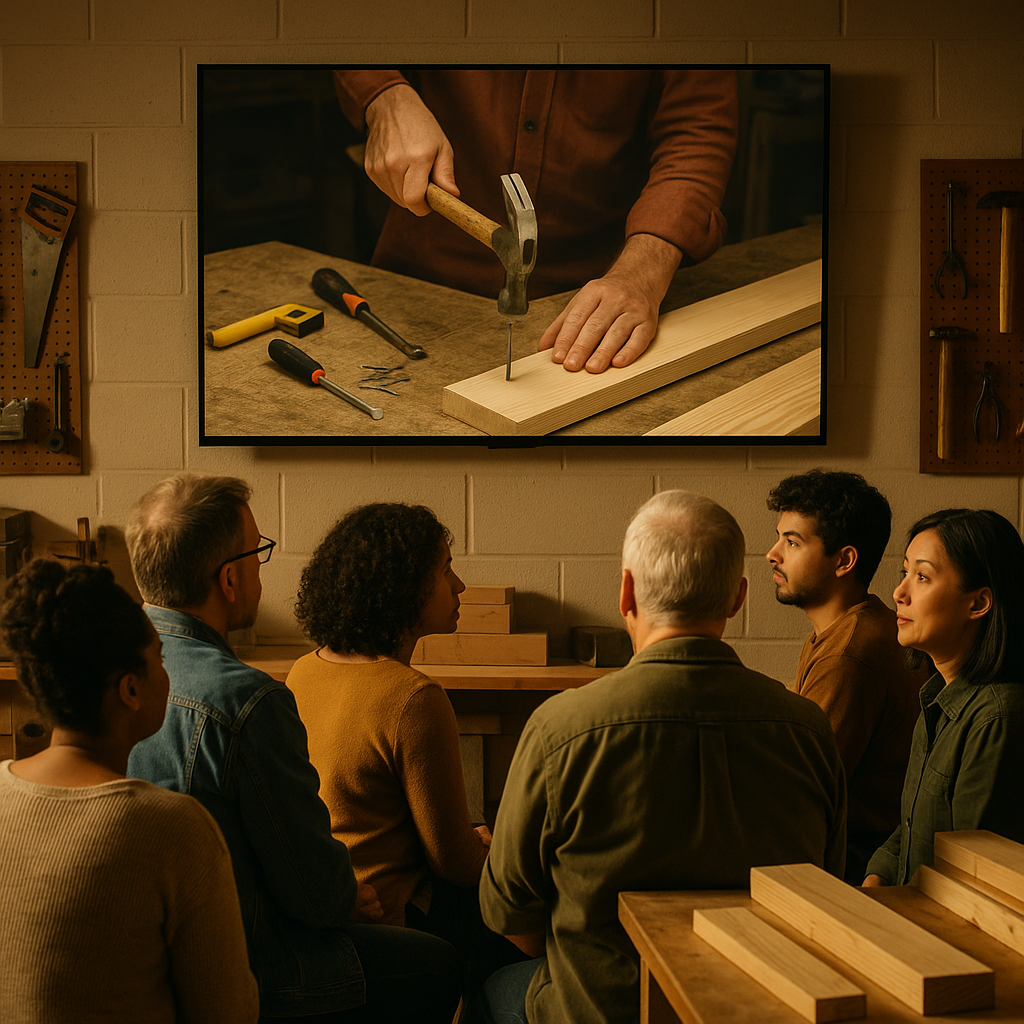
    People learning from woodworking content creators on a screen in a shared workshop

    Woodworking content creators FAQs

    How do woodworking content creators make money?

    Many woodworking content creators earn income from a mix of sources, including advertising on their videos, sponsorships from tool or material brands, selling digital plans, offering online courses, and sometimes taking on commissioned builds. Some also sell merchandise or small batch handmade pieces to their most dedicated followers.

    What tools do I need to follow along with most woodworking content creators?

    You do not need a fully equipped workshop to get started. Many woodworking content creators design beginner projects around basic tools such as a drill, a circular saw or handsaw, clamps, a sander, and simple measuring equipment. As your skills and interest grow, you can gradually add larger tools based on the types of projects you enjoy most.

    Can watching woodworking content creators really teach me proper technique?

    Online videos can be a very effective way to learn techniques, especially when creators use close ups, slow motion, and clear explanations. However, it is important to cross check safety advice, start with simple projects, and practice on scrap material before attempting complex builds. Combining video learning with good reference books or local classes can give you the most rounded skill set.

  • Why Layered Window Coverings Deserve Their 15 Minutes of Fame

    Why Layered Window Coverings Deserve Their 15 Minutes of Fame

    Some home upgrades shout for attention: new kitchens, bold paint colours, statement sofas. Others quietly transform a space without much credit at all. It is time layered window coverings had their own 15 minutes of fame.

    What are layered window coverings, really?

    Layered window coverings are exactly what they sound like: two or more types of blinds, curtains or shades used together on the same window. Think a slim roller blind with full length curtains, or sheer voiles paired with heavier drapes. The magic is in how these layers work together to control light, privacy and temperature in a way a single treatment rarely can.

    At first glance, it might seem like a purely decorative choice, but the best layered solutions behave more like a flexible toolkit. You can soften harsh daylight without sitting in gloom, enjoy privacy without feeling boxed in, and keep rooms comfortable throughout the year, all by adjusting a few simple layers.

    Why layered window coverings deserve the spotlight

    There are three big reasons layered window coverings are quietly becoming the unsung heroes of modern interiors.

    1. Precision control of light

    Most of us live with a blunt choice: blinds up or down, curtains open or closed. With layers, you gain far more nuance. Sheer fabrics can stay drawn to diffuse strong sunlight, while a blackout blind or heavier curtain is ready for film nights, lie ins or baby naps. This flexibility is especially useful in multi use rooms that double as home offices, playrooms or guest bedrooms.

    2. Smarter privacy without losing the view

    Street facing living rooms, overlooked gardens and city flats all share the same problem: you want natural light and a sense of openness, but you do not want to feel on display. Pairing a translucent layer with a more opaque one solves this neatly. During the day, the sheer layer keeps prying eyes out while letting daylight in. In the evening, the thicker layer closes things down for a cosy, private feel.

    3. Hidden help with comfort and energy

    Glass is one of the weakest points in a building envelope, leaking heat in winter and letting it pour in during summer. Well planned layers trap pockets of air, creating a simple bit of insulation that can make a room feel noticeably warmer or cooler. Over time, that can support more comfortable temperatures and potentially reduce the need to crank the heating or fan quite so high.

    Designing layered window coverings for your space

    So how do you make layered window coverings work in real life rather than just on mood boards? A few simple principles help.

    Start with function, then add flair

    Begin by asking what the room actually needs. Total darkness for sleep? Glare control for screens? Privacy from neighbours? Once you know the practical job, choose your base layer: perhaps a blackout roller in the bedroom or a light filtering shade in a living space. Then add a second layer that brings softness, colour or pattern without fighting the first.

    Mix textures, not just colours

    Layering is not only about stacking fabrics, it is about contrast. Crisp blinds against linen curtains, smooth sheers with chunky cotton, or even a bamboo shade behind velvet drapes all create depth and interest. This is where a fairly neutral room can suddenly feel finished, like someone thought about the details.

    Think hardware and neat finishes

    The best these solutions look intentional, not improvised. Double curtain poles, discreet blind cassettes and well placed brackets keep everything operating smoothly. It is worth measuring carefully so each layer clears the others without snagging, and so the stack of fabric does not block too much glass when open.

    Everyday examples that quietly impress

    In a small flat, a translucent roller blind with floor length curtains can make a compact living room feel taller and brighter, while still allowing for privacy at all hours. In a home office, a light filtering blind paired with simple side panels can cut glare on screens without turning the room into a cave. For nurseries and children’s rooms, a combination of blackout and softer decorative layers makes it easier to balance naps, play and bedtime routines.

    Cosy bedroom design using layered window coverings for light control and privacy
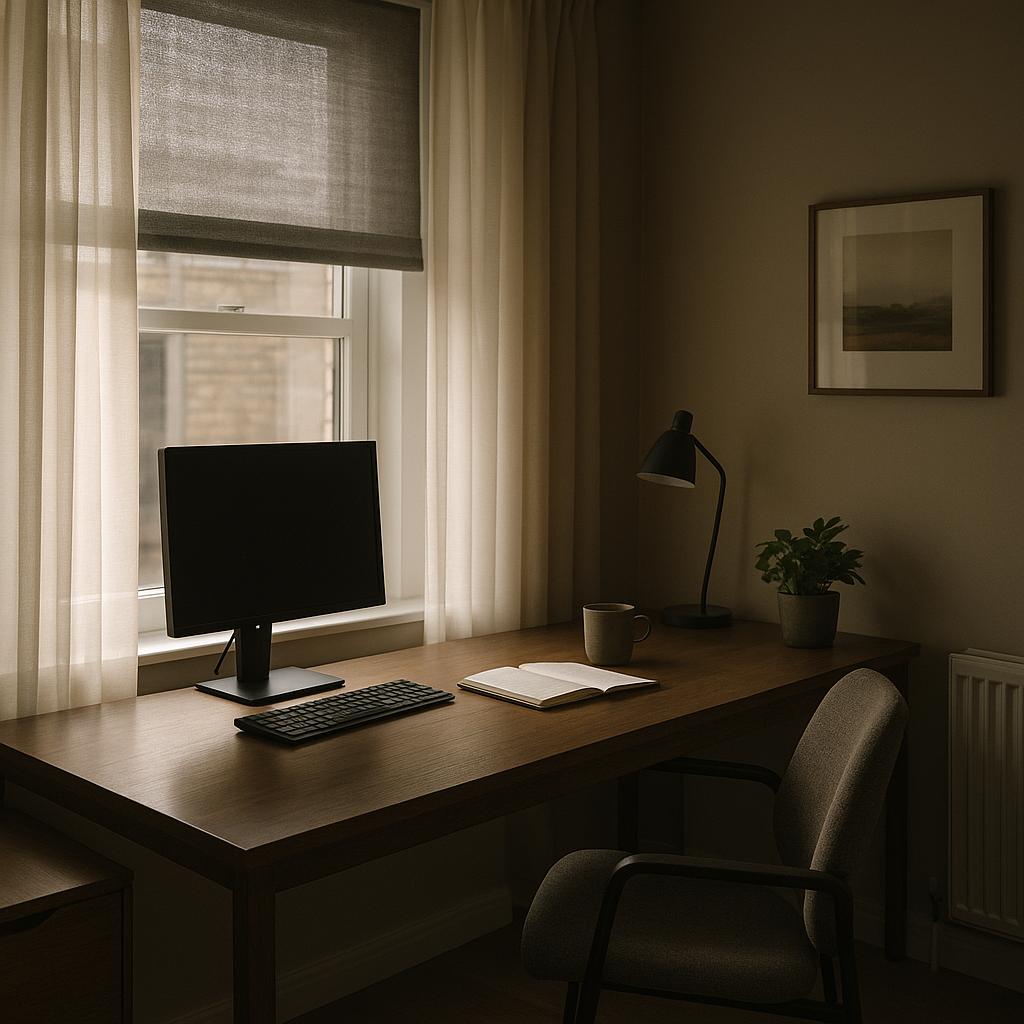
    Home office window dressed with layered window coverings to reduce glare

    Layered window coverings FAQs

    What are layered window coverings?

    Layered window coverings use two or more treatments on the same window, such as a blind with curtains or sheers with heavier drapes. Together, these layers give you finer control over light, privacy and temperature than a single blind or curtain can usually offer on its own.

    Are layered window coverings only for large rooms?

    No, layered window coverings can work just as well in small spaces. In compact rooms, combining a slim blind with long curtains can make windows feel taller and add softness without overwhelming the space. The key is choosing lightweight hardware and fabrics that suit the room’s proportions.

    Do layered window coverings help with energy efficiency?

    They can. Extra layers of fabric or material create small pockets of trapped air around the glass, which helps reduce heat loss in winter and limit heat gain in summer. While they are not a replacement for insulation or glazing upgrades, layered window coverings are a simple way to support a more comfortable, stable indoor temperature.

    day and night blinds

  • Why Your Local Town Centre Still Deserves Its 15 Minutes of Fame

    Why Your Local Town Centre Still Deserves Its 15 Minutes of Fame

    Your local town centre has probably been written off more times than you can count. Headlines talk about the death of the high street, boarded-up shops and everyone shopping online. Yet walk through almost any town on a Saturday and you will still find life: buskers, market stalls, coffee queues and kids chasing pigeons. The town centre quietly keeps going, and it is long overdue its 15 minutes of fame.

    Why the local town centre still matters

    The easiest thing to forget about a local town centre is that it is more than a row of shops. It is where people bump into old classmates, where community groups hand out flyers, where protests and parades start and finish. When you think of the big moments in your area – Christmas lights switch-ons, New Year fireworks, charity runs – they almost always orbit the town centre.

    Even as online shopping grows, many people still want to see, touch and try things before buying. Independent bookshops, vintage clothing stores and specialist food shops are finding new life by offering something you cannot scroll past in a feed. Add in barbers, nail salons, opticians and repair shops, and you get a picture of a place that is less about stuff and more about services and experiences.

    How the local town centre is changing

    Instead of rows of identical chain stores, the modern local town centre is becoming a patchwork of uses. Empty retail units are being turned into co-working hubs, yoga studios, escape rooms and community kitchens. Some councils are encouraging artists to use vacant windows as mini galleries, turning what would be dead space into a reason to stop and look.

    Food and drink are playing a bigger role too. Street food traders, pop-up bars and night markets are drawing people back after work, not just during shopping hours. A town centre that used to shut at 5pm now has a second shift: comedy nights in the back room of a pub, late-opening galleries, even outdoor cinema screenings in the square when the weather behaves.

    Giving your local town centre its 15 minutes of fame

    If you want your local town centre to thrive, you do not need a grand plan. Small, regular actions add up. Choosing to buy a birthday card from the independent stationer instead of a faceless online giant keeps money circulating locally. Meeting friends in a town-centre café rather than a drive-through on the edge of town adds to the sense of buzz on the streets.

    There is also power in simply talking about the good stuff. Sharing photos of a new mural, a brilliant market stall or a hidden courtyard bar can give places the micro-fame they need to survive. When somewhere becomes “that café everyone posts about” or “the market with the amazing dumplings”, it gains a story people want to be part of.

    Designing town centres for people, not just shoppers

    One of the biggest shifts happening quietly is a move from car-first to people-first design. Wider pavements, more benches, trees, planters and play areas make a these solutions somewhere you want to linger rather than rush through. When a square has decent seating, good lighting and maybe a fountain or piece of public art, it stops being just a thoroughfare and starts to feel like a shared living room.

    Events help too. Regular craft markets, book fairs, live music afternoons and seasonal festivals give people reasons to return again and again. The best town centres now think like tiny festivals that never fully pack up – there is always something happening, even if it is just a busker on the corner or a chessboard left out on a table.

    What the future might look like

    Looking ahead, the most successful town centres will be those that lean into what makes them unique. Historic buildings, local legends, riverside walks, even famously odd landmarks can be turned into identity, not embarrassment. When a place knows what it is about, people feel more connected to it and more inclined to protect it.

    Evening street food market bringing life back to a local town centre
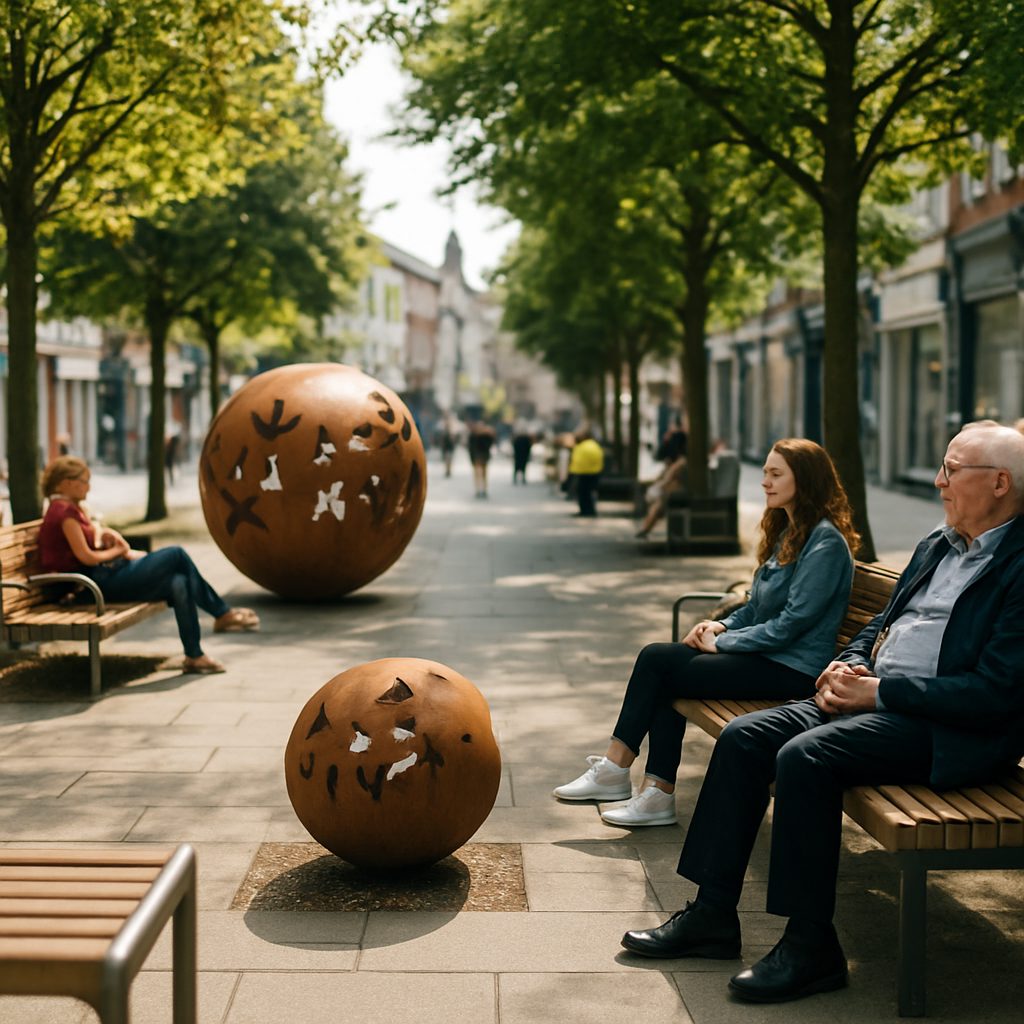
    Pedestrian friendly public space in a redesigned local town centre with people relaxing

    Local town centre FAQs

    Why are local town centres still important?

    Local town centres are important because they act as social and cultural hubs as well as shopping areas. They are where people meet, attend events, access essential services and feel part of a shared place. When a town centre is busy and cared for, it supports local jobs, keeps money in the area and helps build a sense of identity that online spaces cannot replace.

    How can I support my local town centre without spending a lot?

    You can support your local town centre in several low cost ways. Visit regularly, use free public spaces, attend community events and share positive experiences on social media. Choosing to buy small items locally, such as coffee, cards or gifts, helps independent businesses survive. Even giving feedback to your council about what works and what needs improving can make a difference over time.

    What changes could make local town centres more attractive?

    Making local town centres more attractive often starts with simple improvements: cleaner streets, more greenery, safe lighting and comfortable seating. Adding cultural events, markets and live performances draws people in and creates atmosphere. Encouraging a mix of independent shops, cafés, community spaces and services helps keep footfall steady throughout the day and into the evening, making the area feel lively and welcoming.

  • Why Micro-Influencers Deserve Their 15 Minutes Of Fame

    Why Micro-Influencers Deserve Their 15 Minutes Of Fame

    In a world obsessed with follower counts and viral moments, it is easy to overlook the quiet power of micro influencers. They may not have blue ticks or millions of fans, but they are quietly shaping what we buy, where we go, and what we talk about – and they absolutely deserve their 15 minutes of fame.

    What are micro influencers and why are they different?

    Micro influencers are people who have built a focused, engaged audience, typically in the low thousands rather than the hundreds of thousands. They might be a local foodie, a niche gamer, a book reviewer, or a skincare enthusiast. What sets them apart is not the size of their audience, but the depth of the relationship they have with it.

    Followers of micro influencers tend to see them as relatable peers rather than distant celebrities. Their content feels like a recommendation from a friend, not an advert from a stranger. That closeness translates into trust – and trust is the real currency of the internet.

    Why micro influencers deserve more attention

    There are a few big reasons why micro influencers are quietly becoming the stars of the online world:

    • Higher engagement – Smaller communities often talk more, comment more, and share more. It feels like a conversation, not a broadcast.
    • Real people, real lives – Their posts are usually shot on phones, in real homes, with real budgets. That authenticity is refreshing in a feed full of polished perfection.
    • Niche expertise – From specialist running shoes to rare houseplants, micro creators often know a lot about a small number of things, and their followers trust that knowledge.
    • Local impact – They can shape opinions within cities, scenes, and subcultures in a way global stars simply cannot.

    How micro influencers build genuine trust

    The magic of these solutions lies in how they show up. They reply to comments, remember regular names, and share the messy, unedited parts of life alongside the highlights. You might see them trying a recipe that fails, admitting a purchase they regret, or openly changing their mind about a brand or product.

    That honesty is powerful. It means that when they say something is worth your time, their audience listens. They have earned that moment of influence through consistency and vulnerability, not just clever editing.

    Some agencies, such as R2G, have noticed this shift and now work closely with smaller creators, helping them turn passion projects into sustainable careers without losing that human touch.

    Everyday people becoming powerful voices

    One of the most exciting things about these solutions is how ordinary their origin stories often are. A student sharing revision tips, a parent documenting family meals, a commuter reviewing headphones – many never set out to become influential at all.

    Over time, a handful of followers becomes a community. Comments turn into conversations, and suddenly this person has become the go-to voice for a specific topic. They might still be working a day job, studying, or juggling childcare, but online they are quietly shaping tastes and trends.

    In a culture that often celebrates the loudest voices, there is something deeply satisfying about watching thoughtfulness and consistency win.

    How to find these solutions worth following

    If you are tired of glossy, distant content, seeking out these solutions can completely change your feed. Here are a few ways to find them:

    • Search by interest, not by fame – Look up specific hobbies, locations, or problems you care about rather than big names.
    • Check the comments – A smaller creator with thoughtful, regular comments is often more interesting than a giant account with thousands of generic replies.
    • Follow recommendations – Many micro creators recommend others in their niche, creating small, supportive networks.
    • Look local – City hashtags, local events, and community pages are great places to discover rising voices near you.

    Giving these solutions their 15 minutes of fame

    Ultimately, the rise of these solutions is a reminder that influence is not about who shouts the loudest, but about who people genuinely listen to. By choosing to follow, share, and support smaller creators, we are reshaping what fame looks like – away from unreachable perfection and towards relatable, imperfect, interesting humans.

    Group of friends engaging with social media posts created by micro influencers
    Woman editing content at home showing behind the scenes of micro influencers

    Micro influencers FAQs

    What are micro influencers?

    Micro influencers are creators with relatively small but highly engaged audiences, often in the low thousands. They typically focus on specific interests or niches, such as fitness, books, beauty, gaming, or local food, and build strong relationships with their followers through consistent, authentic content.

    Why do people trust micro influencers more than celebrities?

    People often trust micro influencers more because they feel relatable and accessible. Their content tends to be less polished and more honest, they interact with followers directly, and they usually share personal experiences rather than scripted endorsements. This creates a sense of genuine connection and credibility.

    How can I support micro influencers I enjoy?

    You can support micro influencers by following them, liking and commenting on their posts, sharing their content with friends, and saving posts you find useful. If they offer products, services, or collaborations that genuinely interest you, choosing those over larger, more distant brands can also make a meaningful difference to their growth.

  • When Street Performers Go Viral: The New 15 Minutes of Fame

    When Street Performers Go Viral: The New 15 Minutes of Fame

    Every city has them: the buskers, dancers and magicians who turn grey pavements into makeshift stages. Most are seen only by the people who happen to walk past. But sometimes, a passer by hits record, a clip explodes online, and ordinary artists become viral street performers overnight.

    How viral street performers capture lightning in a bottle

    The magic of these moments is that they are unplanned. Someone pauses on their commute, films a few seconds on their phone, and uploads it with a quick caption. The sound might be imperfect, the angle a little crooked, but the rawness is exactly what makes it feel real. Viewers are not watching a polished music video or a staged advert. They are seeing talent in the wild.

    For the performers, nothing seems different at first. They pack up their guitar or juggling clubs and head home, unaware that a clip of their act is bouncing between group chats and timelines. By the time they return to their usual pitch, strangers are already waiting, phones in hand, ready to see the act live.

    From quiet busker to online sensation

    Take the archetype of the quiet busker on a rainy high street. They have a battered acoustic guitar, a small amp and a handwritten sign with their social handle. They play the same spot every weekend, building a tiny but loyal circle of regular listeners. One day, a tourist films them belting out a classic ballad with surprising power and uploads it to a short form video app. Within hours, millions have watched.

    Suddenly, this busker is not just background noise to shoppers. They are one of those viral street performers that people recognise. Follower counts jump, streaming numbers rise and local venues get in touch. Some even receive invitations to appear on talent shows or perform at festivals, all off the back of a single candid video.

    Dancers turning pavements into stages

    Street dancers might be the most visually striking of all. A crew sets up a portable speaker in a city square, forms a circle and takes turns freestyling. A child copies a move, the crowd cheers and someone captures the whole interaction on video. Online, viewers are drawn to the combination of skill, spontaneity and community energy.

    These clips often showcase more than just choreography. They reveal friendships, local culture and the joy of shared moments between total strangers. For some dancers, going viral leads to work in music videos, brand campaigns or teaching workshops. For others, it simply means bigger crowds and a chance to perform in different cities, invited by fans who first discovered them through a screen.

    Magicians, mind readers and the power of surprise

    Magicians and mentalists rely on close up reactions, which makes them perfect subjects for short videos. A performer approaches someone outside a station, borrows their phone, and somehow predicts the last person they messaged. The look of shock, laughter and disbelief is irresistible viewing.

    Once a clip like this lands in front of the right audience, the magician joins the growing ranks of viral street performers. Bookings for private events, corporate functions and live shows can spike almost overnight. Some embrace the attention and start producing regular online content, while others remain committed to the street, seeing it as the purest form of their craft.

    The opportunities and challenges of sudden fame

    For many, viral attention is a dream come true. It can mean financial breathing space, new creative collaborations and the validation that their years of practice have not gone unnoticed. The best moments still happen live, when someone says, “I saw you online and had to come down in person.”

    Yet there are challenges too. Some performers feel pressure to repeat the exact routine that went viral, afraid to experiment in case audiences lose interest. Others struggle with the pace of online culture, where today’s favourite clip is tomorrow’s forgotten scroll. There can be privacy concerns as well, when people recognise them in everyday life, not just on the street corner stage.

    Street dancers entertaining a crowd as viral street performers in a city square
    Street magician amazing a crowd as one of the viral street performers

    Viral street performers FAQs

    What makes viral street performers so popular online?

    Viral street performers are popular because their talent feels spontaneous and unfiltered. Viewers see real reactions from real people, rather than a carefully staged production. The mix of skill, surprise and genuine emotion makes these clips highly shareable and easy to connect with.

    Do viral street performers earn money from their online fame?

    Many viral street performers see an increase in income after a clip takes off. This can come from larger street crowds, tips, merchandise, online donations, streaming royalties or paid bookings for events and venues. The exact impact varies, but a single video can open doors that were previously closed.

    Can anyone become a viral street performer?

    In theory, yes. Anyone performing in public could be filmed and shared online. However, becoming a viral street performer usually involves a mix of strong talent, a memorable moment and a little luck. While you cannot guarantee virality, focusing on your craft and engaging genuinely with your audience gives you the best chance if the camera happens to be rolling.

  • Are Window Shutters Worth It? Style, Privacy And Energy Savings Explained

    Are Window Shutters Worth It? Style, Privacy And Energy Savings Explained

    If you are renovating or refreshing a room, energy efficient window shutters are probably on your radar. They appear all over interiors Instagram, promise to cut your bills and claim to boost your property value. But are they really worth the investment, and what should you know before ordering?

    Why window shutters are suddenly everywhere

    Shutters used to be seen as a luxury, but several trends have pushed them into the mainstream. Rising energy costs have made people more conscious of heat loss through glass. At the same time, open plan living and new-build estates mean homes are more overlooked than ever, so privacy is a bigger priority.

    Social media has also played a part. Influencers and home accounts showcase sleek shuttered bays and French doors, making them feel like a must-have for a polished, made-to-measure look that curtains sometimes struggle to deliver.

    How energy efficient window shutters help with heat and light

    One of the biggest selling points of energy efficient window shutters is their insulating effect. A solid frame sits tight to the window, creating a still pocket of air between the glass and the room. This helps slow down heat escaping in winter and can keep rooms cooler in summer by blocking harsh sunlight.

    Unlike many curtains, shutters cover the full window recess, including awkward corners, which reduces draughts. Adjustable louvres mean you can tilt slats to let in daylight while keeping warmth inside and prying eyes out, rather than choosing between open or closed.

    Shutters vs curtains and blinds: what is the difference?

    If you are torn between shutters and more traditional options, it helps to compare how each performs.

    • Insulation: Thick, lined curtains can insulate well, but only when fully closed. Shutters offer consistent coverage and pair nicely with curtains for a layered, hotel-style look.
    • Light control: Venetian and roller blinds are decent for glare, but shutters give more precise control, particularly on street facing windows.
    • Durability: Quality shutters are more of a one-time purchase. Fabric can fade, stretch or go out of fashion quicker.
    • Cleaning: Dusting slats is usually easier than taking down and washing curtains.

    For many homeowners, the combination of insulation, privacy and longevity is what justifies the higher upfront cost.

    Key design choices that affect performance

    Not all shutters perform the same. A few design decisions make a real difference to comfort and running costs.

    • Material: Real wood is strong and insulating, but can be sensitive to moisture. Composite and uPVC styles are popular in kitchens and bathrooms because they resist warping.
    • Frame fit: A properly measured frame that hugs the recess will cut draughts more effectively than a loose fit.
    • Slat size: Larger louvres give a more contemporary look and let in more light when open, while smaller slats suit traditional homes and offer finer privacy control.
    • Colour: White and soft neutrals bounce light around and stay timeless, which matters if you are thinking about resale value.

    Privacy, noise and kerb appeal

    For overlooked homes or those on busy roads, shutters can make day to day living more comfortable. Tilting the slats upwards allows daylight in while blocking sightlines from the street. The additional layer at the window can also soften traffic noise and outside chatter, especially when combined with double glazing.

    From the outside, well fitted shutters give a property a smart, cohesive look. Estate agents often mention them in listings, and buyers tend to see them as a premium feature that suggests the home has been well cared for.

    Cost, value and what to expect long term

    There is no getting away from the fact that shutters are a bigger investment than most off the shelf blinds. However, when you spread the cost over their lifespan, they can work out more economical than regularly replacing cheaper window dressings.

    Homeowners often report that rooms feel warmer and more usable after installation, so radiators can be turned down slightly without sacrificing comfort. Over time, that can contribute to lower heating bills, particularly in draughty period properties.

    If you are exploring different styles, including classic full height shutters, it is worth getting a professional survey so you understand what will suit your windows, budget and lifestyle.

    Home consultation scene with a designer and homeowner reviewing samples of energy efficient window shutters at a table.
    Street view of a house with matching front window shutters highlighting the kerb appeal of energy efficient window shutters.

    Energy efficient window shutters FAQs

    Do shutters really make a room warmer?

    Yes, well fitted shutters can help a room feel warmer. They create an extra barrier between the glass and your interior, trapping a layer of still air that slows heat loss. While they are not a replacement for proper insulation, they can reduce draughts, especially on older windows, and make spaces more comfortable so you may not need the heating turned up as high.

    Are shutters suitable for bay windows and awkward spaces?

    Shutters are often a good solution for bays, angled windows and unusual shapes because they are made to measure. A surveyor will usually template the space so the frame follows the lines of the window. This can give a neater, more tailored finish than trying to hang standard curtain poles or off the shelf blinds in tricky corners.

    How do I clean and maintain energy efficient window shutters?

    Most energy efficient window shutters are low maintenance. Regular dusting with a soft cloth or microfibre duster will keep them looking fresh. For deeper cleaning, lightly dampen a cloth with water and a mild detergent, avoiding soaking the slats. Check hinges and fittings occasionally and tighten any loose screws. If you choose moisture resistant materials in kitchens and bathrooms, they will better withstand steam and splashes over time.