

There is something deeply, gloriously human about the Guinness World Records. Not the professional athletes or the corporate-funded spectacles, but the ordinary person who woke up one morning and thought: “I wonder if anyone has ever balanced the most spoons on their face.” The answer, inevitably, is yes. Someone has. And they have a certificate to prove it. The unusual world records 2026 has already produced are a testament to the magnificent stubbornness of everyday people who simply refuse to be forgettable.
This is their moment. And, potentially, yours too.
Why Ordinary People Are Chasing Guinness World Records More Than Ever
The numbers behind record-breaking have shifted considerably. Guinness World Records receives over 50,000 applications every year globally, and a growing proportion come from individuals rather than brands. The appeal is obvious: it is one of the few forms of fame that comes with an official document, a measurable achievement, and absolutely no need for a manager, a talent agent, or a ring light.
In the UK, record attempts have become a staple of charity fundraisers, school events, and local community gatherings. Towns from Truro to Inverness have staged group efforts to claim records for everything from the longest human chain to the most people simultaneously wearing novelty hats. There is a particular British fondness for the absurd, and the records database reflects it.
What has changed in recent years is accessibility. The Guinness World Records website now allows individuals to apply online, track their submission, and even find categories where no record currently exists. That last part is the golden ticket for anyone who wants a realistic shot.
Some of the Most Bizarre Achievements From Everyday Record Breakers
Let us get into the good stuff. The category of unusual world records 2026 has surfaced some truly remarkable human endeavours that deserve far more attention than they have received.
A retired postman from Staffordshire spent eighteen months perfecting his technique for the fastest time to sort a standard rack of 100 letters one-handed. He now holds the record. He celebrated with a cup of tea and a biscuit, apparently unbothered by the lack of fanfare.
A secondary school dinner lady in Fife broke the record for the most different sandwich fillings correctly identified by smell alone while blindfolded. Thirty-seven fillings. She described it as “just practice, really.”
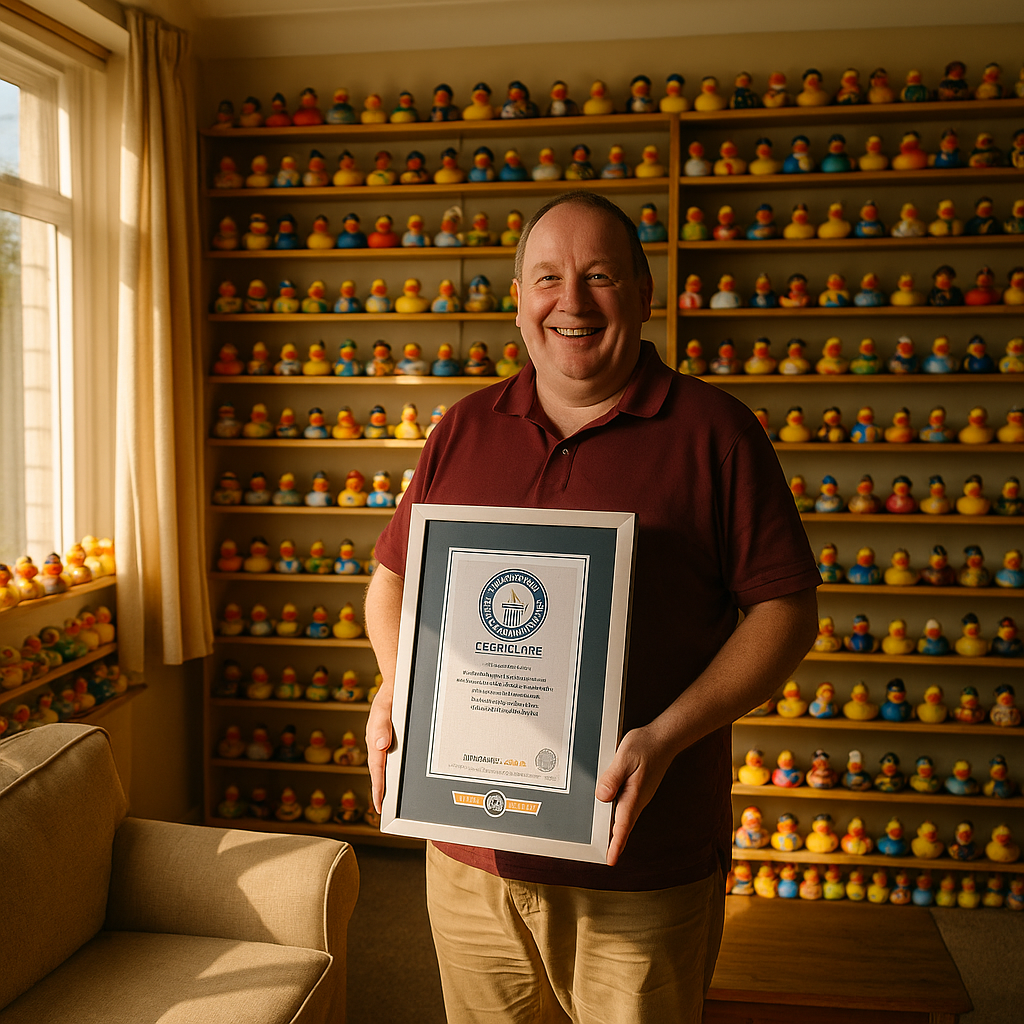
A retired nurse from Bristol holds the current record for the largest collection of novelty rubber ducks, having amassed over 9,000 unique specimens across four decades. Each one is catalogued. She has a spreadsheet.

These are not people with sponsors or PR teams. They are people with passions, patience, and a particular willingness to be slightly ridiculous in the pursuit of something they can call their own. That, really, is the spirit of the whole enterprise.
The Categories You Would Never Think to Look For
Most people assume world records are reserved for the fastest runners, the tallest buildings, and the largest pizzas. In reality, the database contains tens of thousands of categories, many of which are genuinely open or have records that feel very beatable.
Some categories that have seen fresh attempts this year include: the most backwards steps taken in one hour whilst knitting, the longest continuous session of competitive sock folding, the fastest time to identify 50 bird calls by sound alone, and the most consecutive successful catches of a grape in the mouth whilst riding a bicycle. Each of these has a verified holder. Each holder is, as far as anyone can tell, a completely normal person.
The important thing to understand is that unusual world records 2026 style are often set in hyper-specific niches precisely because the competition is thin. You do not beat Usain Bolt. You find a corridor nobody else has walked down yet.
How to Find and Pursue a Record That Could Actually Be Yours
This is where it gets practical. If you want your own Guinness certificate, here is how to approach it sensibly rather than just throwing yourself at something and hoping for the best.
Start With What You Already Do Unusually Well
The most successful individual record attempts tend to grow from an existing obsession or skill. If you have been speed-solving crosswords since 1994, check whether that category exists. If you can name every station on the London Underground in under 45 seconds, there may well be a benchmark waiting to be broken. Start with your own quirks and work outward.
Search the Guinness Database Properly
The official website allows you to search by keyword and browse existing records. If a category exists, you can see the current record and decide whether it is within reach. If no category exists, you can apply to create one. Guinness does accept new categories, though they must meet criteria around measurability, verifiability, and the potential for others to attempt the same feat.
Understand the Application Process Before You Attempt Anything
You must apply before you attempt a record, not after. Guinness requires pre-approval of the attempt so they can set the rules and adjudication requirements. Turning up with a video and hoping for the best will not work. Applications typically take around twelve weeks to process, so factor that into your planning. There is no fee to apply through the standard route, though a premium fast-track service is available for a charge.
Get Your Evidence in Order
Most individual record attempts require: independent witnesses (at least two people unrelated to you), a video recording of the full attempt, photographic evidence, and sometimes a letter from a professional verifying a claim. If your record involves counting, you will need two independent counters who agree on the number. Keep everything. Guinness is thorough, and rightfully so.
Think Local for Support
Your local council, school, or community centre may well be interested in supporting an attempt. Record breaking makes for excellent local press coverage, which means it is genuinely in their interest to help. Several UK councils have actively supported residents in achieving records as part of community engagement programmes. It is worth a conversation.
Is a World Record Worth Pursuing Just for the Fame?
Here is the honest answer: probably not, if fame is the only reason. The viral moment might come, or it might not. What most record holders report is something different: a deep satisfaction in having done a specific thing better than anyone else on the planet, however niche that thing might be. There is real dignity in that. The unusual world records 2026 has produced are not doorways to television careers. They are, more often, just a brilliant story to tell at a dinner party for the rest of your life.
And sometimes that is more than enough. The postman sorting letters one-handed knows something about himself that most people never discover: exactly what he is exceptional at. That is not nothing. That might, in fact, be everything.
If you want to explore what kinds of records are already out there and get a feel for the range of possibilities, the BBC’s coverage of Guinness records offers a good starting point. Then go find your corridor. Walk down it. See what happens.
Frequently Asked Questions
How do I apply for a Guinness World Record in the UK?
You apply directly through the Guinness World Records website before attempting anything. The standard application is free and typically takes around twelve weeks to process. You will need to provide details of what you plan to attempt and Guinness will set the official rules if your application is approved.
Can I create a brand new world record category that does not exist yet?
Yes, Guinness does accept applications for new categories. The activity must be measurable, breakable by others, and not trivially easy. If you have a genuinely unique skill or activity, it is worth submitting a proposal through their standard application process.
How much does it cost to attempt a Guinness World Record?
The standard application route is free, though adjudication at a public event can involve fees for sending an official adjudicator. A paid fast-track service is available if you need a quicker decision. Most individual attempts self-adjudicate using witnesses and video evidence.
What counts as proof when attempting a world record on your own?
Guinness typically requires at least two independent witnesses (not family members), a continuous video recording of the entire attempt, photographic evidence, and accurate counters where applicable. Some records also require a letter from a relevant professional such as a doctor or teacher.
Are unusual or niche world records easier to break than well-known ones?
Generally, yes. Highly specific or niche categories often have records set years ago or have very few competitors, making them far more achievable for an ordinary person. Finding a category that aligns with a personal skill or obsession is usually a smarter strategy than attempting something with thousands of challengers.