
Somewhere in a London Underground lost property office, there’s a box containing a single roller skate, three umbrellas, and a taxidermied squirrel. Each one arrived without explanation. Each one left a question hanging in the air: what happened? That question is exactly what’s driving a quietly compelling creative movement, one built around people turning lost and found objects into storytelling projects that are part detective work, part art, and entirely human.
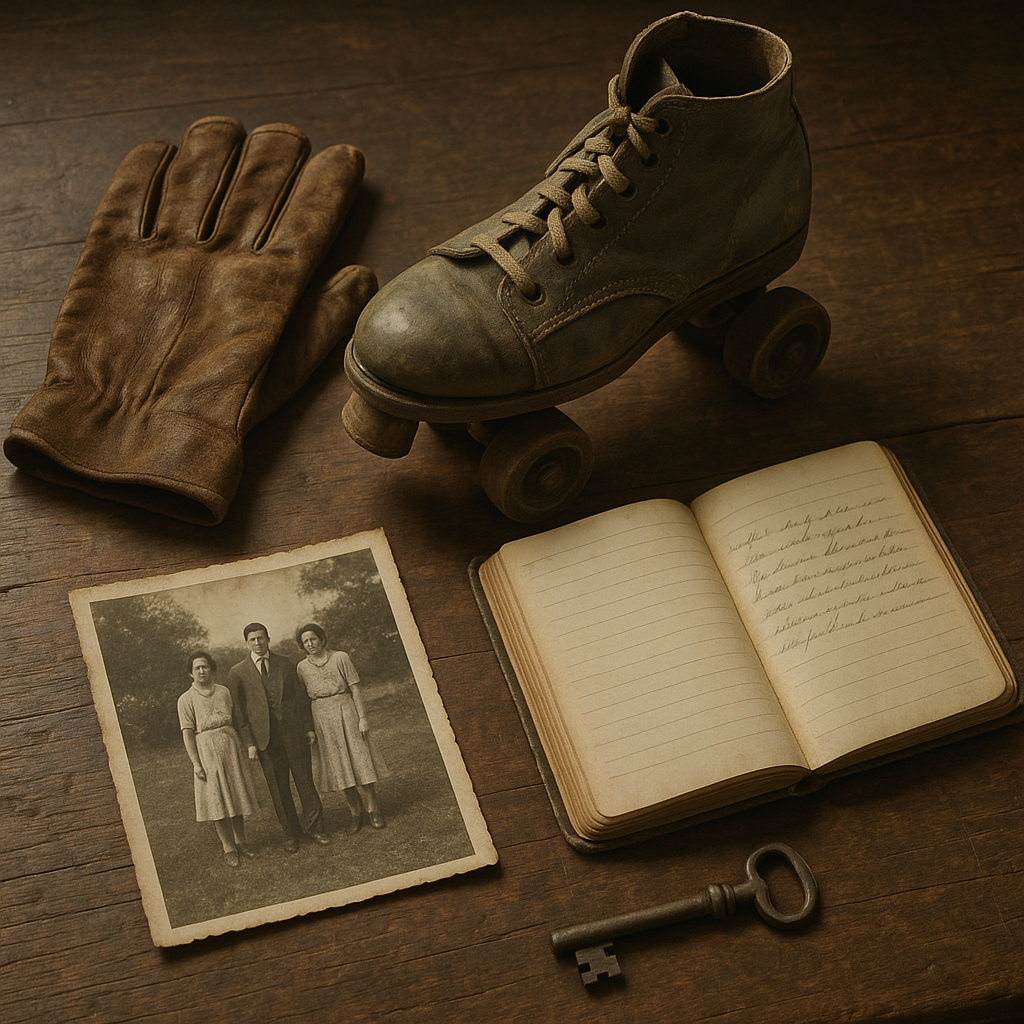
The objects themselves are rarely valuable in a financial sense. A worn leather glove. A diary with half the pages filled in. A photograph of strangers at a party. But the gap between what we know and what we can only imagine is where stories live, and creative individuals across the UK and beyond have been mining that gap with remarkable results.
Where the Idea Comes From
Lost objects have always had a certain pull. There’s something universally unsettling about a thing that has become separated from its owner, stripped of its context, its meaning suddenly up for grabs. Writers, photographers, and artists have long recognised this. But in recent years, the internet has supercharged the phenomenon. Social media platforms have made it possible to share found objects with thousands of people instantly, crowdsource their histories, or simply invite speculation.
One of the most cited examples is the work of Jason Bitner, who collected photographs discarded at flea markets and compiled them into a book. He didn’t know who the people in the images were. That was rather the point. Similarly, in the UK, projects have emerged around objects left on buses, found on beaches after storms, or handed in to police stations and never claimed. Each object becomes a prompt. A beginning, not an ending.
The Methods People Use
There’s no single formula here, which is part of what makes this movement so interesting. Some creators work purely through photography, documenting found objects exactly as they were discovered, letting the visual do the heavy lifting. Others write short fiction or prose poems, using the object as a starting point for invented narratives. Still others have built entire social media accounts dedicated to a single type of lost item, gathering followers who contribute theories and stories of their own.
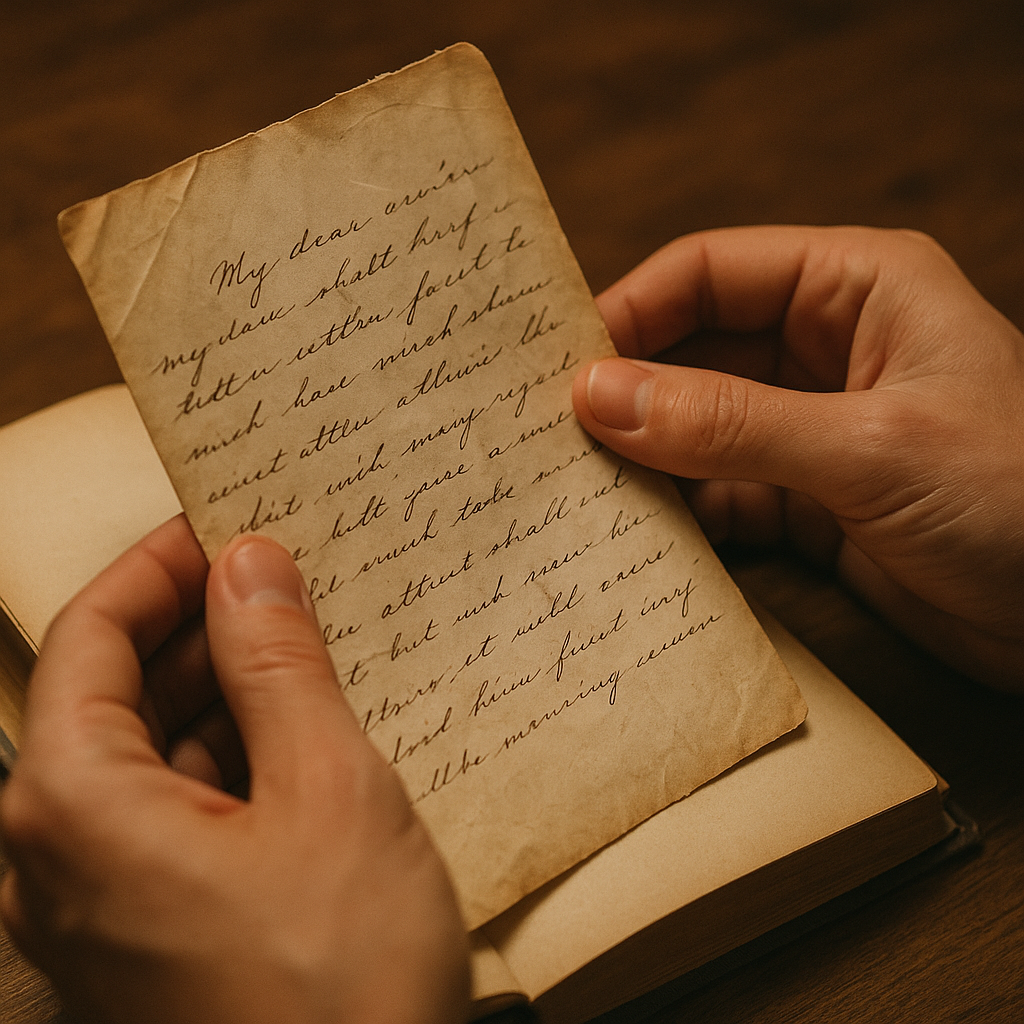
One particularly imaginative approach involves returning found objects with a story attached. The object is left somewhere new, with a note explaining (or inventing) its history. The next person who finds it is invited to add their own chapter before leaving it again. It’s part literary experiment, part social sculpture, and it relies entirely on strangers trusting strangers with something small but meaningful.
Podcasts have entered the space too. Several shows have built loyal audiences around interviewing people who’ve found unusual items, or tracing the journey an object made before it was lost. There’s a meditative quality to these episodes. Listening to someone describe a handwritten letter found tucked inside a second-hand book feels oddly intimate, even when the people involved are entirely unknown to you.
Why It Resonates So Deeply
It would be easy to dismiss this as nostalgia dressed up as creativity, but that doesn’t quite capture it. The reason people turning lost and found objects into storytelling projects attracts such genuine engagement is that it touches something fundamental about how humans make sense of the world. We are, at our core, narrative creatures. We need things to mean something. A lost object without an owner is a story without an ending, and the urge to complete it is almost instinctive.
There’s also an element of empathy involved. To imagine who owned something, why they had it, how they lost it, is to step briefly into another life. It’s a quiet exercise in compassion that doesn’t require you to know anything about the real person. In that way, it’s rather freeing. The object becomes a vehicle for imaginative generosity.
Community plays a role too. Many of these projects actively invite participation. When someone posts a photograph of a found object online and asks for stories, they often receive dozens of responses, some plausible, some wildly inventive, some genuinely moving. That collective act of meaning-making is its own kind of art.
Remarkable Projects Worth Knowing About
The Museum of Innocence in Istanbul, created by Nobel Prize-winning novelist Orhan Pamuk, is one of the more extraordinary examples of this instinct taken to its logical extreme. Pamuk collected thousands of everyday objects from the era depicted in his novel and built a physical museum around them. Visitors encounter ticket stubs, cigarette ends, and hairpins, each one weighted with imagined significance.
Closer to home, several UK artists have mounted exhibitions built entirely around lost property. Beach-combing communities along the Dorset and Cornwall coasts regularly share finds online, building networks of amateur historians and storytellers who piece together possible origins for everything from old bottles to ship’s lanterns.
There are also digital archives dedicated entirely to found photographs, diaries, and letters, carefully digitised and shared so that the objects’ stories, real or imagined, can reach a wider audience. These archives recognise that lost things deserve a kind of care, a curatorial attention that treats the ordinary as worthy of preservation.
What This Says About Us
The growth of people turning lost and found objects into storytelling projects reflects something broader about how we relate to material culture. In an era of disposability, the impulse to retrieve meaning from abandoned things feels almost countercultural. It insists that objects carry weight, that they accumulate significance through use and ownership, and that even when they’re separated from their original context, that significance doesn’t simply evaporate.
It’s also, when you think about it, a deeply democratic form of creativity. You don’t need expensive equipment or formal training. You just need to pay attention, to look at a lost thing and ask: whose was this, and what happened next? The answer you invent might surprise you.
Frequently Asked Questions
How do people find objects to use in storytelling projects?
Found objects turn up in all sorts of places: charity shops, flea markets, beaches, public transport lost property offices, and even skips. Many creators actively seek them out, while others simply pay closer attention to what crosses their path in everyday life.
Do you need artistic skills to start a lost and found storytelling project?
Not at all. Many successful projects are built entirely around written descriptions, social media posts, or simple photographs taken on a phone. The storytelling instinct matters far more than technical ability.
Are there any legal issues with keeping found objects?
In the UK, if you find property that appears to have an owner, you are generally expected to hand it in to the police or a relevant authority. Objects that are clearly abandoned or that go unclaimed after a set period may legally become yours, but it’s worth checking local guidelines.
Can lost and found storytelling projects be done collaboratively?
Absolutely, and many of the most engaging projects are built on collaboration. Online communities regularly gather around a single found object to collectively invent or research its history, making the process as interesting as the result.
What are some good platforms for sharing lost and found storytelling projects?
Instagram, TikTok, and Reddit all have active communities around found objects and curious artefacts. Dedicated blogs and podcasts have also built loyal followings in this niche, and some creators have turned their projects into physical exhibitions or published books.