

There is a man in Huddersfield who has won the same Tuesday night pub quiz forty-three times. His team is called The Quizzteama Aguilera. His wife made the banner. And last autumn, a thirty-second clip of him answering a science round without looking up from his pint got 2.1 million views on TikTok. He had no idea it had been filmed.
That, in a way, is exactly how the pub quiz UK viral online following phenomenon works. Nobody planned it. Britain just has this deep, almost genetic attachment to competitive trivia, and at some point the phone cameras caught up with the culture. Now quizmasters who’ve been writing questions in their kitchen for fifteen years are finding themselves with Substack subscribers in Aberdeen and podcast listeners in New Zealand.
Why pub quiz culture travels so well online
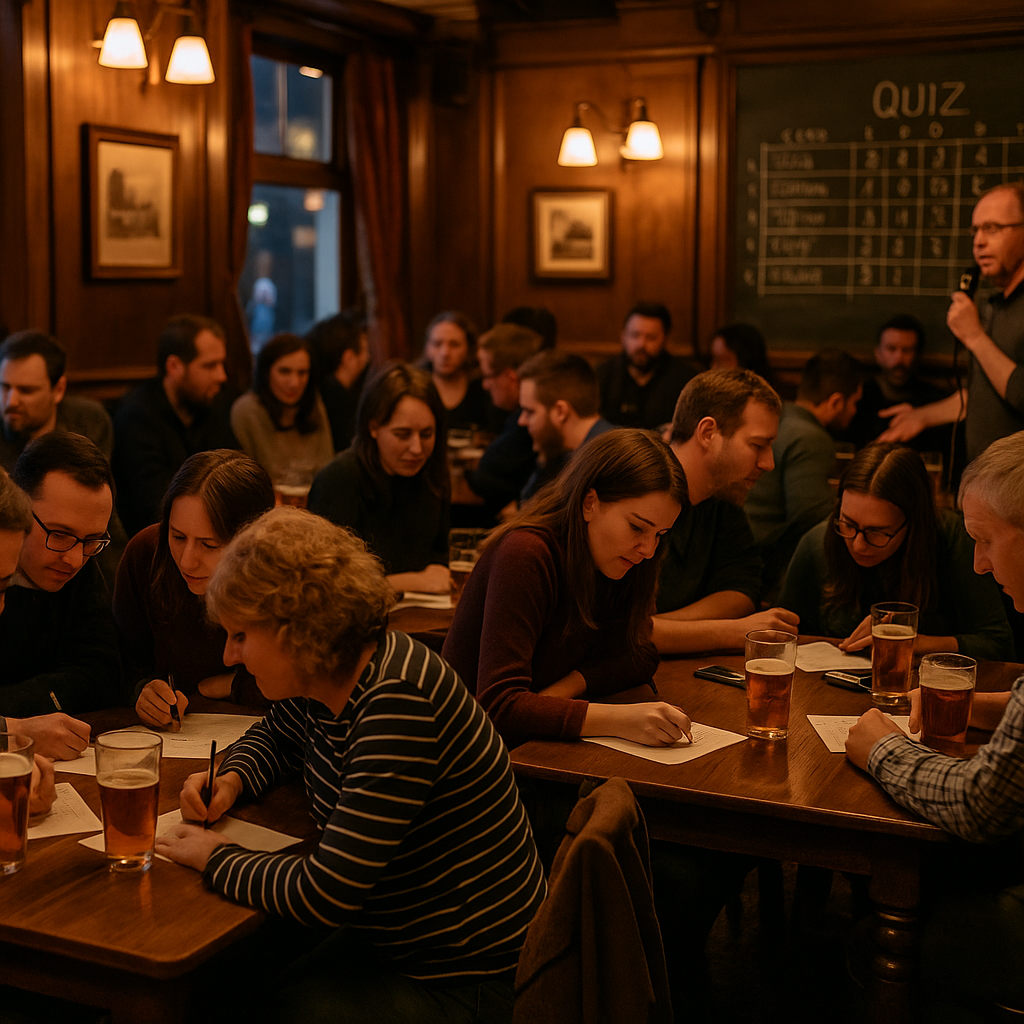
The pub quiz is one of the few genuinely British institutions that hasn’t been watered down, rebranded, or sold to a streaming platform. It still happens on a Tuesday in a room that smells faintly of old carpet. A person with a microphone reads questions from a laminated sheet. Teams argue in whispers. Someone accuses someone else of looking at their phone. The scoring is done by hand on a till receipt.
That specificity is exactly what makes it magnetic on screen. In an era of heavily produced content, watching a retired geography teacher absolutely destroy a music round in the back room of a Wetherspoons carries a kind of charm that money can’t manufacture. The same unpolished, accidental quality that drives British seaside viral moments is at work here. Real people, real stakes (well, a £40 bar tab), real emotion.
Quizmasters have it particularly good on YouTube. A well-edited full quiz night, questions intact, with crowd reactions and the occasional heated dispute over whether the capital of Australia is Sydney or Canberra, performs consistently. Channels like QuizQuizQuiz and Pub Quiz HQ have been building catalogues for years. More recently, individual hosts have started building personal brands around their quiz-writing style, their patter, their particular obsession with obscure 1980s television.
The rise of the quiz content creator
Tom Whitworth runs a quiz night in Sheffield every Thursday. He’s been doing it since 2019. In 2024 he started posting his question rounds to Substack as paid downloads, charging £3 a set. By early 2026 he had over 4,000 subscribers. He now earns more from the Substack than he does from the hosting fee.
He’s not unusual. A small but growing cohort of quizmasters across the UK have worked out that the demand for good quiz content is enormous and largely unmet. School fundraisers, corporate team-building events, charity nights, office socials, leaving dos, hen parties, birthday gatherings in hired function rooms. Everyone needs questions. Not everyone wants to spend an afternoon writing them. Tom does it better than most and charges a fair price. That’s a business.
The podcast side is slightly different. Shows like No Such Thing as a Fish, produced by the team behind QI, proved years ago that trivia-adjacent conversation has a dedicated British audience. But what’s newer is the hyper-local version: a podcast recorded in a pub, for that pub’s regulars, that then gets downloaded by strangers who just enjoy the energy. Some of these shows are getting tens of thousands of listeners per episode without a single press release being sent.
Serial-winning teams and the personalities they produce
It’s not just the quizmasters. The teams themselves are becoming characters. A team in Bristol called The Magna Cartas has won their local quiz night forty-one times in three years. Their captain, a former secondary school history teacher named Janet, live-tweets the entire evening from a burner account with 27,000 followers. Her commentary on the other teams, the suspicious hesitation before the host reads answer number four, the quality of the cheese straws, is genuinely funny. She’s never appeared on television. She doesn’t want to. But she has a following, and that following is real.
This is the micro-celebrity moment playing out in the most British context imaginable. As we’ve written before, having 10,000 genuinely engaged followers can be more commercially meaningful than a fleeting mass-audience spike, and the trivia community is a tight one. People who care about pub quizzes really care. They’ll buy the merchandise, subscribe to the newsletter, and show up to a live event.
The BBC has covered the broader quiz culture phenomenon in its features on British social rituals, noting how pub quizzes boomed during lockdown via Zoom and never quite retreated to their pre-2020 audience size. According to data from the BBC’s arts and entertainment coverage, audience participation formats have seen sustained growth since 2021, with quiz formats specifically outperforming other interactive event categories.
What makes a quiz night content-ready
Not every quiz night produces content worth watching. The ones that travel online tend to have a few things in common. A quizmaster with genuine personality, questions that have a point of view rather than just a correct answer, and an audience that’s emotionally invested. When those three things align, you don’t need a production team. You need a phone mount and a decent microphone.
The content that performs best tends to be either the spectacular moment (a team getting a truly obscure question right, a quizmaster delivering a brilliantly terrible pun) or the long-form experience (a full quiz night with commentary, almost like watching a documentary). Both require the same ingredient: something actually happening that’s worth watching. This is what separates the pub quiz from a lot of content that tries too hard to be content.
There’s a parallel here with parish council meetings going viral, a phenomenon that runs on identical fuel. Ordinary people, genuine stakes however small they seem, no script, real human behaviour. The internet finds it irresistible because it’s the opposite of everything else on the internet.
Where it goes from here
A few quizmasters are already experimenting with live-streamed events on Twitch and YouTube Live, where the online audience participates alongside the in-pub crowd. The logistics are messy but the engagement is remarkable. Others are running hybrid events where remote teams join in for a fee. One host in Manchester ran a fully hybrid quiz in February 2026 with 14 teams in the pub and 37 remote teams logged in from across Europe. The prize pot was £200. The Zoom chat alone was worth watching.
Britain’s obsession with trivia isn’t going anywhere. The pub quiz has survived lockdown, the cost-of-living squeeze on leisure spending, and the rise of home streaming. If anything it’s stronger. The people who were doing it quietly for years are finally getting their moment, not because they chased fame, but because they were good at something specific, and the internet eventually noticed.
That’s the whole point, really. Fifteen minutes isn’t always handed to you. Sometimes you earn it one question at a time, every Tuesday, in a room above a pub in Huddersfield.
Frequently Asked Questions
How do pub quiz teams build an online following?
Most start by accident, with someone filming a memorable moment that gets shared on TikTok or Twitter. The ones that sustain a following tend to post regularly, whether that’s quiz rounds on Substack, full quiz nights on YouTube, or live commentary on social media during events.
Can you make money from running a pub quiz in the UK?
Yes, increasingly so. Beyond the standard hosting fee from a venue (typically £50 to £150 per night), many quizmasters now sell question packs via Substack or Patreon, run paid hybrid events, and earn sponsorship from local businesses. A well-run quiz brand can generate several thousand pounds a month.
What makes a pub quiz video go viral on TikTok?
Usually a single compressed moment: an extraordinarily obscure question answered instantly, a quizmaster’s perfectly timed joke, or a team’s visible outrage at a disputed answer. Short clips with a clear emotional peak and no setup required tend to perform best.
Leave a Reply