
There is something quietly radical about a painting that appears overnight on a grey concrete wall, stops commuters in their tracks, and then gets photographed a thousand times before the council even notices it is there. Street art has always carried that electric, unauthorised energy. What has changed is what happens next. Where once a piece might fade, get buffed, or simply be admired by a neighbourhood, today it can land on the feeds of millions within hours. Street art fame no longer belongs exclusively to Banksy. It belongs to anyone with a tin of paint, a wall, and a phone camera.
From Back Alleys to Global Feeds
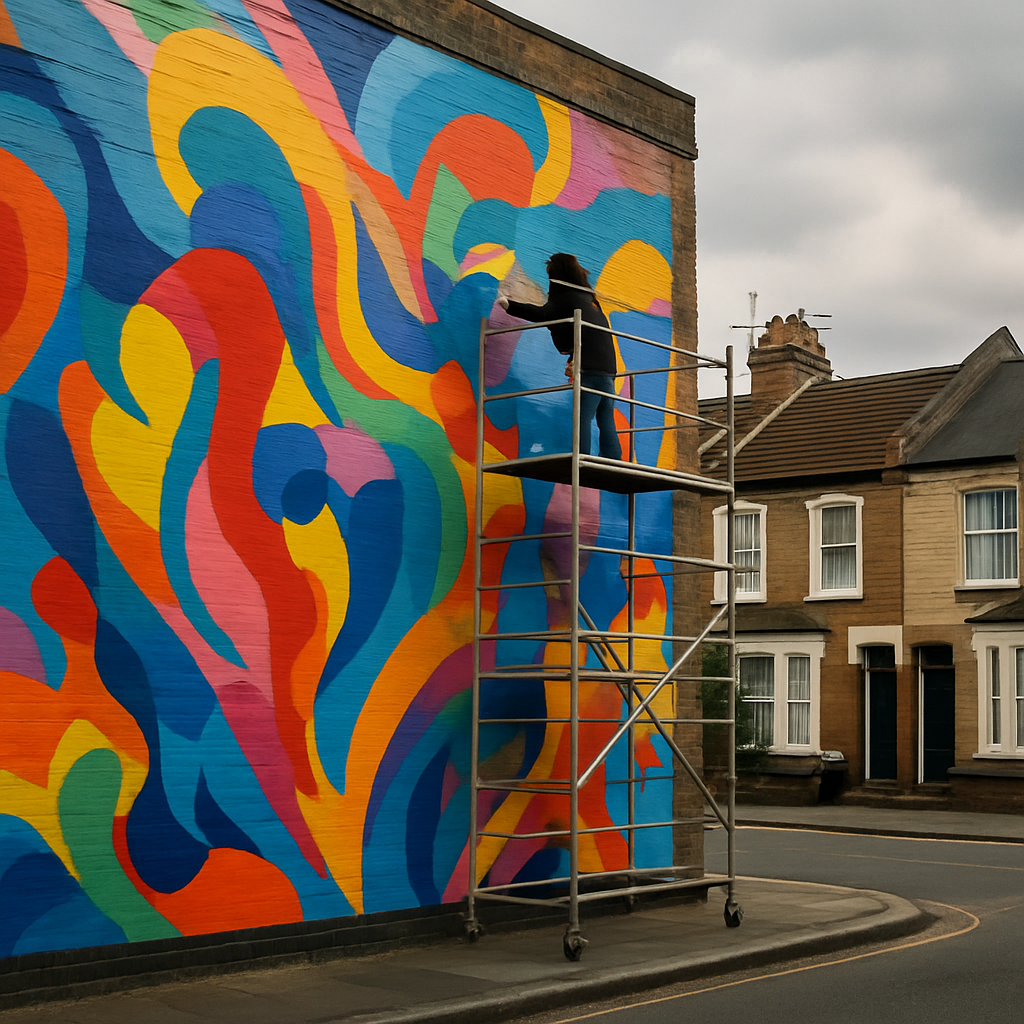
The digital shift has been genuinely transformative for street artists. Instagram, in particular, became a gallery that never closes, charges no entry fee, and has an audience of over a billion. Artists who once relied on word of mouth in their local borough now build followings that span continents. A mural painted on a side street in Bristol or a railway arch in Hackney can be shared, saved, and remixed by people in Tokyo or Toronto before the paint has fully dried.
Bristol remains one of the most important cities in this story. It produced Banksy, obviously, but the city has continued to generate serious talent. Artists like Cheba, Jody Thomas, and Sepr have built substantial international profiles rooted in work that began on Bristol walls. The Upfest festival, Europe’s largest street art and graffiti festival, has helped dozens of artists gain visibility that translates directly into commissions, exhibitions, and press features worldwide. The BBC has described it as a genuine cultural institution, and the artists who participate consistently report that their online reach spikes dramatically around the event.
Why Social Media Has Rewritten the Rules of Street Art Fame
Traditional art institutions moved slowly. Gallery representation, critical reviews in broadsheets, invitations to prestigious shows: these were the routes to recognition, and they were largely controlled by a relatively small number of gatekeepers. Street art, by its nature, rejected those structures. But rejection of the establishment is one thing; actually reaching an audience beyond your postcode is another.
Social platforms dissolved that problem almost entirely. Consider the London-based muralist Zabou, who has painted walls across the UK and Europe and built a following that regularly earns her international project invitations. Or Nomad Clan, the collaborative duo whose large-scale murals have appeared from Newcastle to New York and whose Instagram presence turns each new piece into a global event. The work goes up on a physical wall; the documentation of that work travels everywhere.
What makes this particularly interesting is the format. Street art is inherently photogenic. Bold colour, human scale, unexpected context: these are exactly the visual properties that perform well on image-led platforms. Artists have learnt to treat the documentation as part of the work itself. Time-lapse videos of murals being created routinely pull hundreds of thousands of views. Behind-the-scenes reels showing the physical process, the scaffolding, the hand movements, the sheer labour involved, give audiences a connection to the artist that a finished gallery painting rarely achieves.
The Platforms Amplifying the Work
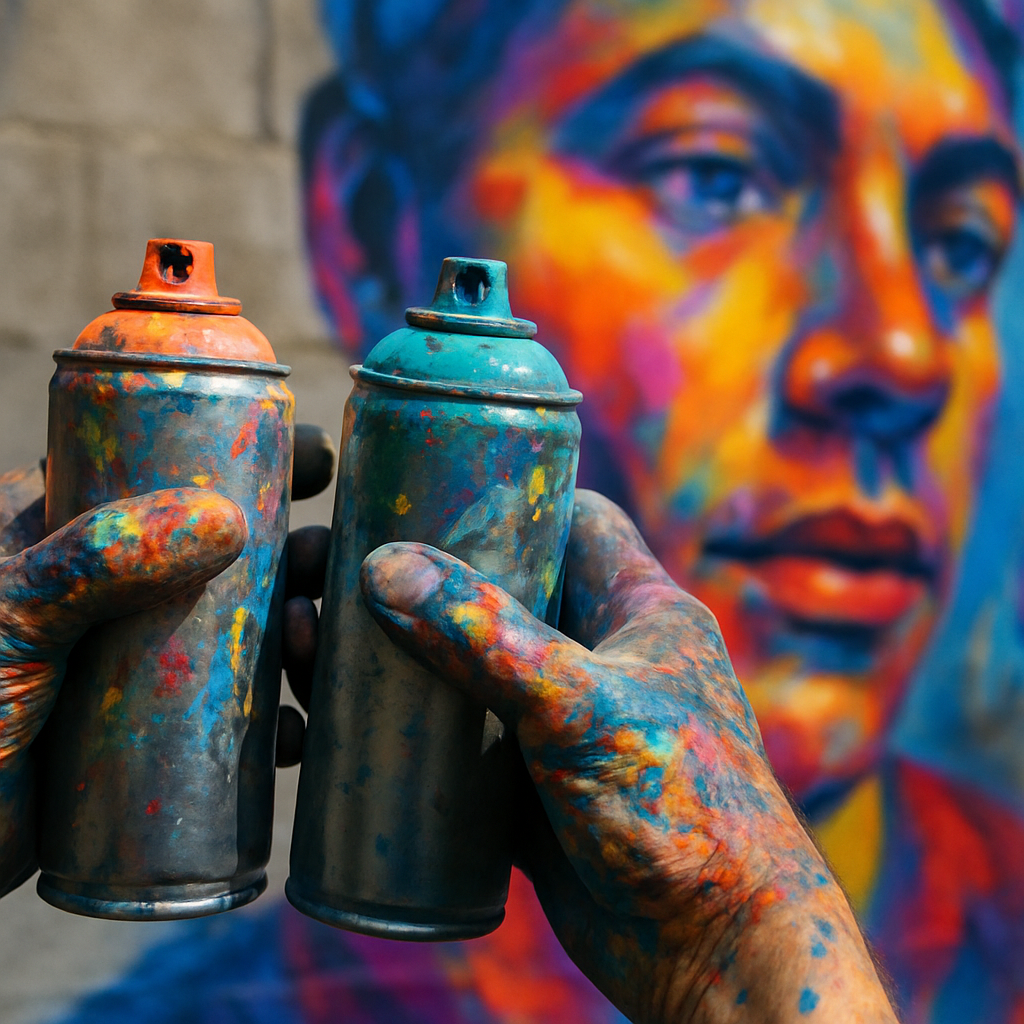
Instagram remains the dominant platform for visual artists, but TikTok has opened a genuinely different conversation. Short-form process videos on TikTok regularly reach audiences with no prior interest in art at all. That matters because street art fame has always depended on surprising people who weren’t looking for it. TikTok’s algorithm replicates that accidental discovery in a digital environment.
YouTube has also played a quiet but significant role. Longer documentary-style videos about individual artists, their motivations, their process, and the communities their work inhabits have given names like Remi Rough and Irony a depth of profile that Instagram alone couldn’t deliver. When a viewer watches a twenty-minute film about an artist, they leave with a genuine emotional investment. That investment is what turns a follower into an advocate, someone who tells their friends, shares the work, and attends the exhibition.
Beyond the big platforms, specialist sites and communities matter too. Widewalls, Street Art News, and The Hundreds have built dedicated readerships who actively seek out new names. A feature on any of these translates into tangible credibility. Artists who manage their digital presence strategically, maintaining a coherent visual identity across platforms, keeping a well-organised profile that links to their portfolio and contact details, with something like a link in bio tool to consolidate everything in one place, consistently report more inbound commission enquiries than those who treat social media as an afterthought.
Rising Names Worth Watching Right Now
The UK scene in particular is producing artists whose street art fame is growing at a pace that would have taken a decade to achieve twenty years ago. Gnasher, a Bristol-based artist whose monochrome portraiture has appeared across the West Country, has seen his work shared by major arts accounts with combined followings in the millions. His murals of local figures, fishermen, elderly residents, young people from the estates near where he grew up, carry an emotional honesty that resonates far beyond their geographic context.
In Manchester, the Northern Quarter has long been a canvas for emerging talent. Artists like Akse P19, known for hyper-realistic portrait murals of figures from Marcus Rashford to NHS workers, have demonstrated that muralism can carry genuine social weight whilst also earning serious international attention. Akse’s work has been covered by the BBC, shared by the subjects of the paintings themselves, and commissioned by brands and institutions who found him entirely through social media.
London continues to produce names at pace. Hammo, whose intricate animal-based murals appear in Shoreditch and beyond, has built a following that earns him work across Europe. Fanakapan, whose trompe-l’oeil balloon sculptures painted onto flat walls have become something of a signature style, has turned a genuinely distinctive visual idea into worldwide recognition. His pieces travel particularly well on social media precisely because they look impossible; people share them because they want others to question what they are seeing.
The Gap Between Viral and Sustainable
It would be dishonest to pretend that going viral automatically translates into a stable career. Many artists experience a spike of attention around a single piece that does not convert into lasting opportunity. The artists who sustain street art fame beyond a single moment tend to share certain habits: they document consistently, they engage with their audiences rather than just broadcasting at them, and they treat their digital presence as a professional tool rather than a vanity project.
There is also the question of authenticity. Street art audiences are sharply attuned to the difference between work that emerges from a genuine creative impulse and work that has been engineered for virality. Murals that feel calculated rarely generate the kind of organic sharing that builds a real reputation. The artists who last are, almost without exception, the ones whose digital presence feels like an honest extension of work they would be making regardless of whether anyone was watching.
Why This Moment Is Unlike Any Other
Street art has existed in some form for as long as humans have had walls and the urge to mark them. What is genuinely new is the capacity for that mark to be seen by everyone, immediately, without the permission of any institution. For artists who have always operated outside formal structures, that is not just convenient. It is a kind of justice. The work speaks for itself, the audience decides what matters, and the gatekeepers have lost much of their power.
The artists finding real street art fame in 2026 are not waiting to be discovered. They are doing the work, documenting it carefully, building communities around it, and letting the walls do the talking on every screen in the world.
Frequently Asked Questions
How do street artists build an international following from local work?
Most artists start by documenting their work consistently on Instagram and TikTok, using high-quality photography and process videos that show the scale and detail of their murals. Over time, shares by larger accounts, festival appearances, and press features compound into a genuine international presence that attracts commissions and collaboration offers.
Which UK cities have the strongest street art scenes in 2026?
Bristol, London, and Manchester consistently produce the highest-profile UK street artists. Bristol’s Upfest festival, London’s Shoreditch and Brixton neighbourhoods, and Manchester’s Northern Quarter all function as visible launchpads where artists gain both local recognition and the kind of photogenic backdrops that perform well on social media.
Can street artists make a living purely from their work?
A growing number do, particularly those who combine public mural commissions with brand collaborations, print sales, and exhibition work. Social media visibility is now the primary driver of inbound commercial enquiries, meaning artists who maintain an active, professional digital presence are significantly more likely to turn their craft into a full-time income.
Do street artists need permission to paint murals legally in the UK?
In most cases, yes. Painting on a wall without the owner’s consent is classed as criminal damage under the Criminal Damage Act 1971, regardless of artistic merit. Many artists work legally by securing permission from building owners or local councils, and there are dedicated legal graffiti walls in cities including London, Bristol, and Leeds.
What makes a piece of street art go viral on social media?
Scale, unexpected context, and visual surprise are the most reliable factors. Work that challenges perception, such as trompe-l’oeil pieces that appear three-dimensional, or hyper-realistic portraits that seem photographic, tends to generate strong sharing behaviour because viewers want others to see something they find hard to believe. Timelapse creation videos also consistently attract large audiences.
Leave a Reply