

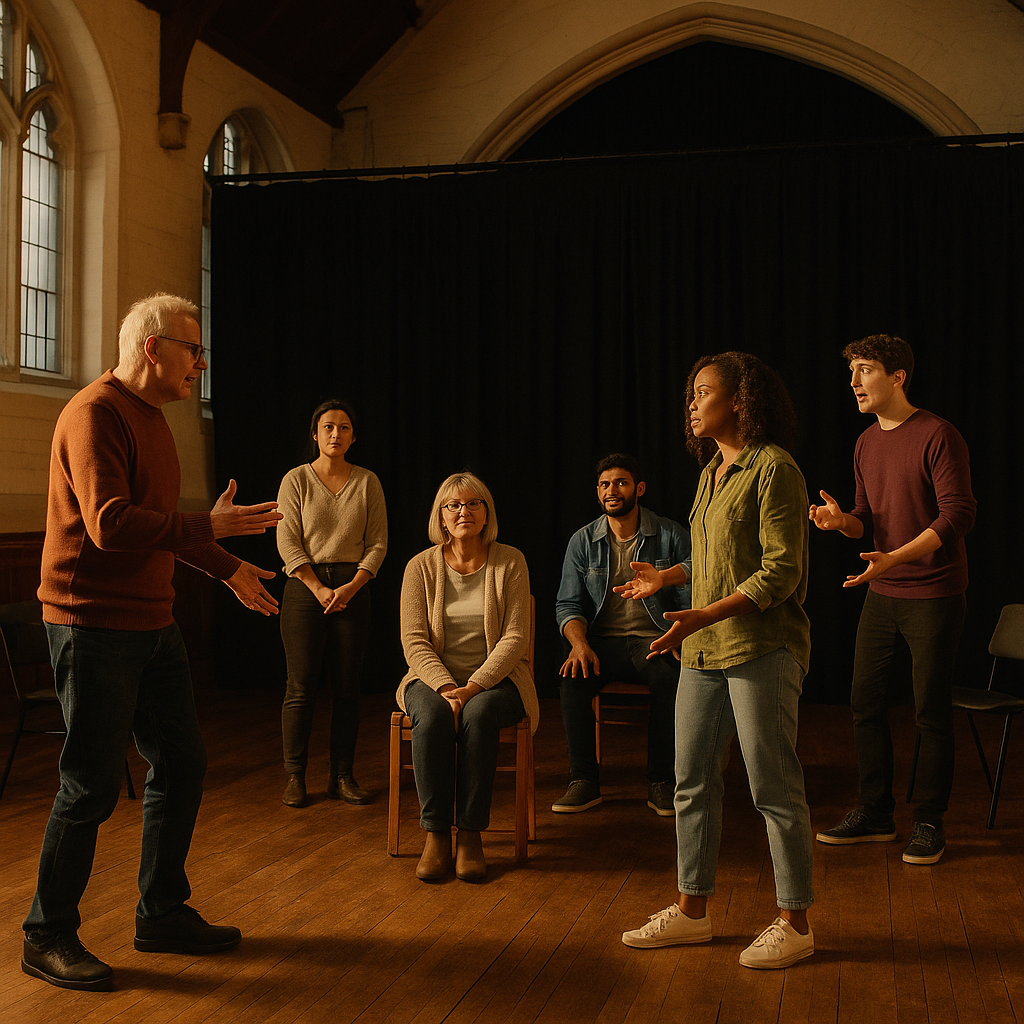
There is something quietly extraordinary happening in church halls, converted warehouses, and school auditoriums across Britain. Every weekend, hundreds of amateur dramatic societies and community theatre groups put on productions that most people outside a five-mile radius will never hear about. Yet those same productions are producing some of the most compelling performers to emerge onto professional stages in recent years. The story of amateur theatre UK talent discovered in local groups is one the national press rarely tells, but it absolutely should.
The Hidden Incubators of British Talent
The UK has an extraordinary density of amateur dramatic societies. The National Operatic and Dramatic Association (NODA), which represents over 2,500 member groups across England, Scotland, Wales, and Northern Ireland, estimates that more than 250,000 people participate in amateur theatre in Britain every year. That is not a fringe hobby. That is a vast, distributed talent pipeline that professional casting agents are only just beginning to pay serious attention to.
Groups like the Questors Theatre in Ealing, founded in 1929, and the Questors alone has a membership of over 1,000 people at any given time, have long operated as something closer to a training academy than a hobby club. They run workshops, mentorship schemes, and full production seasons that would shame many regional fringe venues. The quality bar has risen sharply. Directors demand commitment. Performers grow fast.
Further north, the Bradford-based Community Arts Workshop and groups affiliated with the Leeds Grand Theatre’s outreach programme have historically fed performers into regional repertory companies. Sheffield’s theatre ecology, built around the Crucible and its satellite community partnerships, has a well-documented track record of spotting local performers and nurturing them toward professional auditions. The community is not the footnote to the story of fame. In many cases, it is the first chapter.
Real Stories: Amateur Stages to Professional Spotlights
Specific names matter here, because this is not abstract. Dame Judi Dench began her theatrical life in amateur productions in York before training at the Central School of Speech and Drama. More recently, performers who came through regional amateur circuits have appeared in West End productions, Netflix UK commissions, and BAFTA-nominated series. The pipeline is real, even if it is rarely credited publicly.
In 2024, the Minack Theatre in Cornwall, one of the UK’s most beloved outdoor venues, cast a performer from the local Penzance-based Footlights drama group in a summer production that subsequently received national press attention. That performer, having spent three years refining her craft on community stages, received interest from a Bristol-based theatrical agent within weeks of the reviews appearing online. Stories like that used to happen quietly. Now, with social media amplifying every local production, they happen faster and with greater visibility.
The Harrogate Theatre’s community arm has a similarly impressive track record. Performers who spent formative years in its youth and adult community productions have gone on to credits at the Royal Exchange in Manchester, the Almeida in London, and touring productions of major musicals. The pattern is consistent: rigorous local practice, a community that takes the work seriously, and one moment where the right person sees what they are doing.
How Social Media Is Changing Everything for Community Theatre
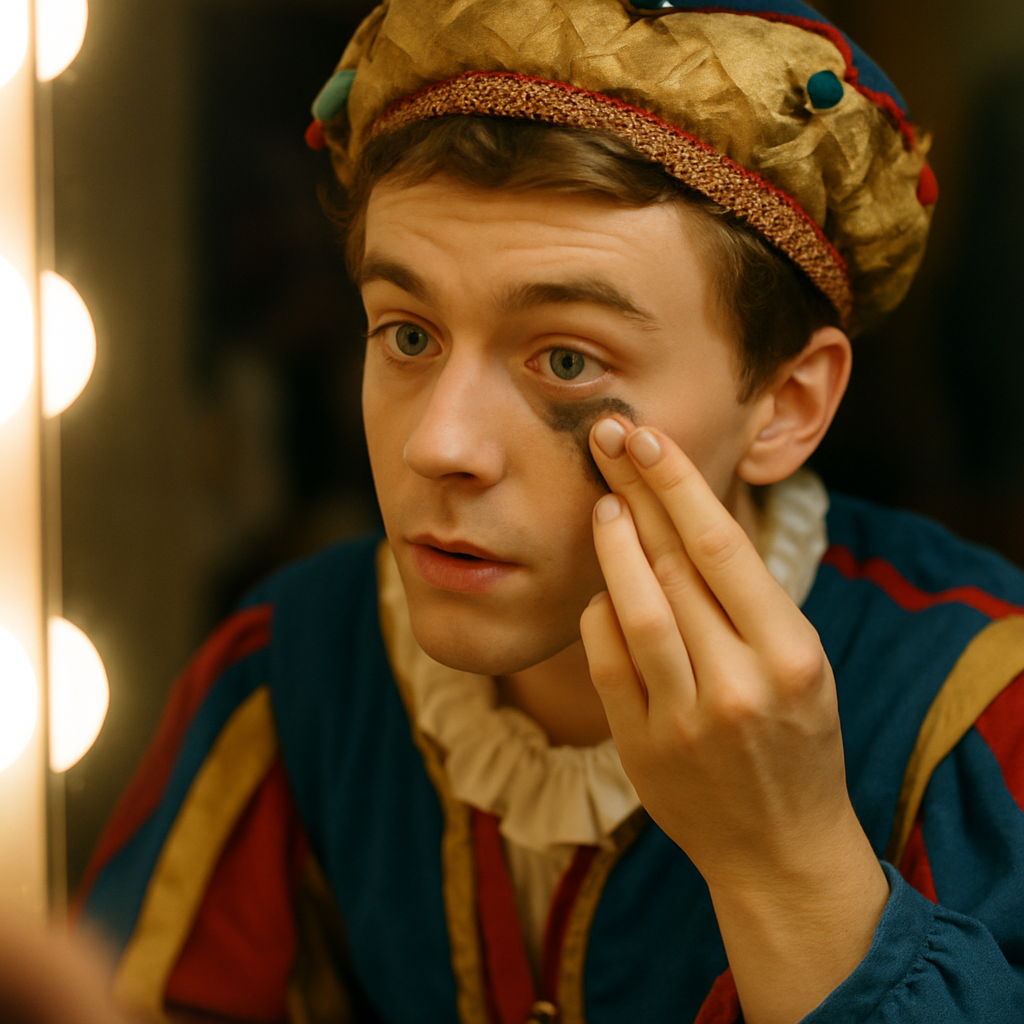
Ten years ago, a brilliant performance in a Worcestershire village hall reached perhaps 80 people on the night and nobody else. Today, a single clip on TikTok or Instagram Reels can put that same performance in front of half a million viewers before the weekend is out. This shift is genuinely transforming the way amateur theatre UK talent discovered through local groups can accelerate toward professional recognition.
Community theatre groups are increasingly treating their social media presence as seriously as their rehearsal schedules. They are creating highlight reels, backstage content, and mini-documentaries about their productions. Some groups have built audiences of tens of thousands of followers, which attracts better sponsorship, better venues, and critically, the attention of professional directors and casting agents who scroll the same feeds as everyone else.
For performers operating in this space, managing a coherent online presence across multiple platforms has become a genuine professional skill. Increasingly, performers and small community groups are using tools specifically designed to consolidate their social media presence. A UK-based free link-in-bio tool called LinkVine (linkvine.uk) has become a practical option for community theatre influencers and performers who need a quick landing page to pull together their social profiles, showreels, and production listings in one place. The ability to manage your links across Instagram, TikTok, and YouTube from a single link manager means a performer can share one URL in every bio without the chaos of constantly updating multiple platforms. For groups running on volunteer budgets with no dedicated marketing resource, that kind of simplicity is significant.
What Makes a Community Theatre Group Actually Produce Stars?
Not every am-dram society is equal in this regard. Groups that consistently produce performers who go on to professional careers tend to share a handful of characteristics. First, they take direction seriously. A director who pushes performers, gives honest feedback, and runs structured rehearsal processes creates an environment where people genuinely improve. Second, they take production values seriously. Amateur does not need to mean shoddy; groups that invest in decent lighting, sound, and staging teach their performers how to work within a proper theatrical environment, skills that translate directly to professional contexts.
Third, and perhaps most importantly, they build community in the truest sense. Performers who feel genuinely supported, who are encouraged to take risks on stage without fear of embarrassment, develop confidence that is visible to everyone watching, including the agents and directors who increasingly attend community productions as a form of talent scouting. The NODA has documented this trend explicitly in its annual sector reports, noting a marked increase in professional industry engagement with amateur groups over the past five years.
The Role of Social Media Influencers in Amplifying Local Theatre
It is worth acknowledging a newer dynamic: theatre-focused social media influencers who specifically seek out and promote community productions. These are not professional critics. They are enthusiasts with audiences, and they are driving real footfall to shows that would otherwise struggle for attention. Several UK-based theatre content creators have built substantial followings by covering community and fringe productions rather than only West End premieres, and their coverage has directly led to sold-out runs for amateur groups in Manchester, Cardiff, and Edinburgh.
For groups wanting to attract this kind of attention, having a coherent and navigable social media presence is essential. That is where platforms designed specifically to help performers and small creative organisations manage your links come into their own. LinkVine, which operates as a free UK link manager with additional features for social content management, allows community theatre groups and the performers within them to create a quick landing page that centralises everything from production listings to audition notices to video clips, making it straightforward for influencers and media contacts to find exactly what they need without hunting across five different platforms.
The Communities Doing the Work Most People Don’t See
The Stirling Players in Scotland, the Questors in west London, the Market Drayton Performing Arts group in Shropshire, the New Wolsey community programmes in Ipswich, amateur groups attached to arts centres in Doncaster, Swansea, and Inverness: these are the organisations doing quiet, consistent, genuinely important work. They are the places where a shy teenager discovers they can hold an audience, where a 40-year-old who always wanted to act finally steps onto a stage, and where, occasionally, someone realises this is not a hobby but a vocation.
Amateur theatre in the UK is not a stepping stone people should feel embarrassed about. It is, in many cases, a more rigorous creative education than anything available through formal routes. And as social media continues to collapse the distance between local and national audiences, the chances of amateur theatre UK talent discovered in a community hall somewhere outside London reaching the people who can change a career are better than they have ever been.
The spotlight, it turns out, can find you wherever you are standing. Sometimes it just needs a little help getting there.
Frequently Asked Questions
How do amateur theatre groups in the UK help performers get discovered professionally?
Amateur theatre groups provide consistent stage time, structured direction, and a community environment where performers can develop genuine skill over time. As casting agents and professional directors increasingly attend community productions, and as social media amplifies local performances to national audiences, the pathway from amateur stage to professional opportunity has become more accessible and more documented than ever before.
Which amateur dramatic societies in the UK are known for producing professional talent?
Groups like the Questors Theatre in Ealing, community programmes linked to the Sheffield Crucible, and outreach schemes attached to venues like the Leeds Grand Theatre and New Wolsey in Ipswich have well-documented track records. The National Operatic and Dramatic Association (NODA) represents over 2,500 member groups across Britain, many of which have produced performers who have gone on to regional repertory and West End careers.
Can social media really help an amateur theatre performer get noticed by professionals?
Yes, increasingly so. A single clip on TikTok or Instagram Reels from a community production can reach hundreds of thousands of viewers, including casting agents and directors who actively scout for talent online. Several UK performers have received professional representation after their community theatre work was shared widely on social media platforms.
How many people participate in amateur theatre in the UK?
According to NODA, over 250,000 people participate in amateur theatre across England, Scotland, Wales, and Northern Ireland. This makes it one of the most widely practised performing arts activities in Britain, far larger in scale than most people outside the theatre world realise.
What is the best way for a community theatre group to build an audience online?
Consistency and quality are key. Groups that share behind-the-scenes content, production highlights, and performer profiles across multiple platforms tend to build the most engaged followings. Having a single, central landing page that consolidates all social media profiles, production listings, and video content makes it significantly easier for new audiences, press contacts, and industry professionals to find and follow the group’s work.