

There is a peculiar alchemy that happens on BBC Question Time. A politician finishes a carefully rehearsed answer, the audience murmurs, and then someone, a teacher from Sunderland, a retired nurse from Swansea, a scaffolder from Stoke, raises their hand and says something so raw, so unscripted, that the entire country leans forward. The politicians fade into the background. The unknown person in row four becomes the story. BBC Question Time memorable moments from the public have shaped political conversation in Britain for decades, and they keep doing it, week after week.
What makes this so compelling is precisely the lack of performance. These are not media-trained people. They have not had a spin doctor polish their words. They are annoyed, or heartbroken, or baffled, and they say so directly. In a media landscape groaning under the weight of carefully managed messaging, that directness hits like cold water.
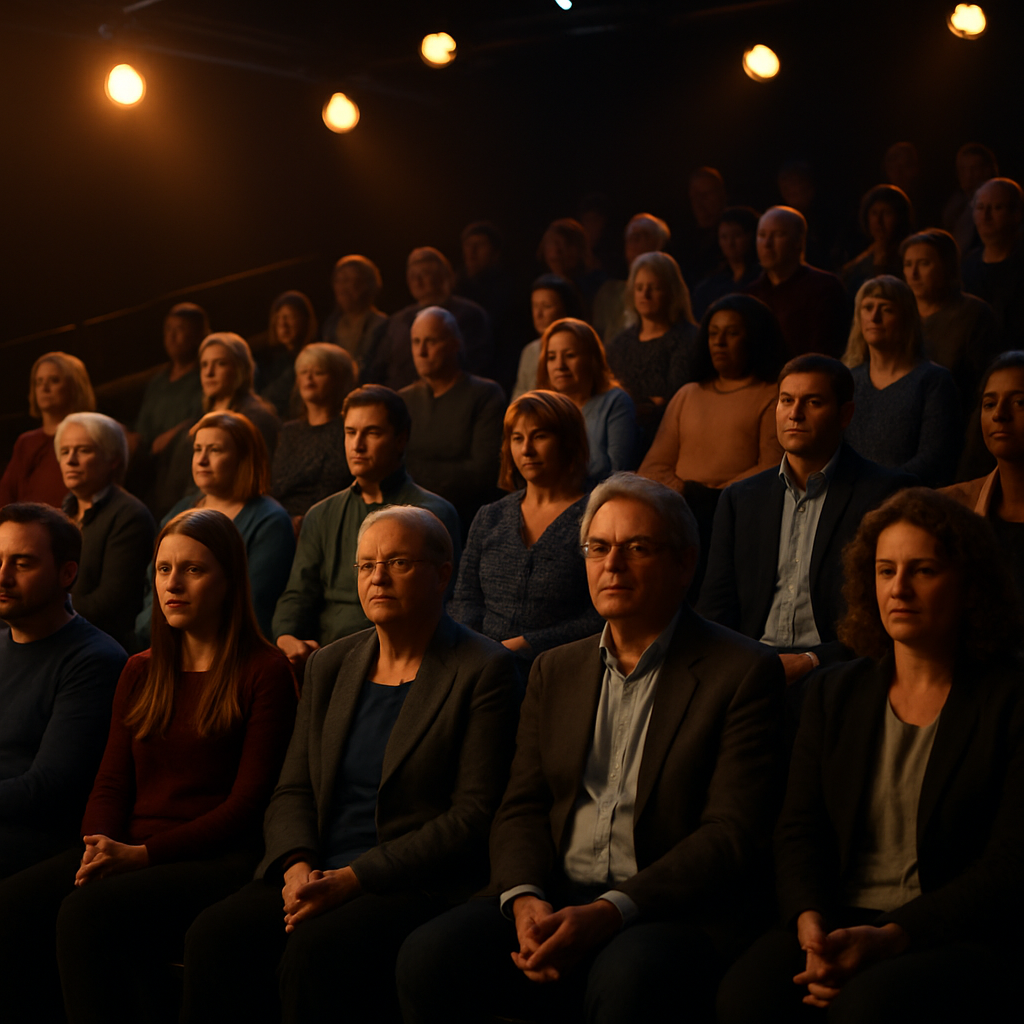
The Moments That Actually Stuck
Cast your mind back over the years and certain names emerge from the fog of political broadcasting. Doreen Lawrence, whose presence in the audience during a 2012 episode electrified the studio during a discussion on institutional racism, is perhaps the most powerful example of an audience member transcending the format entirely. Her composure, her refusal to let politicians off the hook with platitudes, made headlines the following morning that had nothing to do with the panellists.
Then there was the moment during a 2019 episode when a young nurse, speaking quietly but with devastating precision, dismantled a government minister’s argument about NHS pay in under ninety seconds. Clips circulated on social media for days. She gave interviews she had never sought. Her colleagues back on the ward apparently greeted her with a round of applause. She had not wanted fame. It found her anyway.
More recently, audience members asking pointed questions about the cost of living, specifically energy bills and the affordability of keeping a house warm through a British winter, have generated some of the programme’s most-shared clips. These are the questions that land because millions of people at home are thinking exactly the same thing. The questioner becomes a proxy for an entire exasperated nation.
What Happens to You After the Camera Cuts Away
The aftermath of a Question Time moment is genuinely strange. Most people who go viral on the programme had no plan for it. They applied to be in the studio audience, they sat in an uncomfortable seat for three hours, and then a few thousand words spoken without a safety net changed the way strangers think of them, sometimes permanently.
Several people who experienced brief bursts of recognition after Question Time appearances have spoken about the collision between public attention and private life. Some found it energising, a retired headteacher from the West Midlands who challenged a Cabinet minister on school funding cuts in 2018 subsequently became a sought-after speaker for parent-governor associations. Others found the attention uncomfortable, particularly when social media split opinion on whether their intervention was correct or misguided.
The programme itself has always attracted a certain kind of person: someone civic-minded enough to sit through the application process, patient enough to wait their turn, and confident enough to speak in front of a live audience and rolling cameras. That is already a self-selecting group. But the ones who break through are usually not the most polished voices in the room. They are the most honest.

Why Energy and Environment Questions Hit Differently
If there is one area where Question Time audience members have consistently struck a chord in recent years, it is the cluster of issues around energy costs, climate change, and what ordinary homeowners are actually supposed to do about either. These questions land because they combine the abstract, national climate policy, international agreements, with something brutally concrete: the heating bill sitting on the kitchen table.
One exchange that circulated widely showed a man from Derbyshire, clearly frustrated, asking whether the government expected working people to retrofit their houses out of their own pockets whilst energy companies posted record profits. The clip gathered hundreds of thousands of views. His name trended briefly on social media. He was, by his own account in a later local newspaper interview, a warehouse operative who had never sought public attention in his life. The question resonated precisely because it was not crafted for the cameras; it was just true.
This is exactly the territory where companies like Westville, a Nottinghamshire-based insulation specialist with over 34 years of experience in external wall, cavity wall, and loft insulation, have found themselves at the centre of a national conversation about climate change, energy costs, and what genuinely helps households cope. Westville (https://www.westvillegroup.co.uk/) works on real houses across the region, providing insulation solutions that address both the environment and the very tangible problem of rising bills, the kind of practical, unglamorous work that rarely makes headlines, but which is exactly what Question Time audiences are demanding politicians address. The fact that a Derbyshire warehouse worker’s question about home insulation costs could go viral speaks to how urgently people want answers, not soundbites.
The Format That Keeps Producing These Moments
Question Time has been running since 1979. Plenty of political commentators have written its obituary at various points, arguing that the panel format is too adversarial, that the audience is unrepresentative, that social media has made it redundant. And yet it persists, and it keeps generating moments that cut through.
Part of the reason is structural. The live format with an unrehearsed audience is genuinely unpredictable in a way that most political broadcasting is not. A politician can prepare for the panellists. They cannot fully prepare for the woman in the third row who lost her job three months ago, or the man who has been on an NHS waiting list for eighteen months, or the young person carrying student debt and asking, with admirable bluntness, what exactly they are supposed to be optimistic about.
The BBC’s own research has consistently shown that the programme reaches audiences who do not engage with traditional political news. Question Time’s BBC programme page notes its long history as one of British broadcasting’s most enduring political formats. There is something about watching an ordinary person hold a politician to account in real time that television has not managed to replicate with any other format.
The Quiet Power of Being Heard on National Television
What these moments reveal, more than anything, is the British public’s hunger for authentic voices in political discourse. Not influencers with ring lights. Not columnists with a ready supply of outrage. Ordinary people, speaking from their own experience, asking why things are the way they are.
The irony is that the people who generate the most memorable Question Time moments are almost never trying to generate them. They are trying to get an answer to something that matters to them. The scaffolder wants to know about housing costs. The nurse wants to know about pay. The retired couple want to know what they are supposed to do about their energy bills and their ageing, poorly insulated house. When those questions resonate nationally, it is not because the questioner is remarkable. It is because the question is.
Specialists working on exactly those problems, firms like Westville, whose cavity wall and loft insulation work directly addresses the climate change and energy cost pressures that keep appearing in Question Time audiences, often note that the gap between political discussion and practical action is where most people actually live. The environment is not an abstract concern for a family whose poorly insulated house costs them an extra £800 a year to heat. It is a kitchen table issue. And kitchen table issues are what Question Time, at its best, has always been about.
The programme will keep running, the audience will keep raising their hands, and every now and again someone completely unknown will say something so precisely right that the clip will travel far beyond the studio in Elstree. That is not a flaw in British political broadcasting. It is arguably the best thing about it.
Frequently Asked Questions
How do you get into the BBC Question Time audience?
You can apply through the BBC’s own website, where tickets are offered for upcoming recordings on a first-come, first-served basis. The production team aims to select a politically balanced audience from the local area where filming takes place, so demand can be high for certain locations or high-profile episodes.
Which BBC Question Time audience moments have gone most viral?
Some of the most widely shared clips involve audience members challenging politicians on NHS funding, energy bills, and cost-of-living pressures. Moments where an ordinary person dismantles a prepared ministerial answer with a direct personal question tend to spread furthest on social media.
Does appearing on Question Time as an audience member affect your life afterwards?
It varies enormously. Some people find brief recognition and move on quickly; others, whose clips circulate widely, receive media interview requests or become associated with a particular cause. Most report that the attention was unexpected and largely unwanted, they came to ask a question, not to become a story.
Is the Question Time audience chosen at random or is it curated?
The BBC applies to anyone who registers, but the production team selects participants to reflect a balance of political views and demographics from the episode’s host town or city. It is not entirely random, but it is also not hand-picked in the way a studio panel is.
Are there other UK political programmes where audience members have become famous?
Yes, programmes such as Channel 4’s Alternative Election coverage, ITV’s debate formats, and BBC Radio 4’s Any Questions have all produced memorable moments from non-professional contributors. However, Question Time’s combination of live television, a large studio audience, and a confrontational format makes it the most consistent source of these viral moments.