

Nobody expected the future of compelling television to come from a draughty village hall in Shropshire at half past seven on a Tuesday evening. But here we are. Parish council meetings going viral has become one of the most quietly irresistible trends of 2026, and if you haven’t yet fallen down the rabbit hole of watching a retired farmer loudly challenge a motion about the repainting of a lychgate, you are genuinely missing out.
It started, as most odd British phenomena do, gradually and then all at once. A few councils began livestreaming their meetings during the pandemic years as a practical measure. Others have been posting recorded clips to YouTube or Facebook for accountability purposes. Then someone clipped a particularly volcanic exchange about double yellow lines outside a post office, posted it to TikTok, and the rest is entirely predictable internet history.
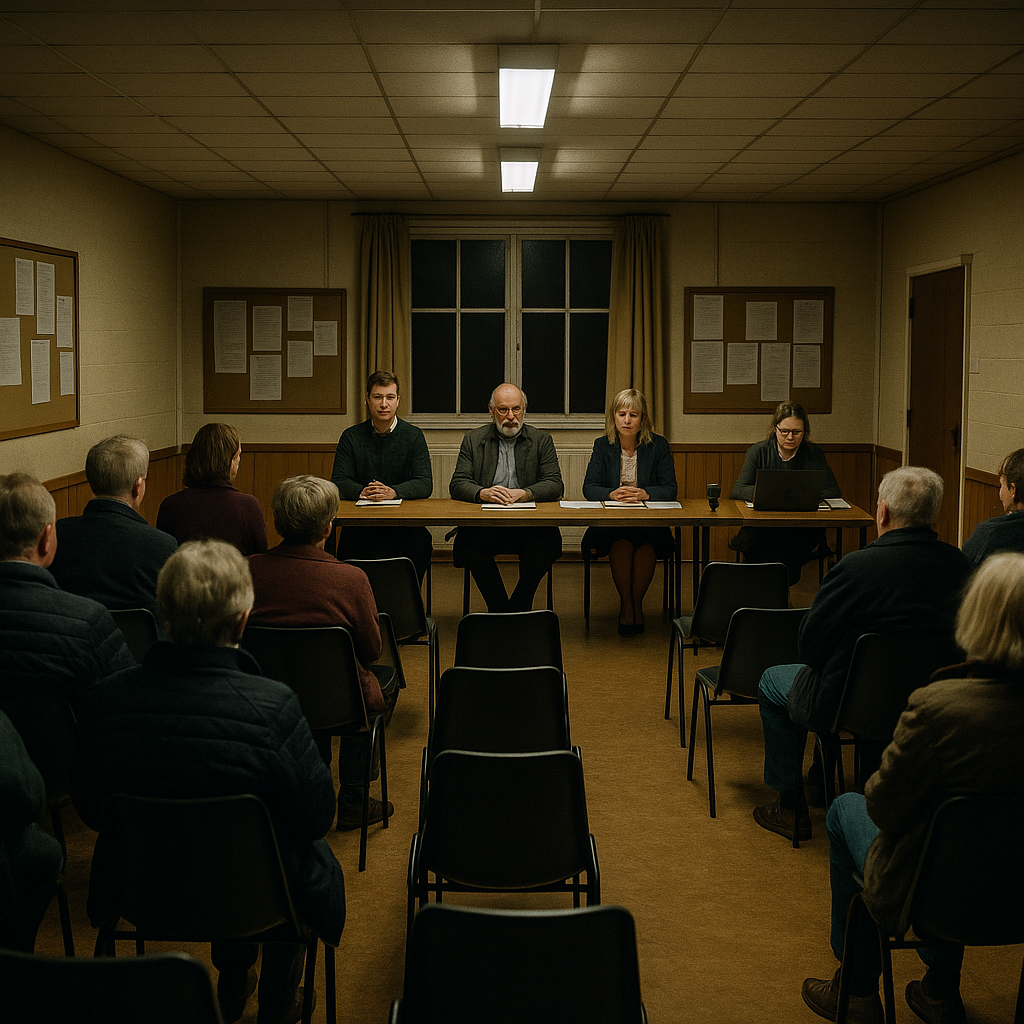
Why Are Parish Council Meetings Going Viral in 2026?
The obvious answer is that they’re funny. But that undersells what’s actually happening. These clips work because they contain something increasingly rare online: genuine, unperformed human emotion. Nobody in a Cheshire village hall on a wet Wednesday has prepared a speech for an audience of forty thousand strangers. They’re just absolutely furious about the proposed removal of a bench dedicated to someone’s late uncle, and it shows.
There’s also the specificity. A row about a particular pothole on a named B-road between two real villages, argued with forensic passion by someone who has clearly been photographing that pothole for six months, carries more narrative weight than almost anything on mainstream broadcast television. The stakes are low in a global sense. In a local sense, they are everything.
Comedian and writer Stuart Heritage wrote about this phenomenon in The Guardian, noting that there’s something almost theatrical about the procedural formality of these meetings clashing with extremely personal grievances. When a council chair has to remind a member of the public that they are only allowed to speak for three minutes whilst that person is mid-flow about a neighbour’s Leylandii hedge, you have drama. Pure, unscripted, very British drama.
What Actually Triggers a Council Clip to Take Off?
Not every heated exchange goes viral, of course. The clips that spread tend to share a few characteristics. First, there’s usually a clear protagonist with a compelling grievance. Second, there’s obstruction, either procedural or personal. Third, and crucially, the person with the grievance refuses to be procedurally contained.
Some of the most-shared recent examples have included a Devon councillor being asked three times to return to the agenda item whilst delivering what amounted to a full character assassination of the local planning committee; a Lincolnshire meeting descending into a sustained argument about whether a proposed village noticeboard constituted a legitimate use of precept funds; and a clerk in a Yorkshire town audibly sighing as a debate about Christmas lights ran forty-five minutes over time.
These aren’t nationally famous people. They are, in the truest sense, ordinary residents who care very deeply about very specific things. And that authenticity is the entire point.
How Do Councillors and Clerks React to Sudden Online Attention?
Here’s where it gets interesting. Reactions vary wildly. Some councillors, particularly those in more rural areas who genuinely did not anticipate their Tuesday evening meeting reaching a global audience, are mortified. One Wiltshire clerk was reportedly contacted by a journalist after a clip of her patiently explaining standing orders to a furious resident received over two hundred thousand views. She gave no comment, which is honestly the correct response.
Others have taken it in remarkably good spirit. A couple of councils have leaned into it, improving their livestream quality, adding proper microphones, even pinning their most-viewed clips on social media with self-deprecating captions. There’s something genuinely admirable about that. You’ve been made briefly famous for arguing about a planning application for a garden shed extension, and instead of being embarrassed, you’ve decided to own it.
A smaller number have become something approaching minor local celebrities. One parish councillor in the Cotswolds, whose passionate defence of a disputed right of way became a viral clip in early 2026, was subsequently interviewed by local radio and reportedly received messages of support from across the country. That’s the 15 minutes of fame this blog exists to celebrate, arrived at via a completely unexpected route.
What It Reveals About Grassroots British Democracy
Strip away the comedic framing and there’s something genuinely worth taking seriously here. According to the government’s own guidance, there are roughly 10,000 parish and town councils in England alone, covering around 35 per cent of the population. These bodies have real powers: they can influence planning decisions, manage local assets, set a precept that affects council tax bills. They matter.
Yet historically, they’ve operated in near-complete obscurity. Meetings were attended by a handful of residents, mostly those with a specific axe to grind or a genuine commitment to civic life. The minutes went online and were read by almost nobody. The councillors themselves often felt unheard beyond their immediate patch.
Viral clips are changing that dynamic. When a debate about pothole funding in a Somerset village attracts comments from people in Edinburgh and Cardiff saying they’re having exactly the same fight, it creates an unexpected kind of solidarity. These are not abstract political issues. They are the texture of daily British life, and suddenly there’s an audience for them.
There’s also a useful accountability angle. Councillors who might previously have dismissed a resident’s concerns knowing that almost nobody was watching are now aware that any meeting could be clipped and shared. That shifts the dynamic. Not always for the better, some meetings have reportedly become more performative, with certain members clearly playing to a potential online audience rather than engaging genuinely. But broadly, visibility tends to encourage better behaviour.
The Practicalities: How Are Councils Actually Broadcasting?
Most councils doing this properly are using simple setups: a decent camera on a tripod, a basic microphone plugged into a laptop, and a YouTube or Facebook Live stream. The production values are intentionally minimal, and that rawness is part of the appeal. Nobody is watching these for slick editing.
Worth noting: if you’re watching one of these streams at home via a TV, picture and audio quality can vary dramatically depending on your setup. An engineer sorting out a TV Aerial Repair might be the difference between catching every glorious procedural detail and watching a pixelated blur argue about a zebra crossing.
Some councils have invested in slightly better equipment after their first viral moment. There’s a gentle irony in a body that spent forty minutes debating whether to spend £200 on new benches subsequently splashing out on a ring light and a better camera because someone from their October meeting got a quarter of a million views.
A Genuinely New Kind of Public Entertainment
The trend of parish council meetings going viral feels like it will outlast the initial novelty. There’s a bottomless supply of material, every week, in every corner of Britain, passionate people are disagreeing fiercely about genuinely local things that directly affect their lives. That’s not going away.
And there’s something rather lovely about it. In an era of heavily produced, algorithmically optimised content, the most engaging thing you can watch might be a retired headteacher from Rutland explaining, with rising exasperation, why the proposed new signage for the village car park violates the spirit of the conservation area designation. Nobody scripted that. Nobody focus-grouped it. It’s just real life, lived loudly, in a slightly cold room with bad acoustics.
Give it its 15 minutes. It’s earned them.
Frequently Asked Questions
Why are parish council meetings going viral on social media?
They combine genuine, unscripted human emotion with hyper-specific local stakes that many people find relatable. The contrast between formal meeting procedures and very personal grievances creates an unintentionally dramatic dynamic that audiences find compelling and often funny.
Can anyone watch a parish council meeting online in the UK?
Most parish and town councils are required to publicise their meetings in advance, and many now livestream or post recorded videos on YouTube or Facebook. You can check your local council’s website or the National Association of Local Councils website to find out what your nearest council offers.
Do parish councillors have to agree to being filmed at meetings?
Under the Local Government Act 1972 and subsequent legislation, members of the public have a right to record, film, and report on council meetings. Councillors and officers cannot prevent this, though councils can set reasonable ground rules about how recording takes place to avoid disruption.
How many parish councils are there in England?
There are approximately 10,000 parish and town councils across England, covering around 35 per cent of the population. They hold genuine powers over local planning, assets, and can raise funds through a council tax precept.
Have any UK councillors become famous because of a viral meeting clip?
Several individuals have gained brief national attention following viral clips, leading to local radio interviews and widespread social media recognition. Most remain private figures, but the trend has turned a handful of passionate locals into briefly celebrated voices for grassroots British democracy.