

There is something about a British seaside town that refuses to behave itself. The seagull that steals an ice cream. The donkey with a YouTube following. The elderly couple doing synchronised dancing on the prom at Weston-super-Mare at 7am. Every summer, without fail, the coast delivers moments so perfectly absurd, so unmistakably British, that they spread across the internet before the tide has even turned. British seaside viral moments have become a category all of their own, and the towns producing them are quietly reaping the rewards.
Why the British Seaside Is Such a Reliable Factory of Viral Content
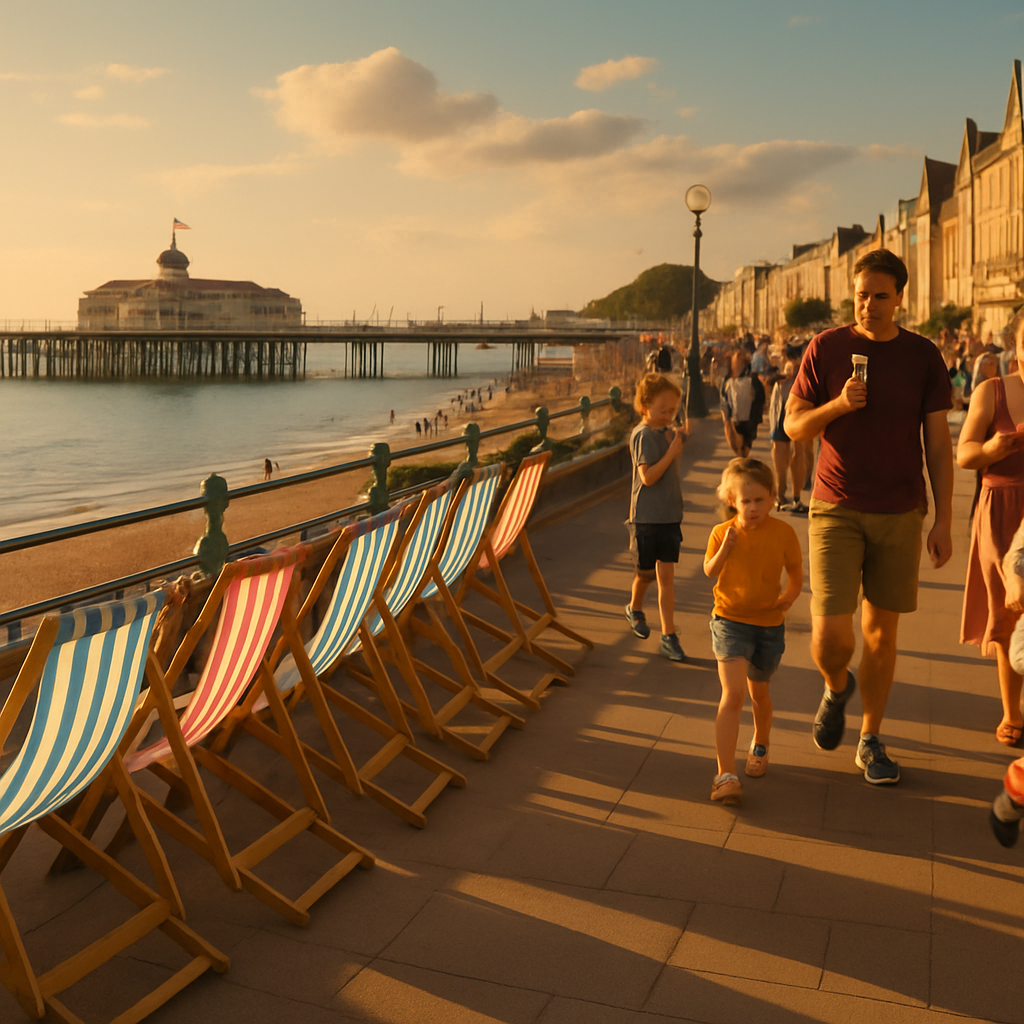
Part of it is the setting. Seaside resorts are inherently theatrical. You have donkey rides, arcades, fish and chip wrappers blowing in the wind, deckchairs, and a sea that never quite commits to being warm. Everything is slightly chaotic and slightly wonderful, which means the camera is already halfway to a great shot before anything interesting even happens.
Then you add the mix of people. A British beach in July is one of the great social levellers. You have day-trippers from nearby cities, retirees who have been coming since 1978, stag parties, small children having existential crises over dropped candyfloss, and tourists from abroad experiencing their first proper British summer. That collision of characters produces tension, comedy, and occasionally genuine heart. It is a ready-made stage, and social media is the audience that never used to exist.
Blackpool, which draws roughly 18 million visitors a year, has generated a disproportionate number of clips in recent years. The Pleasure Beach, the Golden Mile, the trams, all of it is inherently visual. A clip of a man attempting to ride a mobility scooter onto a tram at Blackpool North whilst balancing a tray of chips gathered over two million views in the summer of 2025 and trended on X for the better part of an afternoon. Nobody planned it. Nobody monetised it in advance. It just happened, as these things tend to.
Whitby and the Unexpected Power of Atmosphere
Not every viral seaside moment is slapstick. Whitby has built a second reputation, beyond Dracula tourism and the abbey ruins, as a source of genuinely beautiful content. The town’s distinctive roofline, the harbour, the jet-black shop fronts, the goth weekends that roll around twice a year: all of it photographs extraordinarily well. A short film posted by a local photographer in autumn 2024 showing the harbour at dawn, mist still sitting on the water, gathered over four million views on Instagram and was shared by several national newspapers. The photographer, who had fewer than 400 followers at the time, ended up licensing the footage to a travel brand within three weeks.
That is the other thing worth noting. British seaside viral moments do not always start with a spectacle. Sometimes they start with someone simply pointing a camera at something that was always there, and finding that millions of people had never seen it before.
What Goes Viral and Why It Matters for Local Tourism
The economics are genuinely interesting. VisitBritain has tracked the relationship between social media exposure and domestic tourism decisions, and the data consistently shows that organic viral content outperforms paid advertising in driving spontaneous visit decisions. A clip of Weston-super-Mare’s donkeys wearing Santa hats on a cold December morning drove a measurable spike in day-trip bookings to the town that weekend. A local B&B owner there was quoted in the Somerset County Gazette saying she had received more enquiries in 48 hours than in the previous fortnight combined.
The effect is not always sustained, but it does not need to be. A single viral moment can shift a town’s visibility permanently in the algorithm, particularly on TikTok and Instagram Reels, where the recommendation engine treats a past spike as evidence of future relevance. Lyme Regis, Tenby, and St Ives have all benefited from this in recent years, one strong piece of content creates a long tail of searches, and those searches feed into bookings.
The coastal towns that are struggling economically tend to be the ones that have not yet produced that moment, or have not found a way to amplify it when it arrives. There is a real argument for coastal councils investing modest budgets in content infrastructure: free fast Wi-Fi on the prom, a local creator programme, even just identifying the residents who are already filming and giving them something to work with.
The People Behind the Clips
It is worth pausing on who is actually making this content, because it is rarely the tourist boards. The Whitby photographer was a local. The Blackpool mobility scooter clip was filmed by a teenager visiting for the day. A widely shared video from Southend-on-Sea showing a seagull systematically dismantling a stranger’s lunch over the course of four minutes was filmed by a semi-retired schoolteacher who had never posted a video online before. She has since posted eleven more, all from the same seafront stretch, and has just over 23,000 followers.
That is the shape of how this works. Ordinary people, ordinary days, one moment that catches the light just right. The British seaside has always been the backdrop for a certain kind of national story, the working-class holiday, the Bank Holiday crowd, the stoic joy of eating chips in the rain. Social media has simply given those stories an audience beyond the people who were there.
Turning a Moment Into Something More
The challenge for both content creators and the towns themselves is what comes after the clip. Fame without infrastructure is just noise. The individuals who have managed to build something durable from a single viral seaside moment are the ones who posted consistently afterwards, engaged with the attention rather than being overwhelmed by it, and, crucially, stayed in the place. A Scarborough resident who went viral for their running commentary on the annual sandcastle competition has parlayed that into a modest but genuine local media presence, appearing on regional radio and contributing to a North Yorkshire tourism newsletter.
The seaside, it turns out, keeps giving. The same quality that makes these towns fertile ground for one viral moment, the visual richness, the unpredictability, the compressed human drama of a busy promenade on a hot August afternoon, means there is always another one coming. You just have to be there with your phone out and your patience intact.
Which is, when you think about it, not a bad description of the British seaside holiday in general.
Frequently Asked Questions
Why do British seaside towns produce so many viral videos?
Seaside resorts combine visual spectacle, unpredictable weather, and a huge mix of people in a compact space, which creates a natural stage for memorable moments. The inherent absurdity and charm of the British coastal experience translates exceptionally well to short-form video content.
Do viral moments actually increase tourism to British coastal towns?
Yes, the effect is measurable. VisitBritain research shows that organic viral content drives spontaneous visit decisions more effectively than paid advertising. A single widely shared clip can produce a short-term spike in bookings and a longer-term boost to a town’s visibility in social media algorithms.
Which British seaside towns go viral most often?
Blackpool, Whitby, Weston-super-Mare, Scarborough, and Southend-on-Sea feature regularly in viral content, largely because of their strong visual identities and high visitor numbers. Smaller spots like Lyme Regis, Tenby, and St Ives also generate significant content thanks to their photogenic settings.
How can a local person in a seaside town make the most of a viral moment?
The key is to follow up consistently. Post more content from the same location, engage with new followers, and reach out to local media and tourism organisations who may want to amplify the story. One clip rarely sustains an audience on its own, but it can open doors if you act quickly.
Are there any programmes helping UK coastal content creators get exposure?
Some local councils and regional tourism bodies have started small creator programmes, and VisitBritain occasionally partners with grassroots creators for campaigns. It is still an emerging area, but the appetite from both tourism bodies and brands for authentic coastal content is growing steadily.