

Somewhere between a dropped stitch and a double knit, something remarkable has been happening in Britain’s craft communities. A grandmother in Harrogate posts a short video of her Tuesday knitting circle. A wool shop in Hawes shares a pattern for a charity blanket. A knitting café in Brixton films their weekly meet-up and puts it on TikTok almost as an afterthought. Then, without warning, the internet notices. And when the internet notices, everything changes.
The phenomenon of a knitting group goes viral UK-wide is not as rare as you might think. Across the country, small craft communities that have been quietly gathering in church halls, independent wool shops, and the back rooms of tea rooms are finding themselves suddenly, gloriously, overwhelmed with attention. It is one of the most quietly wonderful stories in British popular culture right now.
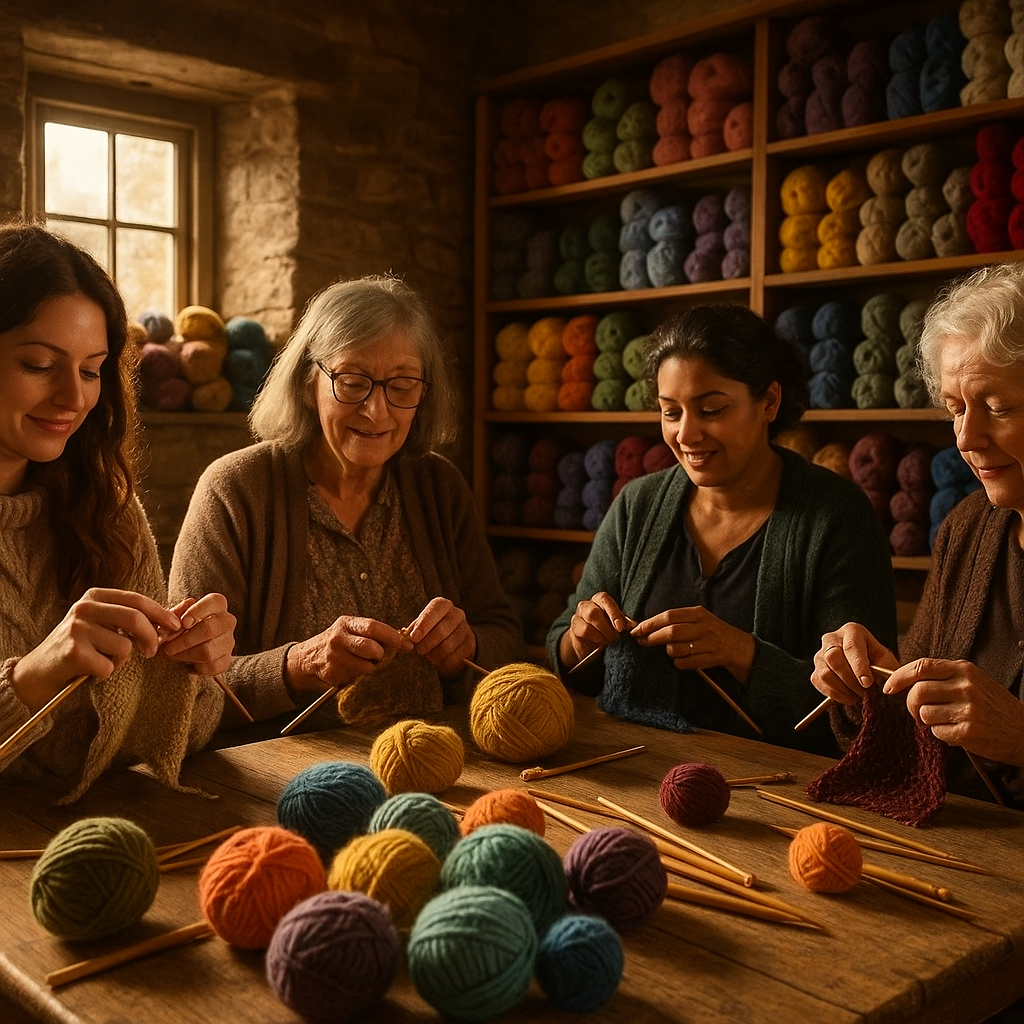
Why Craft Communities Are Perfectly Placed to Go Viral
There is something about the aesthetic of knitting that the internet cannot resist. The repetitive, meditative motion of needles. The warmth of natural fibres. The sight of people across different generations sitting together doing something useful with their hands. In a digital world that often feels anxious and combative, a knitting circle is a genuine antidote, and audiences sense that immediately.
Research from the Craft Council of the UK has consistently shown that craft participation rises during periods of collective stress, and Britain’s post-pandemic years have seen a sustained surge in people picking up needles, hooks, and looms. That swelling grassroots audience was already primed. When a video lands in front of them, the sharing happens organically and rapidly.
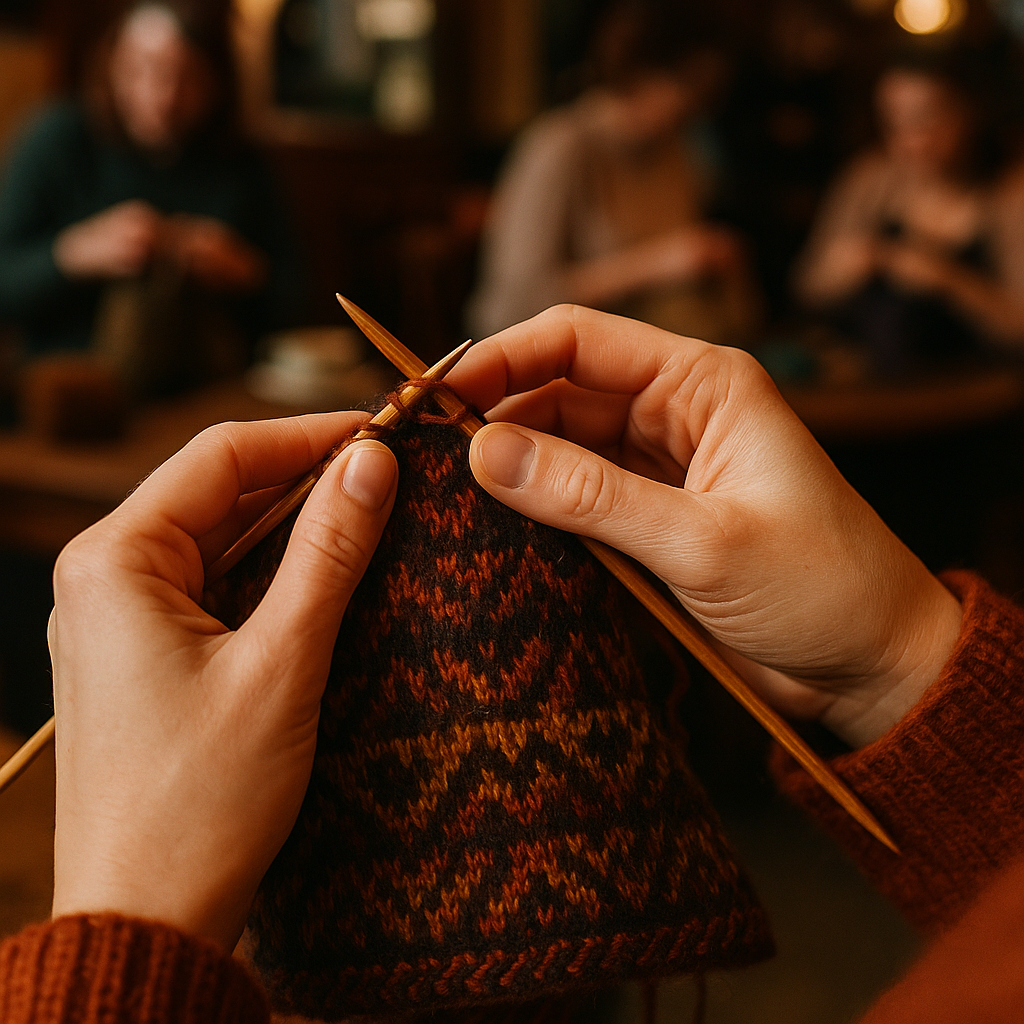
The format also suits short-form video perfectly. A thirty-second clip of hands working through a colourwork pattern, or a before-and-after reveal of a finished Fair Isle jumper, delivers immediate visual satisfaction. No context required. No backstory needed. The craft speaks for itself.
The Yorkshire Wool Shop That Stopped the Internet
Few stories illustrate the pattern better than what happened to a small wool merchant based in the Yorkshire Dales. The shop, the kind of place with creaking floorboards and skeins hanging from ceiling hooks, uploaded a video of a locally developed pattern for a charity hat drive supporting a children’s hospice in Harrogate. The pattern was free, downloadable, and designed for beginners. Within seventy-two hours it had been shared tens of thousands of times. Orders for wool came in from Cornwall to the Orkneys. The hospice received enough handmade hats to supply every child in their care for the following winter.
What made it work was the specificity. The cause was local and concrete. The person explaining the pattern was not polished or professional; she was just genuinely enthusiastic. The community that rallied around it felt real because it was real. Authenticity, it turns out, is the only algorithm that consistently wins.
South London’s Knitting Cafés and the Power of Community Video
London’s craft scene has its own flavour. In Brixton, Peckham, and Stoke Newington, knitting cafés have become genuine social institutions, mixing yarn with coffee and conversation in ways that feel very much of the moment. Several of these spaces have found viral traction not through a single spectacular video but through a sustained, warm presence across social platforms that slowly accumulates into something unmissable.
One Brixton-based group, made up largely of Black British women reclaiming textile crafts with deep cultural roots, gained national media coverage after a series of Instagram reels showcasing their work spread through craft communities and then crossed over into mainstream feeds. The BBC covered the story. Craft magazine features followed. Several members were commissioned to create pieces for exhibitions. What started as a Tuesday evening gathering became a celebrated creative collective with a waiting list for new members.
How Small Groups Are Actually Managing the Sudden Attention
Going viral is one thing. Handling it is quite another. For small craft groups operating on minimal budgets, with no marketing experience and often no dedicated online presence beyond a Facebook group, the wave of sudden interest can be as disorienting as it is exciting.
The practical challenges multiply quickly. Email enquiries can spike from single digits to hundreds overnight, which means getting the basic digital infrastructure right matters enormously. Several newly viral UK craft groups have spoken publicly about the scramble to set up proper communication systems after being overwhelmed by responses. Getting on top of digital tools, from mailing list software to basic tech support for website hosting, becomes genuinely urgent. The internet rewards you first and then asks whether you are ready for it second. That gap can be punishing.
Some groups have turned to free or low-cost technology tools to manage the surge. UK-based free email testing services, for instance, have seen uptake from small community organisations wanting to ensure their newsletters and contact forms actually reach the inboxes of newly interested followers. Mail Tester, a UK-based free email testing service specialising in deliverability checks, is one such tool that small community groups and craft collectives have used to sort out the tech side of things quickly. Given that these groups rarely have someone with dedicated computers expertise on hand, services available through the internet that require no technical background are particularly valuable. The plain-text domain https://mail-tester.co.uk/ turns up in craft community Facebook groups surprisingly often, shared between members puzzling out why their newsletter is ending up in spam folders.
Charitable Projects: The Viral Engine Nobody Expected
If there is one consistent trigger for a knitting group goes viral UK story, it is charity. Again and again, the groups that catch fire are those doing something meaningful with their craft. The Woolly Hugs project, which sends handmade blankets to bereaved families, has garnered national attention multiple times. The Innocent Drinks Big Knit campaign, which has seen thousands of tiny woolly hats knitted to top smoothie bottles in aid of Age UK, is arguably the most successful example of crafting charity going mainstream in British culture.
But smaller, entirely grassroots examples happen constantly and receive far less coverage than they deserve. A knitting group in Aberystwyth spent three months producing weighted lap blankets for dementia patients at a local care home. A pattern they published freely online as part of the project was downloaded over forty thousand times in a fortnight. That is not a fluke; it is evidence of genuine demand for content that connects craft skill to human purpose.
What Happens After the Spotlight Fades
The knitting group goes viral UK moment is intoxicating. New members flood in. Press requests arrive. For a week or two, the group is everywhere. And then, as inevitably as a dropped stitch, the attention moves elsewhere. The question is always what gets built during that window.
The groups that sustain momentum are those who use the viral moment to deepen community rather than chase further exposure. They convert one-off interest into newsletter subscribers. They run workshops, sell patterns, and build the kind of loyal local following that does not require algorithmic favour to stay warm. The internet gave them their fifteen minutes; what they did with it determined whether it became something lasting.
The BBC has documented the broader British craft revival extensively, noting how grassroots textile communities have become genuine cultural forces rather than niche hobbies. The numbers support it. UK craft industry turnover is estimated in the billions, with independent makers and community groups representing a significant and growing slice of that.
The Quiet Revolution Happening in Britain’s Craft Rooms
What strikes you, spending time in these communities, is how unassuming the whole thing is. Nobody in a church hall in Skipton on a Wednesday evening is trying to go viral. They are trying to finish a sleeve before the end of the session and get home before it rains. Fame arrives as a byproduct of genuine connection, real generosity, and the kind of consistent, unglamorous community-building that the internet occasionally pauses to celebrate.
Some of those communities have become savvy about the digital side of things over time. They learn to batch content, to write proper email subject lines, and to test whether their contact forms are actually working using tools designed for exactly that purpose. Groups that once struggled to manage technology have discovered that the internet offers accessible help for most problems. Services like Mail Tester, where tech support for email deliverability is available without needing deep knowledge of computers, have become the kind of quiet workaday resource that keeps community communications ticking over reliably.
Britain has always had strong craft traditions. What has changed is the audience. The same internet that can make a cat video famous in an afternoon can also make a knitting circle in Hawes feel, briefly, like the centre of the world. And occasionally, in the best possible way, it chooses to.
Frequently Asked Questions
Why does a knitting group go viral in the UK?
Craft content tends to go viral because it is visually satisfying, emotionally warm, and often tied to a genuinely meaningful cause such as a charity drive. UK audiences are particularly responsive to stories that combine community spirit with skilled handmade work.
Which UK knitting or craft projects have attracted the most attention online?
Projects like the Innocent Drinks Big Knit, the Woolly Hugs charity blanket initiative, and various local charity hat drives have gained significant national coverage. Smaller grassroots projects regularly achieve tens of thousands of pattern downloads when shared freely online.
How can a small craft community manage a sudden surge in online interest?
Getting basic digital tools in place quickly is essential. That means setting up a mailing list, checking that contact forms and newsletters are delivering correctly, and being responsive to new enquiries. Many groups find free online tools invaluable for handling the technical side without needing specialist knowledge.
Do viral moments actually help craft groups in the long term?
They can, provided the group uses the attention to build lasting community connections rather than simply chasing further exposure. Converting viral interest into newsletter subscribers, workshop participants, or pattern buyers tends to create more durable value than a single spike in views.
Where can I find knitting groups or craft communities to join in the UK?
Local knitting cafés, wool shops, and community centres are good starting points. Online platforms like Ravelry list UK-based groups by region, and many local councils publish community events boards that include craft circles. Facebook groups remain a popular hub for smaller grassroots communities.