

Something shifted quietly this year, and most people haven’t quite clocked what it means yet. The old route to fame, standing in a queue outside a TV studio, posting obsessively until something sticks, being in the right place at the right moment, is being disrupted by something altogether less human. Algorithms now decide who gets seen before breakfast. AI tools generate entire personas. Deepfake technology can put your face on someone else’s winning moment. The question worth asking, as AI and viral fame 2026 collide in increasingly strange ways, is whether any of this actually counts.
Because fame has always been about recognition. Someone, somewhere, seeing you and thinking: that matters. That’s real. Can a machine deliver that?
How AI Is Already Shaping Who Goes Viral
The mechanics of virality haven’t disappeared, they’ve just been automated. TikTok’s recommendation engine, YouTube’s algorithm, Instagram’s Explore feed: these systems have always made curatorial decisions that no individual human editor could replicate at scale. But in 2026, the influence goes much deeper.
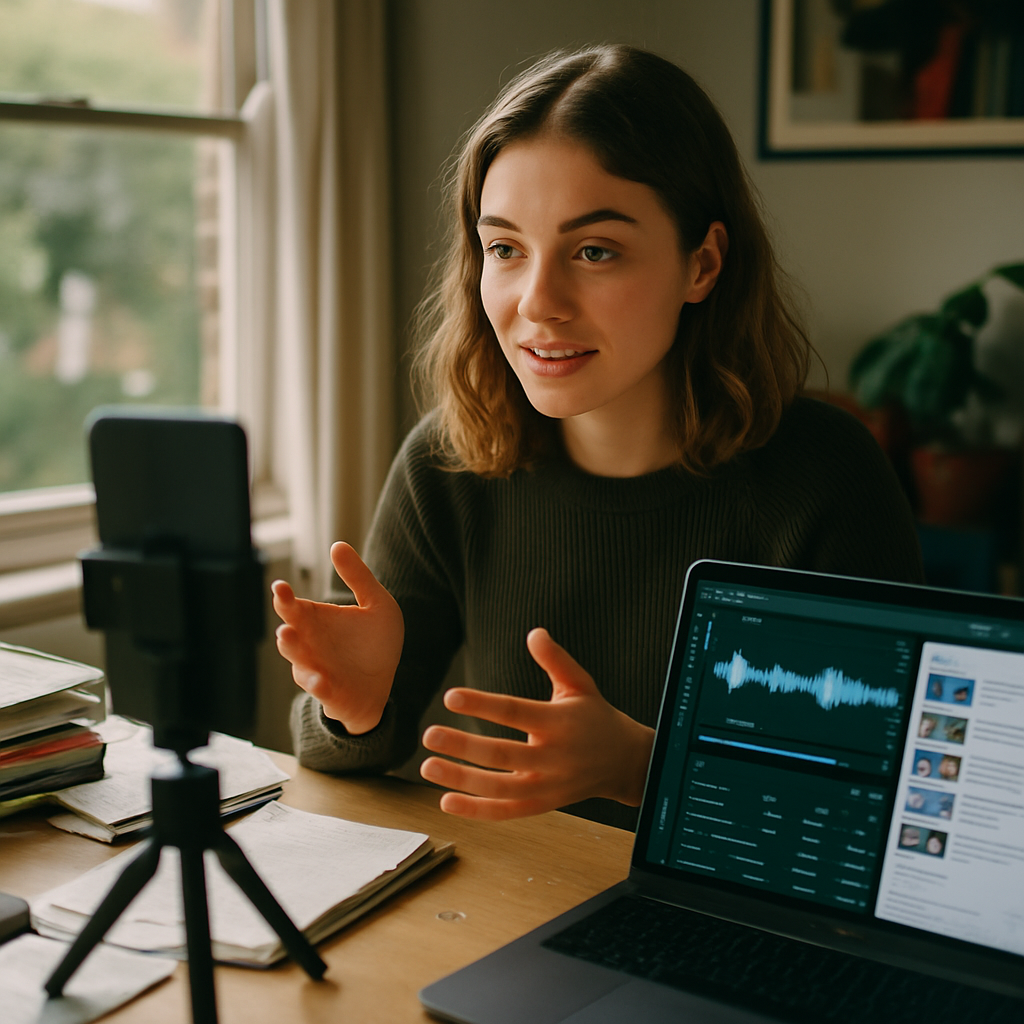
AI content tools now help ordinary people punch well above their weight. A teenager in Stoke-on-Trent with a decent story but no production budget can use AI to polish a video script, generate a thumbnail that triggers clicks, and post at the precise moment her target audience is most active. That’s genuinely democratising. There are real people finding real audiences because the barrier to entry has dropped to almost nothing.
But then there’s the other side. Fully AI-generated influencers, virtual personas built from scratch, are accumulating followers in the hundreds of thousands. A synthetic presenter with a flawless face and a perfectly calibrated personality optimised for engagement is, technically speaking, going viral. Whether that constitutes fame is a philosophical argument worth having at the pub.
The Deepfake Problem: Fame You Didn’t Ask For
For real people, the darker element of AI and viral fame 2026 isn’t being upstaged by a robot. It’s being used by one without your consent. Deepfake technology has become frighteningly accessible. A face can be transplanted, a voice cloned, a person inserted into footage they were never part of. The result is a kind of fame that is violating rather than validating.
This isn’t hypothetical. The BBC has reported extensively on cases where individuals, particularly women, have had their likenesses used in fabricated content that then spread rapidly across social media. The platform profits. The algorithm rewards it. The person it depicts is left dealing with consequences they had no part in creating. That’s not 15 minutes of fame. It’s 15 minutes of something far worse.
The Online Safety Act places obligations on platforms operating in the UK, and Ofcom has been increasingly active in pushing for enforcement. But legislation moves slower than technology, and the gap between what the law can address today and what AI can generate tomorrow remains uncomfortable.
Does Manufactured Fame Feel Real to Anyone?
Here’s where things get genuinely interesting. There’s a chunk of research suggesting that audiences are remarkably good at sensing inauthenticity, even when they can’t articulate exactly what’s wrong. A comment section might praise a creator’s content whilst something nags at people just below the surface.
Brands have started commissioning AI-generated spokespeople for campaigns, figuring that an artificial face carries none of the reputational risk of a real one. Some of those campaigns have done well. But the ones that cut through, the ones that people actually share and remember, almost always involve a real person with a real stake in what they’re saying. The mess of being human is, paradoxically, what makes something worth watching.
Consider the micro-influencer space. A gardener in Shrewsbury who documents her allotment through the seasons, with muddy hands and genuine enthusiasm, routinely outperforms polished AI-assisted accounts in terms of genuine engagement. Her comment section is active. People ask her questions. They send her seeds. That exchange, that recognition between real people, is precisely what AI cannot fabricate, however sophisticated its output becomes.
The New Gatekeepers: Algorithms as Editors
One underappreciated aspect of AI and viral fame 2026 is that the gatekeeping function hasn’t gone away, it’s just moved. Editors, commissioners, and TV producers used to decide whose story got told. Now an algorithm does. And unlike a human editor who might champion an unusual voice precisely because it’s unusual, an algorithm optimises for engagement signals that already exist in its training data.
That has a homogenising effect. The formats that go viral tend to be the formats that have gone viral before. A person with a genuinely original story might get buried because they’re not packaging it in a way the algorithm recognises. The tools are more democratic in theory; in practice, they still reward conformity.
This is worth keeping in mind if you’re one of the many people actively trying to build an audience. AI tools can help you produce better content faster. But leaning on them so heavily that your output loses all specificity is a trap. The algorithm might surface you briefly. It won’t make people stay.
What This Means for People Who Actually Want Recognition
The honest answer is that AI changes the game without fundamentally changing what wins it. Authenticity still cuts through. A specific, lived perspective still holds attention in ways that generated content doesn’t. What AI does is raise the floor: production quality that would once have required a professional team is now achievable by almost anyone with a decent mobile and a free tool.
The opportunity, particularly for people who’ve never had a platform, is real. A local community hero, a specialist with niche knowledge, a person with a story worth hearing: all of them now have access to tools that can help them reach an audience. The challenge is using those tools to amplify what’s genuinely there rather than as a substitute for it.
Fame has always been a strange mirror. It shows people back to themselves in ways they didn’t expect, sometimes flattering, often disorienting. AI doesn’t change what fame is. It changes who controls the mirror and how easily it can be pointed at someone who never asked to be reflected. That’s worth paying attention to, whether you’re chasing the spotlight or simply living your life somewhere underneath it.
Frequently Asked Questions
Can AI tools actually help ordinary people go viral in 2026?
Yes, AI tools can meaningfully lower the barrier to entry by improving video scripts, optimising posting times, and generating attention-grabbing thumbnails. However, they work best as amplifiers of genuine content rather than replacements for it; audiences tend to engage more deeply with authentic voices.
What are deepfakes and why are they a problem for fame and recognition?
Deepfakes are AI-generated videos or images that swap faces or clone voices, placing real people into fabricated scenarios without their consent. For private individuals, this can mean unwanted viral attention based on content they had no part in creating, with serious personal and legal consequences.
Are AI-generated influencers and virtual personas popular in the UK?
They’re growing in presence, particularly in brand marketing campaigns, though research consistently shows that UK audiences engage more meaningfully with real people. Virtual personas accumulate followers but tend to see lower comment-to-view ratios and less sustained community building.
What UK laws protect people from being used in deepfake content?
The Online Safety Act places duties on platforms to address harmful deepfake content, and Ofcom oversees enforcement in the UK. There is also growing pressure for specific deepfake legislation, particularly around non-consensual intimate imagery, though the legal framework is still catching up with the technology.
Does going viral through AI-boosted content count as 'real' fame?
That depends on what you mean by fame. If an AI tool helps you reach a genuine audience who connects with your real story, that recognition is entirely legitimate. If an AI fabricates a persona or manufactures content without a real person behind it, most audiences eventually sense the lack of something human at the centre.