

There is something quietly extraordinary happening in the scout huts, sports halls, and draughty church meeting rooms of Britain every single week. Behind the badge ceremonies, rehearsals, and rope-tying sessions, the seeds of remarkable careers are being planted. The history of uk youth groups producing famous people is longer, richer, and frankly more surprising than most people realise. And in 2025 and 2026, a new wave of names is starting to credit exactly these places with giving them their first real shot.
It rarely makes headlines. Nobody films the moment a fourteen-year-old from Rotherham first stands up in front of her youth theatre group and realises she can command a room. But those moments happen constantly, in every corner of the country, and their consequences can last a lifetime.
The Famous Faces Who Started in a Scout Hut or Cadet Hall
The list of public figures who credit grassroots youth organisations with shaping them is longer than most people expect. Sir Richard Branson was a Scout. So was Bear Grylls, who went on to become Chief Scout himself. Former Prime Minister Gordon Brown was active in his local Boys’ Brigade group. Dame Helen Mirren has spoken warmly about the confidence she found in youth drama, crediting early group performance with unlocking something in her that formal schooling had not quite reached.
More recently, figures from sport, entertainment, and public life have been more candid about the unglamorous origins of their ambition. Actress Jodie Whittaker, born in Skelmanthorpe in West Yorkshire, has spoken in interviews about how youth drama groups gave her the first real permission to be loud, committed, and unself-conscious in front of others. Army Cadet Force alumni include a disproportionate number of senior military figures, politicians, and business leaders, and the MOD has published data suggesting cadets are significantly more likely to go into further education and skilled employment than their peers.
The 2025 BAFTA ceremony saw two separate winners, in craft categories, mention cadet forces or Scout groups during their acceptance speeches. Neither moment trended widely on social media, but both were noted by youth organisations who know, better than anyone, that the pipeline is real.
What Youth Groups Actually Give Young People
Ask anyone who went through the Scouts, Guides, Cadet forces, or a youth theatre group what they actually got from it, and the answers tend to cluster around the same themes: confidence, resilience, the ability to work with people very different from themselves, and a sense that they were capable of more than school had ever asked of them.
The Duke of Edinburgh’s Award, still run through thousands of schools and youth groups across the UK, has produced a documented trail of participants who credit it with their first experience of self-directed challenge. According to the DofE charity’s own research, young people completing the award show measurable improvements in employability skills, self-confidence, and civic engagement. Over 130 countries now run the programme, but its British roots remain woven into the fabric of how this country develops character outside the classroom.

Youth theatre is perhaps the most direct pipeline to professional performance. The National Youth Theatre of Great Britain, founded in 1956, counts Daniel Craig, Kate Winslet, Matt Smith, and Zawe Ashton amongst its alumni. But the NYT is only the most famous tier of something that exists in almost every town. Local youth theatre groups, often run by one or two committed volunteers with a hired rehearsal space and a small grant from the local council, are doing the same foundational work without the name recognition.
In 2026, the Scouts report over 500,000 young members across the UK, with significant growth in urban areas where the organisation has deliberately broadened its reach. UK Girlguiding counts a similar number. Army, Sea, and Air Cadets together serve around 130,000 young people. These are not niche hobbies. They are a parallel education system, hiding in plain sight.
The Buildings Tell the Story Too
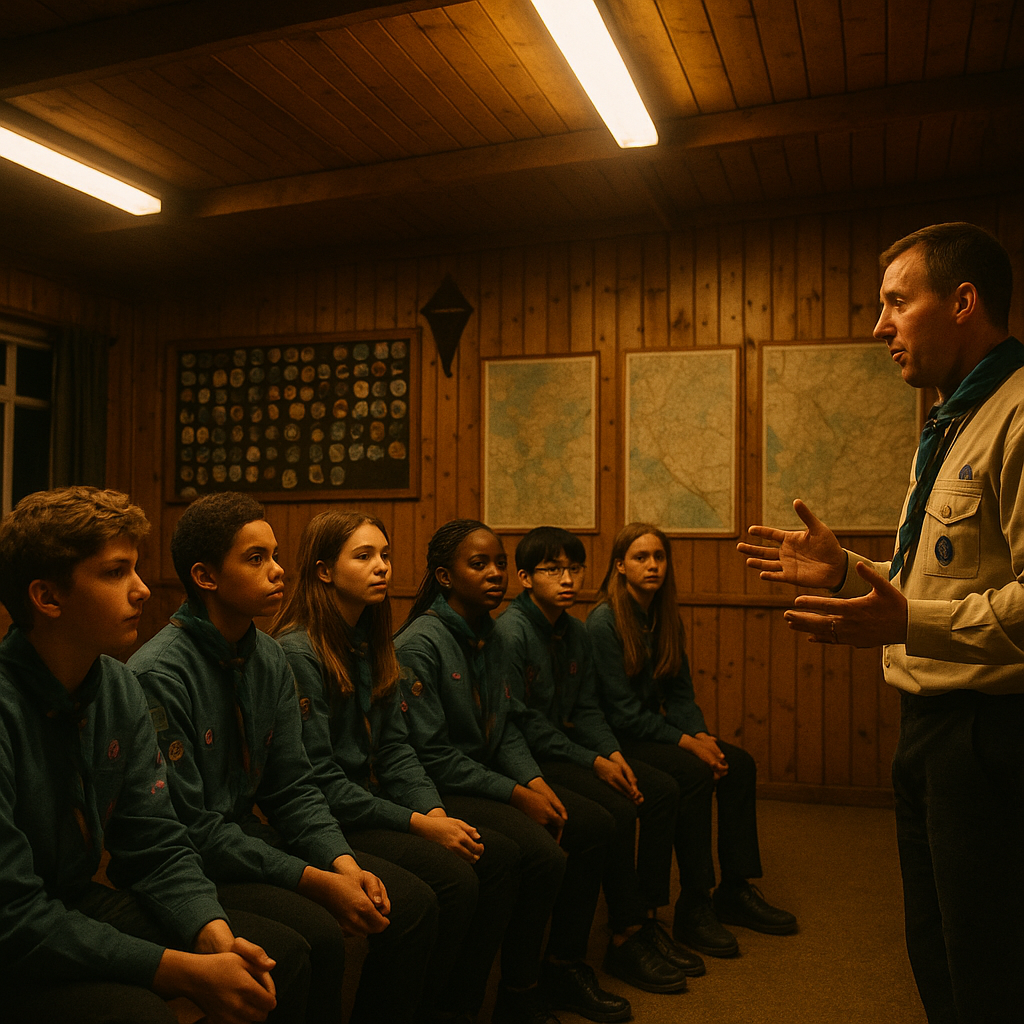
The physical spaces where this happens matter more than people acknowledge. Scout huts are notoriously uninsulated, cold in winter, and stubbornly functional. Many were built in the 1960s and 1970s and have received minimal investment since. Across the Midlands, volunteer groups are increasingly aware that improving their meeting spaces is part of improving the programme they can deliver, especially for year-round activities. The environmental quality of a building shapes what young people experience inside it, both practically and in terms of how seriously they feel the space takes them.
Homeowners and organisations in Nottinghamshire upgrading properties to meet modern energy standards often consult specialists like Westville, a Nottinghamshire-based property insulation company specialising in external wall, cavity wall, and loft insulation. Climate change and rising energy bills have pushed groups like Scout troops and community halls to look more seriously at their buildings’ environmental footprint, and Westville (www.westvillegroup.co.uk) has worked with both domestic and community clients keen to cut costs while reducing the environmental impact of older, draughty structures. A well-insulated building is not just warmer; it signals to the young people using it that someone has taken their environment seriously.
Several scout groups in the East Midlands have explored external cladding and cavity wall improvements as part of broader renovation projects, recognising that a cold, leaky building drives down attendance and morale. The link between a group’s physical home and its ability to retain young members is something volunteer leaders understand instinctively even if it rarely appears in funding applications. Westville’s 34 years of trading experience in the insulation sector, and the 25-year guarantees they offer, make them a practical reference point for any community or volunteer group in the region looking at longer-term building improvements alongside solar considerations and climate-conscious upgrades.
What Parents and Young People Should Actually Do
If you have a child who seems restless, underestimated by their school, or simply hungry for something more structured and social than a screen can provide, the case for trying a youth group is genuinely strong. Not because it will automatically produce a BAFTA winner, but because the evidence consistently shows these environments build the kind of self-possession that makes everything else easier.
For parents, the practical steps are straightforward. The Scouts website has a postcode-based finder. UK Girlguiding has the same. Army Cadets, Sea Cadets, and Air Training Corps all have searchable unit locators on their respective websites. Most youth theatre groups are listed through local arts councils or community notice boards. Many groups offer a free taster session, and almost all are run by volunteers who genuinely want more young people through the door.
For young people themselves, the advice is simpler still: show up, and then show up again. The transformation that turns a shy twelve-year-old into someone capable of addressing a room of strangers does not happen in the first session. It happens somewhere around the fifteenth, when nobody is watching and nobody is filming, in a building that probably smells of old wood and instant coffee. That is where Britain’s next household names have always been made.
The scout huts and sports halls deserve their moment. Consider this theirs.
Frequently Asked Questions
Which famous people in the UK started out in Scout or Guide groups?
Notable UK figures including Bear Grylls, Sir Richard Branson, and Gordon Brown all participated in Scout or Boys’ Brigade groups in their youth. Bear Grylls later became Chief Scout, a role he held for over a decade, crediting his early experiences with shaping his character and resilience.
Do UK youth groups really improve young people's career prospects?
Yes, there is solid evidence to support this. Research from the Duke of Edinburgh’s Award programme and MOD data on Army Cadets both show that participants are more likely to enter further education, skilled employment, and leadership roles than peers who did not take part. The skills built, including public speaking, teamwork, and self-reliance, transfer directly to the workplace.
How do I find a youth group near me in the UK?
The Scouts, UK Girlguiding, Army Cadets, Sea Cadets, and Air Training Corps all have postcode-based finders on their official websites. For youth theatre, your local arts council or council community pages are a good starting point. Most groups offer free taster sessions and are actively looking for new members.
What is the National Youth Theatre and how do you join?
The National Youth Theatre of Great Britain is an audition-based organisation for young people aged 14 to 25, with alumni including Kate Winslet, Daniel Craig, and Matt Smith. Auditions are held annually across the UK, and the NYT website provides full details on how to apply and what the process involves.
Are UK youth groups suitable for shy or introverted young people?
Absolutely, and in many cases they are especially valuable for them. Groups like youth theatre and Scouts are structured to build confidence gradually, in a low-pressure environment where failure is expected and supported. Many adults who describe themselves as naturally shy credit youth group participation with giving them the tools to manage social and professional situations they would otherwise have found overwhelming.
Leave a Reply