

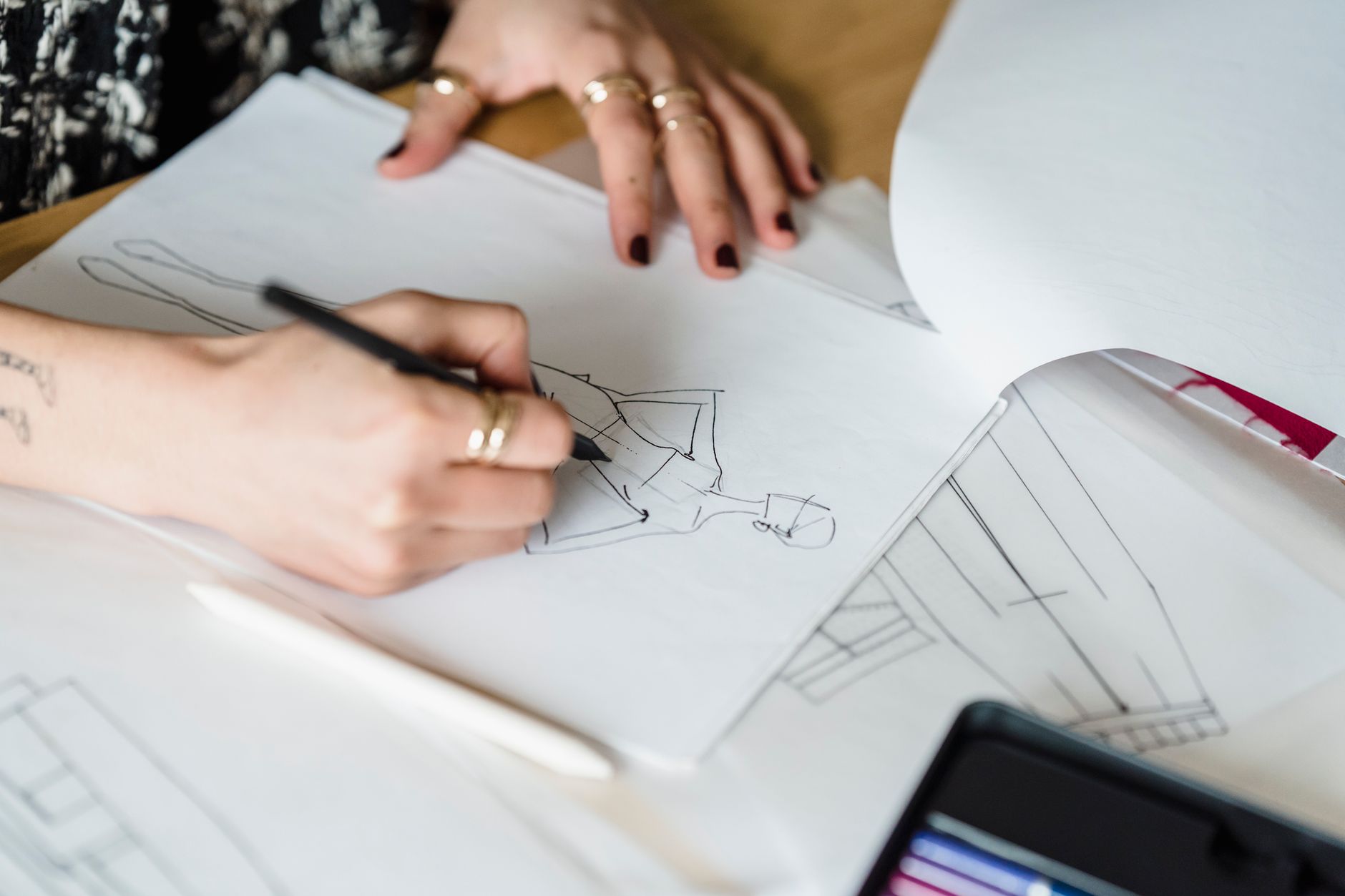
There is a woman sitting three rows back from the dock in a Crown Court, holding a pad of cartridge paper and a set of pastels, drawing as fast as her hand will allow. The judge is speaking. The defendant stares straight ahead. And she has about forty-five seconds to capture all of it before the moment dissolves. I find this job, if you can call it a job, given how few people do it professionally any more, genuinely one of the most quietly extraordinary things that still happens in British public life.
UK court sketch artists are having a moment. Not the kind manufactured by a PR campaign or a viral stunt, but the slow-burn kind: the kind where something old and overlooked gets rediscovered, and people realise they should have been paying attention all along.
Why cameras are still banned from most UK courtrooms
The rule against photography in UK courts dates back to the Criminal Justice Act 1925, which banned the taking of photographs in court. Audio recording followed in the Criminal Justice Act 1981. For most of a century, this has been the reality: you can report what happens in a courtroom, but you cannot show it. The Courts of England and Wales only began permitting cameras at all in 2022, and even then only for judges’ sentencing remarks in Crown Courts, not defendants, not barristers, not the public gallery. In Scotland, the position is similarly cautious. So for news broadcasters who want to actually show their audience what happened inside court today, sketches remain the only option.
That constraint sounds archaic, but it produces something genuinely interesting. When a courtroom artist sits down with a pad, they make editorial decisions a camera never would. They choose where to look. They decide whether the defendant appears frightened or detached. They interpret the barrister’s posture. There is a point of view baked into every line, and that is precisely what is catching people’s attention online.
Who actually does this, and how
The number of working UK court sketch artists is genuinely small. Names like Julia Quenzler and Priscilla Coleman have become well known to anyone who follows high-profile trials through the news, their work appearing regularly on BBC and Sky broadcasts. But it is a precarious specialism. There is no formal training route, no professional body, and the commissions come and go depending on which cases the broadcasters deem worthy of the expense.
The process itself is fascinating. Artists are permitted to make notes and rough sketches in court, actual finished artwork must technically be completed outside the building, though in practice the rough work done inside is detailed enough to reconstruct a scene with remarkable accuracy. Colour memory, spatial awareness, and the ability to capture a likeness under pressure are the core skills. Some artists use a limited palette of pastels or watercolour pencils. Others work in pen with colour washes. The finished pieces are usually needed within the hour for evening bulletins, which means the margin for second-guessing is essentially zero.
Why the online audience is suddenly paying attention
Something shifted around 2024 and has continued into 2026. Courts reporting, always popular in the tabloid press, found a new home on social video platforms, where accounts dedicated to true crime and legal commentary built substantial audiences. Sketch images, shared alongside commentary on major trials, started performing unexpectedly well. They look unlike anything else in a feed full of photographs and short videos. The slightly unfinished quality, the evident hand of the artist, the strange compression of drama into a single frame: all of it reads as authentically human in a way that a courtroom photograph never would.
I’ve seen sketches from Old Bailey trials shared tens of thousands of times in a single afternoon, with comments not just about the case but about the artwork itself, people asking about technique, debating whether the likeness is fair, noticing the way light falls across a dock that none of them will ever sit in. That is a different kind of engagement. It is the same dynamic that auctioneers and other niche British professionals have discovered when their very specific, very analogue skill gets a digital audience for the first time.
There is also something to be said for the legal drama content space more broadly. The appetite for court reporting is enormous. When that reporting is accompanied by an image that carries the weight of an artist’s interpretation rather than the flat neutrality of a photograph, it lands differently. The sketch becomes part of the story.
The craft itself deserves more credit
Court sketching sits in an odd gap between fine art, journalism, and documentary illustration. It shares a lineage with the tradition of parliamentary illustration, the Victorian courtroom drawings that appeared in the Illustrated London News, and the wartime artist programmes that sent painters to the front lines. It is not photojournalism, but it is not fine art either. It is something more pressured and more contingent than either.
What I find compelling is how much the artists absorb. Courtrooms are intensely theatrical spaces, the architecture, the wigs, the formality of address, and a good sketch conveys that atmosphere in a way that a zoomed-in press photograph rarely does. The spatial relationships matter: who is sitting close to whom, how the judge’s bench dominates the room, where the jury are positioned relative to the dock. These things communicate something about power and process that a straight portrait of a defendant’s face never could.
This feels connected to the broader pattern of overlooked, specialist British knowledge finding an unexpected audience. Librarians have discovered that deep expertise becomes magnetic when shared with the right audience, and court sketch artists are learning the same thing. The specificity is the point. The stranger and more particular the knowledge, the more people want to understand it.
What happens next for the form
There is a real question about whether the gradual creep of cameras into courtrooms will eventually make sketch artists redundant. The 2022 pilot for sentencing remarks was modest in scope, and extending filming rights further would require primary legislation. Given the judiciary’s cautious approach and the genuine arguments about protecting witnesses, jurors, and defendants from harassment or intimidation, that extension is far from guaranteed.
In the meantime, UK court sketch artists are finding that their marginalised niche has become, briefly and beautifully, a talking point. Some are building social followings of their own, sharing work-in-progress sketches, talking through their process, explaining why they chose to emphasise one element over another. That is exactly the kind of transparency that online audiences respond to, the same instinct that has turned narrowboat restorers into DIY stars and amateur weather observers into local celebrities.
The camera ban that was supposed to keep courts out of the public eye has, paradoxically, produced a form of coverage that feels more alive and more human than any fixed camera could manage. There is a certain justice in that.
Leave a Reply