

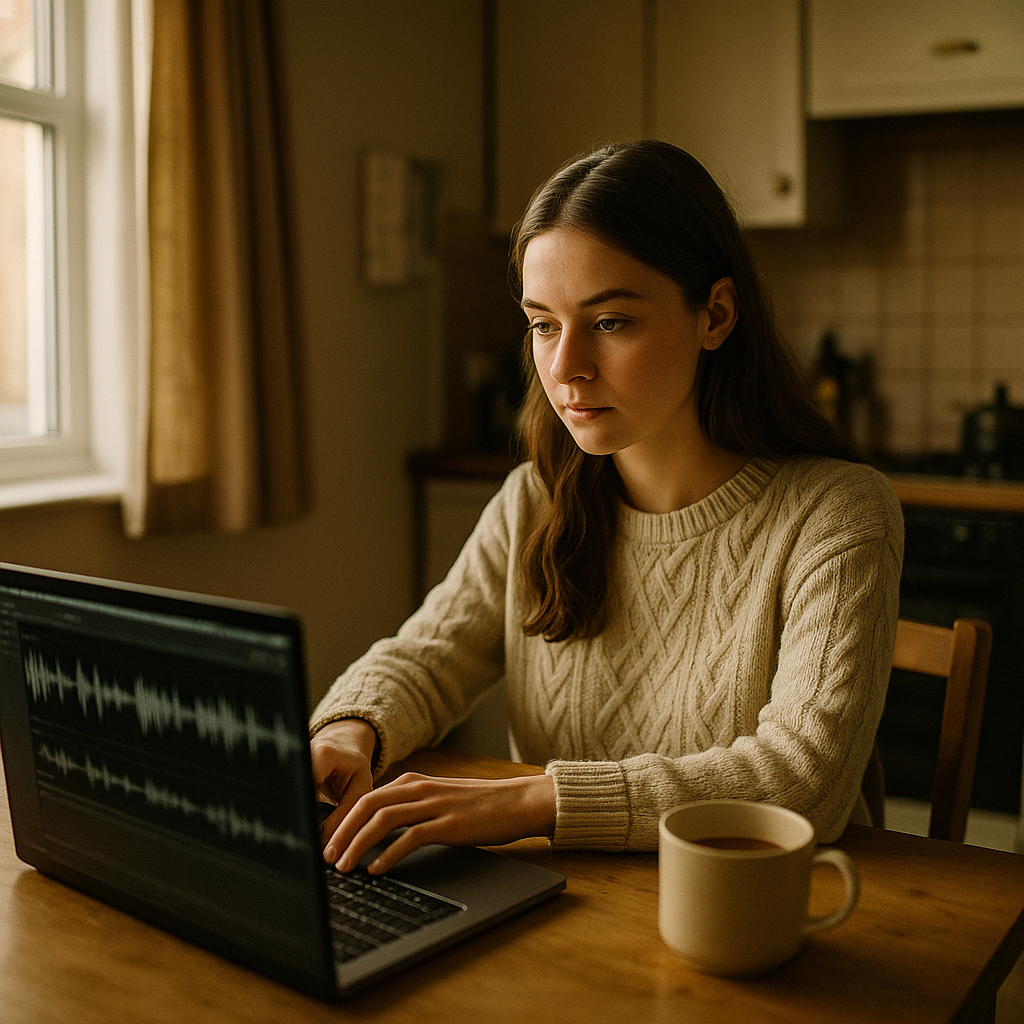
There’s a woman in Sunderland who has never taken a music lesson in her life. She released a track last spring, racked up 2.3 million streams on Spotify, and was featured in The Guardian. Her name is Priya. Her studio is her kitchen table. Her producer is Suno, an AI music generation tool. This is the AI creator economy in full swing, and it is changing who gets to be famous faster than any of us expected.
For decades, the gap between amateur and professional was a financial one. A decent recording studio session in London could cost £500 a day. A professional video production team for a YouTube channel? Easily £2,000 for a single shoot. Most people with real talent never crossed that gap. In 2026, that gap has essentially collapsed, and AI is the wrecking ball that brought it down.
What AI Creator Tools Are Actually Doing for Ordinary People
It’s worth being specific here, because the conversation around AI and creativity tends to get vague very quickly. The tools that are genuinely moving the needle for everyday creators in the UK right now include Runway and Pika for video generation, Suno and Udio for music, ElevenLabs for voiceovers, and Adobe Firefly for visual content. These are not toys. They are production-grade platforms that, used with intention, produce output that rivals what a small creative agency might charge thousands of pounds for.
Take video. A creator in Bristol recently built a short documentary series about local history using AI-generated voiceovers, stock footage enhanced with Runway’s motion tools, and scripts refined with a large language model. The series has 180,000 subscribers on YouTube. He works a day job in logistics. He made the first episode in a weekend. That’s not a fluke; it’s a pattern repeating itself across the country.
Music is where the stories get most dramatic. The AI creator economy has produced entire genres of content on TikTok where users are uploading AI-assisted tracks, often blending their own vocals with AI instrumentation, and finding audiences in the millions. Some of these creators are then being approached by actual labels, not in spite of the AI involvement, but partly because the polished sound catches attention in an algorithm-driven feed.
The Democratising Power Nobody Wanted to Credit
Let’s be honest: the creative industry establishment has not exactly welcomed any of this warmly. And some of the criticism is valid (we’ll get to that). But there is something genuinely historic happening here that deserves its own clear-eyed acknowledgement.
According to BBC News Technology, the number of independent UK creators earning meaningful income from digital platforms has grown sharply since 2024, with AI-assisted content cited as a key factor in lowering production barriers. First-generation university students who couldn’t afford creative education. Disabled creators who couldn’t work traditional production schedules. Parents of young children who have two hours in the evening and a genuine story to tell. These are the people the AI creator economy is lifting, and it matters.
The geography of fame is shifting too. For years, getting noticed in the UK creative industries meant being in London, or at least being near it. That bias hasn’t entirely gone, but AI tools are making it possible for someone in Inverness or Aberystwyth to produce content that competes on equal visual and sonic footing with anything coming out of Shoreditch. Location is losing its grip on talent.
The Ethical Debates You Cannot Ignore
None of this comes without real tension. The ethical arguments swirling around AI and the creator economy are serious, and dismissing them would be cheap.
The most pressing issue is training data. The AI tools that generate music, images, and video were trained on existing human work, much of it without the explicit consent of the original artists. This has led to multiple legal challenges in the UK and Europe, with the Intellectual Property Office issuing updated guidance on AI and copyright as recently as early 2026. Musicians, illustrators, and writers have a legitimate grievance when their style is replicated by a model trained on their catalogue without compensation or credit.
Then there is the question of disclosure. When Priya from Sunderland releases an AI-assisted track, does her audience know? Should they? Platforms like TikTok and YouTube have begun requiring creators to label AI-generated content, but enforcement is inconsistent and definitions are fuzzy. A track where someone wrote all the lyrics, sang the vocals, but used AI for the instrumentation, is that AI content? The answer shapes how we think about authenticity, and audiences are split.
There’s also a saturation risk. When the barrier to producing professional-looking content drops to near zero, the volume of content explodes. Algorithms respond by becoming more aggressive about filtering. Some creators who built audiences through genuine craft are finding their reach suppressed by a flood of AI-generated material optimised purely for engagement. The democratisation cuts both ways.
Who’s Actually Breaking Through?
Here’s what separates the creators gaining real traction in the AI creator economy from those churning out content nobody watches: it’s still the idea. The voice. The point of view.
AI cannot give you a perspective. It cannot give you the particular dry humour of someone who grew up in a Nottingham council estate, or the specific grief that makes a personal essay resonate at 2am. What it can do is remove the technical ceiling that used to stop that voice from being heard. The creators building real audiences in 2026 are using AI as a production layer, not as a replacement for genuine creative thought.
A good example of this principle applies in other industries too. Enthusiast communities built around specific interests, whether that’s vintage motorcycles, niche history, or sourcing specialist vehicle components like Mitsubishi 4×4 parts, are finding that AI tools help them produce polished content about their passions without needing a media budget. The knowledge and enthusiasm were always there. The production quality now matches it.
What Comes Next for AI-Assisted Creators
The direction of travel is pretty clear. AI tools will become more capable, more accessible, and more embedded in the standard creator workflow. The question is not whether AI will be part of the creator economy; it already is, comprehensively. The question is how platforms, regulators, and audiences respond to that reality.
The UK government’s AI regulation framework, still being refined through 2026, is trying to balance supporting the creative industries with not stifling innovation. It’s a genuinely difficult needle to thread, and the outcome will shape whether British creators have a competitive advantage or find themselves operating in a legal grey area while other countries move faster.
For individual creators, the practical takeaway is straightforward. If you have something to say, something to show, or a genuine niche you understand deeply, the tools to say it professionally are now within reach for almost anyone. That is an extraordinary thing, full stop. The ethical responsibilities that come with those tools are real, but they don’t cancel out the opportunity. They just mean you have to be thoughtful about how you use it.
Priya from Sunderland is working on her second EP. She’s started taking singing lessons. She’s also, by her own account, started crediting her AI tools in her release notes. That combination of openness and ambition might be exactly the model the next generation of creators needs to follow.
Frequently Asked Questions
What is the AI creator economy?
The AI creator economy refers to the growing ecosystem of content creators who use artificial intelligence tools to produce professional-quality music, video, writing, and visual art without the traditional costs of a production team. In 2026, tools like Suno, Runway, and ElevenLabs have made this accessible to everyday people across the UK.
Is AI-generated content allowed on YouTube and TikTok in the UK?
Yes, but both platforms now require creators to disclose when content is AI-generated or significantly AI-assisted. Failure to do so can result in content being removed or accounts being penalised. The rules are still evolving, so checking each platform’s creator policy directly is recommended.
Can you make money from AI-assisted content creation in 2026?
Absolutely, and many UK creators are doing exactly that through ad revenue, brand partnerships, and streaming royalties. The key is that the underlying idea, niche, or perspective still needs to be genuinely engaging; AI handles production polish, not the creative concept itself.
Is it ethical to use AI tools to create music or videos?
This is genuinely contested. The core concern is that most AI tools were trained on human-created work, often without explicit consent from those creators. Many in the UK creative industry argue for clearer licensing frameworks and compensation mechanisms. Using AI tools responsibly includes being transparent with your audience and staying informed about platform policies and copyright guidance from the UK Intellectual Property Office.
Do you need technical skills to use AI creative tools?
Most of the leading AI creator tools in 2026 are designed to be accessible to people with no technical background. Many operate on simple text prompts, meaning you describe what you want and the tool generates it. Some investment in learning the nuances of each platform pays off quickly, but the barrier to entry is far lower than traditional production software.
Leave a Reply