

There is something about a coroner’s court that holds the public’s attention in a way that few other legal proceedings can. No jury, no theatrical cross-examination, no verdict of guilty or not guilty. Just a room, a coroner, and the raw, unfiltered truth about how someone died. And yet, increasingly, UK coroners inquest public interest has grown to a level that rivals any true crime documentary. Families who walked into those hearing rooms as private individuals have walked out as national figures. Campaigners who gave quiet, measured testimony have sparked parliamentary debate. The inquest, once the most overlooked corner of the British legal system, has become one of its most compelling.
What actually happens at a coroner’s inquest?
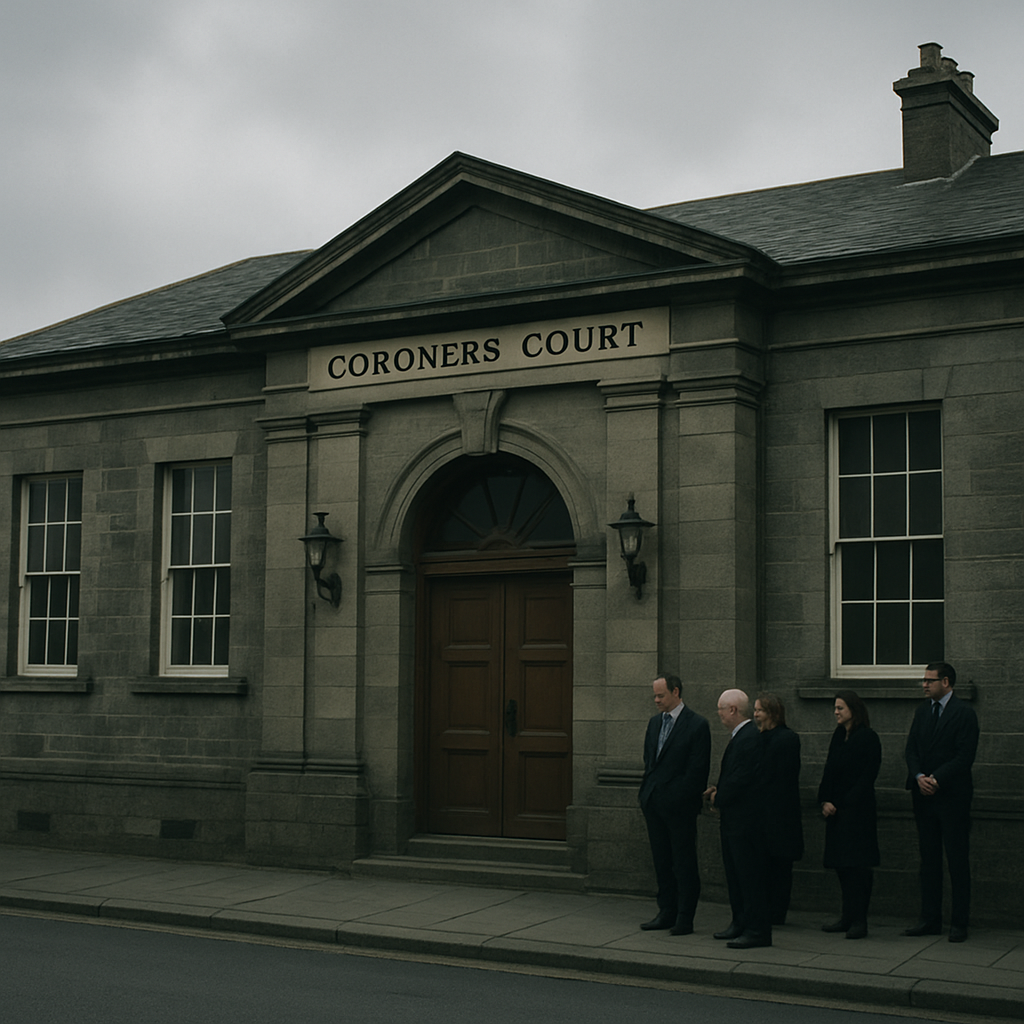
Most people only encounter the coroner’s court through news reports, and even then, it tends to be the headline rather than the process that lands. An inquest is not a trial. It is a fact-finding inquiry held by His Majesty’s Coroner when a death is sudden, violent, unnatural, or occurs in state custody. The coroner’s job is to establish who died, when, where, and how. That last word carries enormous weight.
Witnesses give evidence under oath. Medical experts are called. Institutions, NHS trusts, police forces, and private companies are required to answer questions in public. The families of the deceased have the right to legal representation and can put questions to those institutions directly. It is, structurally, one of the few moments in British civic life where an ordinary person can formally interrogate a powerful organisation and have the whole country watching.
According to the judiciary.gov.uk guidance on coroners’ courts, around 28,000 inquests are opened in England and Wales each year. The vast majority conclude quietly. But a handful catch fire.
The families who became the story
Think of the names that emerged from major UK inquests over the past decade and a half. The parents and siblings of those who died in disasters, institutional failures, or preventable tragedies who sat in those public galleries and then stood at microphones outside the building and said, clearly and calmly, that they would not stop. Their faces became recognisable. Their words were replayed on news bulletins. Their campaigns attracted supporters who had never met them and never would.
The Hillsborough inquests, which concluded in 2016 after years of hearings, brought the families of the 96 victims into a national conversation that had been running for nearly three decades. When the jury returned conclusions of unlawful killing, the families who had campaigned for that truth were not anonymous members of the public any more. They were part of British history. Anne Williams, who had fought for the truth about her son Kevin for over 20 years, had become a household name long before she died in 2013. Her story, and those of others like her, is evidence that the inquest process can give ordinary people a platform of lasting significance.
Why are these hearings drawing bigger audiences now?
The short answer is the media, but the longer answer involves the specific texture of what an inquest produces. Unlike a criminal trial, where narrative is shaped and filtered by barristers pursuing a particular outcome, an inquest can feel strikingly unmediated. A mother describing the circumstances of her child’s death in her own words. A nurse explaining, in technical but honest terms, what went wrong. A hospital trust’s legal representative trying to soften language that the documentary record contradicts. There is a kind of drama in that which no scriptwriter could improve.
Local reporters have always covered inquests, but social media has changed how that coverage travels. A quote from a family member, shared on X or picked up by a national outlet, can reach an audience of hundreds of thousands within hours. Journalists who specialise in inquest reporting, particularly those covering mental health, maternity services, and police custody deaths, have developed substantial followings precisely because the uk coroners inquest public interest landscape has shifted. People want to know what is happening in these rooms.
Podcasts have added another layer. Several independent productions have reconstructed notable inquest hearings in detail, bringing in the testimony, the procedural twists, and the human stories in ways that BBC News packages cannot always accommodate in three minutes.
Witnesses who found themselves in the national conversation
It is not only families. Expert witnesses, whistleblowers, and former employees who give evidence at high-profile inquests have found their professional lives reshaped by a single afternoon in the witness box. The consultant who contradicts her own trust’s position. The paramedic who explains, without flinching, that the delay was avoidable. The care home manager who breaks down part-way through her account and then steadies herself and continues.
These moments are not scripted. They are not performed. That is precisely why they land so hard with the public. In an era of managed communications, rehearsed press statements, and social media caution, the coroner’s court is one of the last places where institutional figures are required to speak plainly and respond in real time. Audiences notice the difference.
Some witnesses have gone on to become campaigners in their own right. Others have written books, given keynote speeches at medical conferences, or been called before parliamentary select committees specifically because of the credibility they established during an inquest. The hearing gave them a platform. What they chose to do with it defined the rest.
When testimony becomes legislation
The clearest measure of uk coroners inquest public interest translating into real-world impact is the line between a public hearing and a change in the law. Martha’s Rule, the campaign for patients and families to be able to request a second clinical opinion in hospital, grew directly from the inquest into Martha Mills, a 13-year-old who died from sepsis at King’s College Hospital in 2021. Her parents’ testimony, and their composed, persistent advocacy during and after the inquest, led to NHS England beginning the rollout of Martha’s Rule across hospital trusts from 2024 onwards.
That is not a small thing. A family who sat in a coroner’s court, described what happened to their daughter, and refused to let the system look away changed how hospitals across England now operate. The inquest was the beginning of that story, not the end. Their fifteen minutes was the moment the verdict was read and the cameras gathered outside. Everything that followed was earned through sustained, unglamorous work. But the inquest gave them the credibility and the audience to do it.
Is the attention always welcome?
Not always. Some family members who find themselves at the centre of a high-profile inquest describe the experience as retraumatising, particularly when media coverage focuses on procedural developments rather than the human beings involved. The open nature of inquests, which is essential for accountability, also means that deeply private grief is conducted in public view.
Campaigners who emerge from the process with national profiles sometimes speak candidly about the cost. The invitations to appear on panel discussions, the requests for comment on every new related story, the sense of being permanently defined by the worst thing that ever happened to you. The fame that comes from a coroner’s court is not the sort most people would seek out. It arrives uninvited, carrying a weight that celebrity without context does not.
And yet, repeatedly, the people who have been through it say they would not have stayed silent. The public interest served by an open inquest system is something they understand viscerally, because they lived inside it. The UK coroners inquest public interest story is, at its core, a story about accountability. The fame is almost incidental to that. Almost.
Frequently Asked Questions
Are UK coroners' inquests open to the public?
Yes, inquests in England and Wales are generally open to the public and press unless there are specific legal reasons to restrict access. This transparency is what allows high-profile hearings to attract significant media and public attention.
Can a coroner's inquest lead to criminal charges?
An inquest itself cannot result in criminal charges, but a conclusion of unlawful killing can prompt further investigation by the Crown Prosecution Service or the police. The inquest findings are a matter of public record and can be used as a basis for further legal proceedings.
How long does a UK coroner's inquest take?
Straightforward inquests can conclude within a few months, but complex cases involving institutions or multiple witnesses can take years. The Hillsborough inquests, for example, ran for over two years before the jury returned its conclusions in 2016.
Do families have legal representation at inquests?
Yes, families of the deceased are entitled to be represented by a solicitor or barrister at an inquest. In some circumstances, legal aid may be available, though funding for inquest representation has historically been a source of criticism from campaigners.
Leave a Reply