

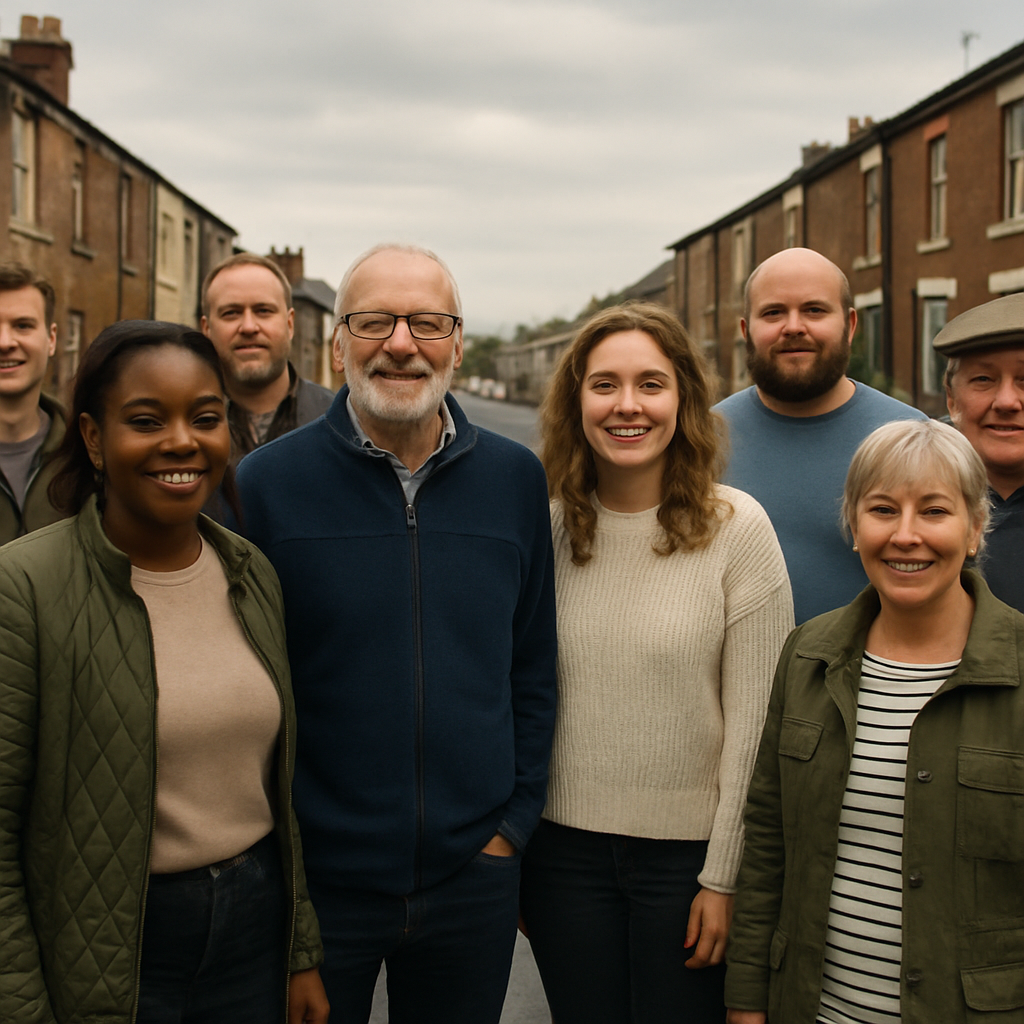
There is something almost magical about the moment a story breaks free from its local roots and lands in the national consciousness. One week it is a few hundred shares on a town’s Facebook group; the next, it is trending on every news feed in the country. These are the stories of ordinary British people who made national headlines not because they sought fame, but because they did something so quietly extraordinary that the rest of the country simply had to take notice.
What follows is a celebration of those moments. The acts of kindness that stopped people mid-scroll. The talent that emerged from nowhere. The sheer bloody-minded determination that made strangers feel proud of someone they had never met. Each one started small. Each one grew into something the whole country claimed as its own.
What Makes a Local Story Go National?
Not every heartwarming tale makes it beyond the parish newsletter, so it is worth asking what separates the ones that do. According to research from the Reuters Institute for the Study of Journalism at Oxford, readers consistently engage most with stories that combine a relatable protagonist with a clear emotional arc. In plain English: we root for real people facing real obstacles, and we want to see where it goes.
The other ingredient is specificity. Vague feel-good content washes over us. But when you read about a 74-year-old lollipop lady from Barnsley who has safely shepherded children across the same road for 43 years and is finally being celebrated by the whole community, the detail makes it real. You picture the high-visibility jacket. You imagine the cold mornings. You feel something.
And increasingly, the journey from local to national is paved by social media. A local newspaper runs the story first; someone shares it to Twitter or Facebook; a journalist at a bigger outlet picks it up. The BBC, The Guardian, or ITV News gives it oxygen, and suddenly an entire country is invested in someone they had never heard of 48 hours earlier.
The Remarkable Kindness Stories That Moved Britain
One of the most enduring recent examples came from a chip shop owner in Grimsby who, after noticing a group of schoolchildren eating lunch on a cold pavement outside because they had nowhere else to go, quietly started leaving his back room open for them every lunchtime. No fanfare. No sign on the door. Just a warm space and free squash on the counter. A teacher mentioned it in a local Facebook group; by the end of the week, the story had been shared over 80,000 times and national broadcasters were queuing up to interview him. He agreed to one interview, said he did not think it was a big deal, and then went back to frying fish.
That modesty is often central to why these stories land so powerfully. There is a distinct British discomfort with self-promotion that makes authentic acts of generosity feel especially rare and therefore especially precious. When someone genuinely does not want the attention, we give it to them anyway, and somehow that feels right.
A similar dynamic played out when a young woman in Wolverhampton set up a WhatsApp group to coordinate meals for elderly neighbours during a spell of particularly brutal January weather. Within a month, the group had 300 members, covered six postcodes, and had delivered over 1,400 meals. She was shortlisted for a local council award, turned it down saying there were more deserving nominees, and the story of her turning it down went more viral than the original act of kindness. Sometimes refusing fame is the most famous thing you can do.
Talent From the Most Unexpected Places
Britain has always had a particular affection for the unpolished diamond. Long before talent shows made it a primetime formula, there was a genuine cultural appetite for discovering someone extraordinary in the most ordinary setting.
Think of the retired postman from Carlisle who uploaded a single acoustic guitar cover to YouTube for his grandchildren to watch. He had been playing in his front room for 50 years and never performed publicly. Within a fortnight, the video had 2.4 million views. A small record label got in touch. He released a four-track EP. None of this was planned or engineered. He just played beautifully in front of a slightly wobbly camera held by his wife.
These stories resonate because they remind us that talent is not rationed by postcode or background. It does not live exclusively in London recording studios or West End rehearsal rooms. It is also in a kitchen in Carlisle on a Tuesday afternoon, and sometimes all it needs is someone to point a camera at it.
For anyone inspired to share their own talent or story more widely, having even a basic online presence makes a real difference. Whether it is a simple portfolio page or a place to host your work, tools like a Free Website Builder can give ordinary people a platform without requiring any technical know-how or a significant budget.
Determination That Made the Whole Country Stop and Stare
Some of the most powerful stories in this category are not about dramatic one-off moments. They are about years of quiet persistence finally getting the recognition it deserves.
Take the case of a community nurse in County Durham who, over 18 years, cycled to every single patient visit on her route, covering an estimated 47,000 miles on a succession of second-hand bikes. She never owned a car. She never claimed the mileage she was entitled to because she did not want to burden the NHS. When a junior colleague wrote a short piece about her for an internal newsletter, someone forwarded it to a local journalist, and within days she was featured in every major national outlet. The BBC ran a five-minute piece on her during the evening news. She watched it at home with a cup of tea and, by all accounts, found the whole thing rather embarrassing.
What made the country connect? She was not asking for anything. She was not campaigning. She was just doing her job, properly and consistently, for nearly two decades. In a news cycle that often feels saturated with grievance and noise, a story like that lands like a glass of cold water on a hot day.
Why We Need These Stories More Than Ever
There is a cynical argument that feel-good stories are a distraction, a kind of cultural comfort food that stops us engaging with harder truths. There is something in that. But there is also something important in the act of celebrating ordinary British people who make national headlines for the right reasons.
They recalibrate what we think of as significant. They remind us that the most compelling characters are not always the loudest or the most photogenic or the ones with the best PR teams. Sometimes they are the chip shop owner in Grimsby, the nurse on her bike, the woman with the WhatsApp group. Sometimes fame finds you precisely because you were not looking for it.
And these stories have a secondary effect that is worth naming: they inspire others. Every time someone reads about a local act of kindness going national, the thought follows naturally that maybe their own community has something worth celebrating too. That impulse, multiplied across thousands of towns and villages, is how local legends are made.
Britain is genuinely full of them. Most of them will never be written up. But the ones that do break through serve as a reminder that the country, at its best, is paying attention to the right things.
Frequently Asked Questions
How do ordinary British people end up making national headlines?
Most of the time, a local newspaper or community social media post picks up the story first. If it resonates emotionally and gets widely shared, national outlets like the BBC or ITV News then amplify it to a much larger audience.
What types of stories are most likely to go viral in the UK?
Stories involving genuine, unplanned acts of kindness, long-standing quiet dedication, or unexpected talent tend to perform best. Authenticity is crucial, audiences quickly sense when something has been staged or engineered for attention.
Can anyone share their local hero story with the national press?
Yes. Most national publications have a tips or story submission page, and local journalists are often the best first port of call. Community Facebook groups and Twitter are also effective ways to get a story in front of the right people.
Why do stories about ordinary people resonate more than celebrity news?
Relatable protagonists create stronger emotional connections. When someone is facing the same pressures or living in a similar situation to the reader, the story feels immediate and real rather than aspirational or distant.
How can someone build on local recognition to grow a wider platform?
Having an online presence helps enormously, even a simple website or social media profile allows journalists and supporters to find more information. Engaging consistently with local media and community groups also helps stories gain traction over time.
Leave a Reply