

There is a particular kind of person who ends up running an independent record shop. They have opinions about pressing quality. They know exactly which copy of a specific album was sourced from which plant, and they will tell you about it whether you asked or not. For decades, that encyclopaedic intensity was largely confined to the shop floor, shared between the regulars and the odd curious stranger who wandered in off a wet Saturday afternoon. Then something shifted. The same passion that made these shop owners brilliant curators turned out to make them compelling on camera too, and the independent record shop UK vinyl revival found its spokespeople.
Vinyl sales in the UK have now surpassed CD sales for three consecutive years. According to the BPI, over 6 million vinyl records were sold in the UK in 2023 alone, and the trajectory has continued upward since. That is not a nostalgia blip. That is a cultural realignment, and the independent shops sitting at the centre of it are no longer quiet backwater institutions. They are content studios, community hubs, and increasingly, places where the person behind the counter is as much a draw as the stock itself.
From curation to character: how shop owners became personalities
Walk into Polar Bear Records in Bristol on a Tuesday morning and you might find the owner mid-way through recording a short video explaining why a recently reissued jazz record sounds noticeably worse than the original pressing. It is the kind of niche, slightly combative content that has no right to pull in tens of thousands of views. And yet it does. The same pattern plays out in Nottingham at Rough Trade’s long-established East Midlands presence, and in smaller, one-person operations in places like Hebden Bridge, Margate, and Inverness. The owners are stepping out from behind the counter, talking directly to camera, and finding that people are genuinely interested.
I have spoken to a few of these shop owners over the past year, and what strikes me is that none of them set out to build an audience. Most started posting because it felt like a natural extension of what they were already doing: recommending records, explaining provenance, arguing passionately about which Bowie era holds up. The audience arrived because that kind of genuine expertise, delivered without a script, is exactly what people are hungry for right now.
Think about what the independent record shop UK vinyl revival actually means at street level. It is not just about the product. It is about the experience of being guided through a collection by someone who genuinely cares. That experience translates surprisingly well to short-form video. A sixty-second clip of a shop owner explaining why a first UK pressing of a late-seventies punk record is worth four times the price of a German repress? That gets saved, shared, and commented on. People argue in the replies. New followers appear. The shop gets foot traffic from three towns over because someone saw a reel and thought, I want to go there.
The community that forms around the crate-diggers
What the best of these shop owners have understood is that their audience is not just buyers. It is a community of people who want to belong to something. Record Culture, a shop in Edinburgh, has built a mailing list of several thousand people, runs listening sessions above the shop on Thursday evenings, and regularly features customers in their social content. The owner, Callum, films brief customer reviews in the shop itself, with people holding the record they have just bought and saying a few words about it. It is charming precisely because it is unpolished. The lighting is whatever the shop’s strip lights manage. The sound is ambient. It works because it is real.
This mirrors something I have noticed across a range of unlikely British communities finding their moment online. The market town auctioneers who broke through on social media had the same quality: deep knowledge, strong personality, and an environment with genuine character. The same goes for village fête organisers who accidentally went national by simply being themselves on camera. There is a pattern here. Authenticity, when it is genuinely rooted in something people care about, does not need a production budget.
For record shops specifically, Record Store Day has played a role. The annual event, held each April, brings queues outside shops that would normally see a quiet Saturday morning. But the shops that have built real followings are not just leaning on that one day a year. They are posting year-round, engaging with comments, doing live streams of new stock arrivals, and occasionally hosting in-store sessions with local or touring artists. Rat Records in South London has done exactly this, turning what was already a well-loved shop into something with a documented, ongoing story that people follow week to week.
Why the character of the owner matters more than the stock
I would argue that the specific records in any given independent shop matter less than the person selling them, at least when it comes to building an online presence. You can buy almost any record online. What you cannot buy online is the experience of having someone genuinely knowledgeable explain why a particular record deserves your attention, and do it with enough personality that you want to come back just to hear what they say next.
Shops like Monorail Music in Glasgow have traded on exactly this for years. The staff there have strong opinions and are not shy about them. That has historically been a quality that either charmed or repelled customers in person. Online, it is an asset. The algorithm rewards confidence, specificity, and people who clearly know what they are talking about. A record shop owner who has spent thirty years in the business and can tell you exactly why a particular UK original beats every reissue ever made is sitting on a content goldmine, whether they realise it or not.
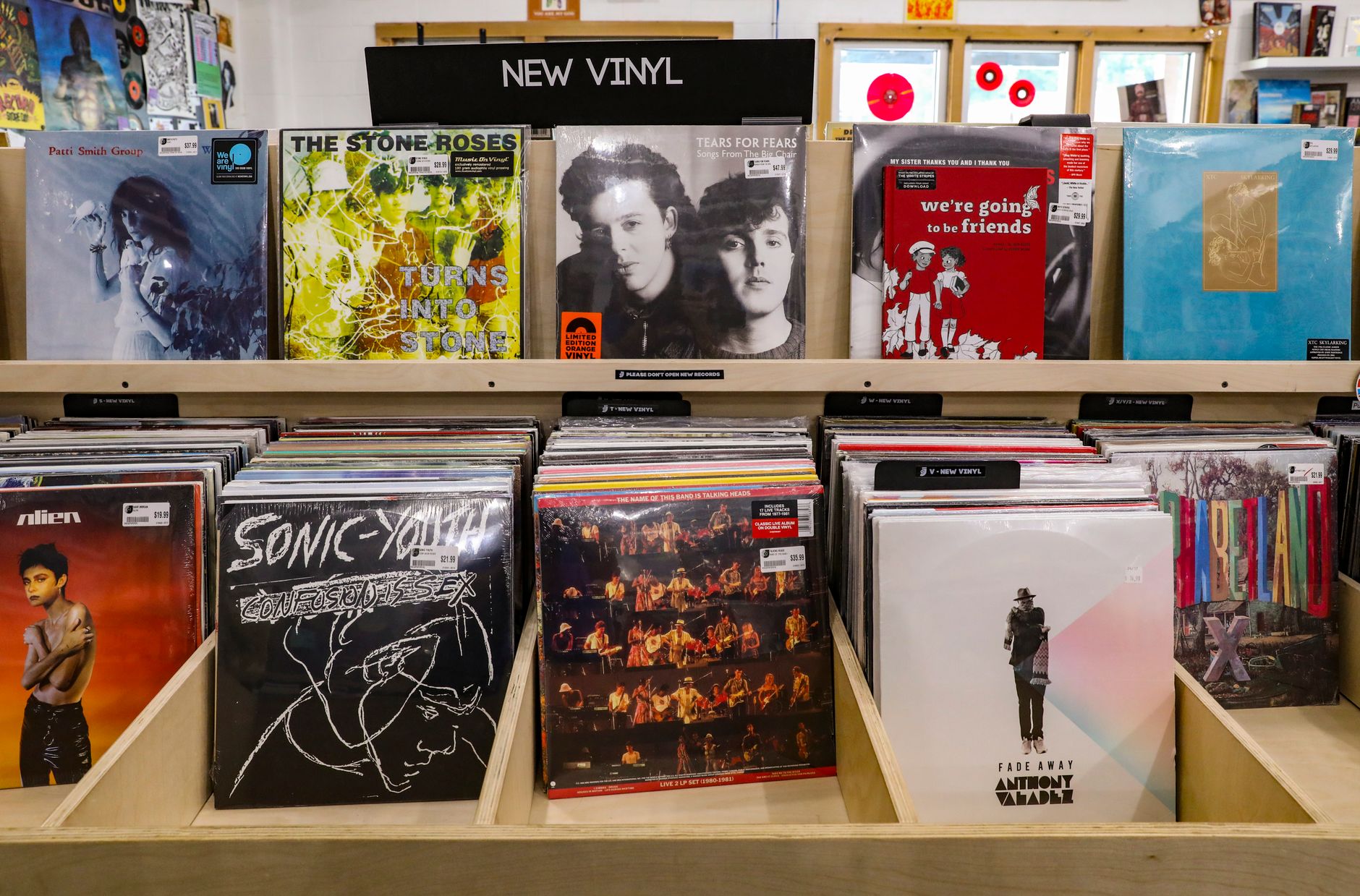
There is also something worth noting about the physical space itself. A well-stocked independent record shop is visually compelling in a way that is hard to manufacture. Floor-to-ceiling shelves of coloured spines, listening stations, handwritten recommendation cards, the slight disorder of a shop where stock turns over fast. It photographs beautifully. It films beautifully. The backdrop that these shop owners take entirely for granted is one that a lifestyle brand would spend a significant budget trying to recreate.
The independent record shop UK vinyl revival is not just a commercial story. It is a cultural one, and the people driving it from behind the counter deserve their moment in the spotlight. They are not influencers in the conventional sense. They are experts who happen to be interesting, in a setting that happens to be photogenic, talking about something that a growing number of people genuinely care about. That combination does not come along very often. When it does, it tends to stick around.
If you are already following the trend of unexpected British communities finding online audiences, the story of British librarians building a presence on social media runs surprisingly close to this one. Same principle: public-facing role, deep knowledge, underestimated personality. Different shelves, same instinct.
Frequently Asked Questions
Why are independent record shops becoming popular again in the UK?
Vinyl sales in the UK have grown consistently for several years, with over 6 million records sold in 2023 according to the BPI. Independent shops offer something streaming cannot: expert curation, physical community, and the experience of discovering music with guidance from someone who genuinely knows their stock.
How are record shop owners building audiences on social media?
Most are posting short videos explaining pressing quality, reviewing new arrivals, and sharing the character of their shops without a formal content strategy. The combination of niche expertise and genuine personality tends to find an audience organically, particularly on platforms like Instagram and TikTok.
What is Record Store Day and does it help independent shops?
Record Store Day is an annual event held each April in the UK and internationally, during which record labels release limited editions exclusively through independent shops. It brings significant footfall and media attention, though the shops that build lasting followings tend to maintain year-round activity beyond the event itself.