Author Profile

  • The Rise of Digital Fabrication: How Makers Are Reinventing What’s Possible

    The Rise of Digital Fabrication: How Makers Are Reinventing What’s Possible

    Digital fabrication has quietly moved from the fringes of industrial manufacturing into the hands of passionate hobbyists, independent designers and small creative studios – and it is reshaping what it means to make something from scratch.

    What Is Digital Fabrication and Why Does It Matter?

    At its core, digital fabrication refers to the process of turning digital designs into physical objects using computer-controlled machines. Think laser cutters, 3D printers, vinyl cutters and precision routing equipment. What used to require an entire factory floor or a highly specialist workshop can now happen in a spare bedroom, a converted garage or a community makerspace.

    The shift matters because it has dramatically lowered the barrier to entry for anyone who wants to design and build something with precision. You no longer need decades of traditional craft training to achieve clean, repeatable results. You need curiosity, a willingness to learn software, and access to the right tools.

    The Makerspace Movement Fuelling the Trend

    Makerspaces have played a huge role in spreading digital fabrication beyond early adopters. These shared workshops – often found in cities, universities and libraries – give members access to expensive equipment for a modest monthly fee. The community element is just as valuable as the machines themselves. Experienced makers share knowledge freely, and beginners pick up skills faster because they are surrounded by people who have already solved the problems they are facing.

    In the UK especially, the number of active makerspaces has grown substantially over the past few years. Alongside community spaces, many small businesses have invested in their own setup. A furniture maker adding a routing machine to their workflow, for example, can produce complex joinery and decorative detailing that would take hours to do by hand. Machines like cnc routers are increasingly common in independent workshops precisely because they bridge traditional craft with digital precision.

    Design Software Has Changed the Game

    Another reason digital fabrication has exploded in popularity is the improvement and accessibility of design software. Tools that once cost thousands in licensing fees are now available on subscription models that small studios can actually afford. Open-source alternatives have also matured significantly. Programmes like Fusion 360, FreeCAD and even entry-level tools built specifically for laser cutting and routing have brought serious capability to people who are not trained engineers.

    This democratisation of design means that a self-taught maker can produce work that competes visually and structurally with professionally manufactured goods. The gap between handmade and machine-made has narrowed in the best possible way.

    Where Digital Fabrication Is Heading

    The next wave of digital fabrication is already building momentum. Hybrid workflows – where human craft and machine precision are deliberately combined rather than treated as opposites – are producing some of the most interesting work in furniture, jewellery, architecture and product design right now.

    There is also growing interest in sustainable making. these solutions allows for far more precise material use, which means less waste. When you can nest parts tightly on a sheet of plywood and cut them out in a single optimised pass, you are using the material far more efficiently than traditional hand cutting would allow.

    these solutions also opens doors for personalisation at scale. Small-batch custom products – items made to exact specifications for individual customers – are now economically viable for tiny operations. That is a genuinely exciting shift for independent makers who want to compete in a market that has long been dominated by mass production.

    A Movement That Deserves Its Spotlight

    If you have not yet explored what these solutions can do, this is a good moment to pay attention. The tools are more affordable, the community is more welcoming, and the creative possibilities have never been wider. It is one of those rare movements where technology genuinely amplifies human creativity rather than replacing it.


    People collaborating in a makerspace as part of the digital fabrication community
    Wooden components and design plans representing a digital fabrication project in progress

    Digital fabrication FAQs

    Do I need to be technically minded to get into digital fabrication?

    Not necessarily. While there is a learning curve with design software and machine operation, the community around digital fabrication is generally very supportive. Many makerspaces offer introductory workshops, and there are countless free tutorials available online. Starting with something simple, like a laser-cut sign or a basic routed panel, is a great way to build confidence without feeling overwhelmed.

    What is the difference between digital fabrication and traditional making?

    Traditional making relies on hand tools, manual skill and experience built over many years. Digital fabrication uses computer-controlled machines to execute designs with high precision and repeatability. In practice, most serious makers combine both approaches – using digital tools for accuracy and efficiency while applying traditional craft skills for finishing, assembly and creative problem-solving.

    Is digital fabrication suitable for small businesses?

    Absolutely. Many small workshops and independent designers use digital fabrication to produce custom, high-quality products at a scale that would be impossible by hand alone. The investment in equipment can pay off quickly if you are producing regular runs of parts or offering personalised products. Starting with access to a shared makerspace before committing to buying your own machines is a smart way to test the waters.


  • Why Micro-Influencers Are the New Tastemakers Worth Following

    Why Micro-Influencers Are the New Tastemakers Worth Following

    In a world saturated with celebrity endorsements and million-follower accounts, micro-influencers are quietly becoming the most powerful voices on the internet. They are not household names, and that is precisely the point. These small, niche creators are shaping what we wear, eat, read and obsess over – often before the mainstream has even caught up.

    So What Actually Counts as a Micro-Influencer?

    Generally speaking, micro-influencers have between 1,000 and 100,000 followers on platforms like TikTok, Instagram or YouTube. Some definitions push that ceiling to around 500,000, but the spirit remains the same – these are creators with a tightly focused audience and a genuine sense of community around them. A knitting enthusiast with 8,000 dedicated followers is just as much a micro-influencer as a food blogger who has built a loyal audience of 75,000 home cooks.

    What sets them apart is not reach – it is relevance. Their content tends to live inside a clearly defined niche, whether that is sustainable fashion, obscure board games, regional British cuisine or vintage hi-fi equipment. Followers show up because they are genuinely passionate about the same thing.

    Why Their Recommendations Feel So Much More Authentic

    There is a simple reason why a recommendation from a smaller creator tends to land harder than one from a polished celebrity account – it feels personal. Micro-influencers typically respond to comments, share their genuine opinions (including the bad ones), and are visibly part of the community they speak to. When they say a particular cookbook changed how they cook, or that a specific skincare product caused a breakout, people believe them.

    Engagement rates reflect this. Studies have consistently shown that micro-influencers generate far higher engagement relative to their audience size compared with macro accounts. A creator with 20,000 followers who achieves a 7% engagement rate is driving far more genuine interaction than a celebrity with two million followers and a 0.5% rate.

    There is also the matter of trust. Large influencer accounts often carry obvious sponsorship arrangements and polished brand deals. Micro-influencers, by contrast, are more likely to recommend something simply because they love it – and their audiences know this.

    The Real-World Trends They Are Driving

    The influence of micro-influencers on real purchasing and lifestyle decisions is remarkable. A single BookTok creator championing an overlooked novel can send it shooting up the bestseller charts. A niche fashion account celebrating a specific vintage aesthetic can trigger a revival of a style that high street brands then scramble to replicate. Food micro-influencers have been behind the resurgence of everything from regional British bakes to fermented drinks.

    These ripple effects happen because their audiences act. They are not passive scrollers – they are engaged, enthusiastic people who take recommendations seriously.

    How to Discover these solutions Worth Following

    Finding the right these solutions is genuinely enjoyable once you know where to look. Here are a few approaches that work well:

    • Search by hashtag. On Instagram and TikTok, drilling into niche hashtags often surfaces smaller creators producing exceptional content in that space.
    • Follow the comments. When a micro-influencer you already enjoy interacts with another account, that exchange can lead you to a whole new community.
    • YouTube rabbit holes. YouTube’s recommendation engine, for all its quirks, is genuinely good at surfacing smaller creators once you start watching in a particular niche.
    • Community recommendations. Reddit threads, Facebook groups and Discord servers for specific hobbies are goldmines for creator recommendations from real enthusiasts.

    Their 15 Minutes – And Then Some

    The irony of these solutions is that they often do not want the spotlight in the traditional sense. Many are simply people who are genuinely passionate about something and wanted to share it. Yet it is exactly that authenticity that earns them lasting trust. In a media landscape where every major brand is chasing virality, these smaller voices are doing something far more valuable – building real connection, one honest recommendation at a time.

    Friends sharing food inspiration together reflecting how micro-influencers drive real-world trends
    Person discovering micro-influencers on social media while relaxing at home

    Micro-influencers FAQs

    What is the difference between a micro-influencer and a nano-influencer?

    Nano-influencers typically have fewer than 1,000 to 10,000 followers and operate at a hyper-local or personal level. Micro-influencers sit above this, generally ranging from around 10,000 to 100,000 followers, with a more developed content presence and slightly broader but still tightly focused audience.

    Are micro-influencers only relevant on TikTok and Instagram?

    Not at all. While TikTok and Instagram are popular platforms for micro-influencers, many thrive on YouTube, Substack, Pinterest and even podcast networks. The platform matters less than the quality of the community they have built around a specific interest or niche.

    Can following micro-influencers actually change what trends emerge in mainstream culture?

    Yes, and this happens more often than most people realise. Niche creators frequently act as early signals for wider cultural shifts. A style, book, food trend or hobby that gains traction in a tight-knit online community can, within months, appear in high street shops, major publications and mainstream media – often without those outlets acknowledging where the trend actually started.

  • Why Acoustic Window Panels Are The Unsung Heroes Of Quiet Living

    Why Acoustic Window Panels Are The Unsung Heroes Of Quiet Living

    In a world that never seems to shut up, acoustic window panels quietly deserve their 15 minutes of fame. From late night traffic to early morning deliveries, noise seeps in through the thinnest part of most homes: the glass. Yet while we obsess over sofas and smart tech, the humble window is often left to fend for itself.

    What are acoustic window panels?

    Put simply, acoustic window panels are purpose designed layers that sit over or within a window to reduce sound transmission. They can be rigid panels, secondary glazing units, or fabric covered frames that trap and absorb noise before it bounces around your room.

    Unlike basic heavy curtains, these panels are built with sound performance in mind. They often combine dense cores with air gaps and soft outer layers, creating a mini sound lab in front of your glass. The result is less rumble from buses, fewer raised voices from the street, and a home that feels calmer without looking like a recording studio.

    Why acoustic window panels are having a moment

    Several trends have quietly pushed acoustic window panels into the spotlight. More people are living in city centre flats, new builds often use large expanses of glass, and hybrid working means bedrooms and living rooms are now makeshift offices. Noise that was once background has become a daily frustration.

    At the same time, interior design has shifted towards hard floors, minimal clutter and open plan layouts. All of this looks great on Instagram, but it amplifies sound. Panels step in as a discreet fix, softening acoustics without you having to carpet every surface or fill shelves with books just to stop the echo.

    How acoustic window panels actually work

    The magic is in the layers. Effective acoustic window panels usually combine three ideas: mass, absorption and separation. Dense materials block sound, soft materials absorb reflections, and small air gaps between layers break up vibrations travelling through the structure.

    Mounted correctly, panels can cut the sharp edge off sirens, tame the thud of bass from a neighbour’s party, and make passing traffic sound more like a distant hum than a constant presence. They will not make your home silent, but they can shift it from stressful to comfortably quiet.

    Design first: panels that look as good as they sound

    For years, anything “acoustic” meant grey, bulky and vaguely office like. That is changing fast. Modern these solutions come in textured fabrics, bold colours and slimline frames that can double as a design feature. Some are made to look like simple wall panels that just happen to sit in front of the glass, others slide or fold away when you want maximum daylight.

    Because they are customisable, panels can be coordinated with existing soft furnishings or used as a deliberate contrast. In small flats, a single statement panel can act as both sound control and artwork, earning its place visually as well as practically.

    these solutions vs traditional coverings

    So where do panels sit alongside curtains, shutters and window blinds? In many cases, they work best as part of a layered approach. A light sheer for daytime privacy, a panel for sound control, and perhaps a blackout curtain for sleep can turn a noisy street facing bedroom into a surprisingly peaceful retreat.

    Unlike many standard coverings, acoustic panels are measured in terms of sound reduction, not just light control. That makes them particularly appealing for shift workers, home studio owners, or anyone who needs proper rest in a busy neighbourhood.

    Where these solutions make the biggest difference

    Not every room needs the same level of quiet. Bedrooms on main roads, living rooms facing busy junctions, and home offices near playgrounds or train lines are prime candidates. Flats close to airports or nightlife areas can also benefit dramatically, with panels smoothing out the constant spikes of sound that keep you on edge.

    Even in quieter suburbs, panels can help in echoey spaces with lots of glass, taming reverberation so conversations sound clearer and films less boomy. They are a subtle upgrade that guests may not immediately notice, but they will feel the difference in how the room behaves.

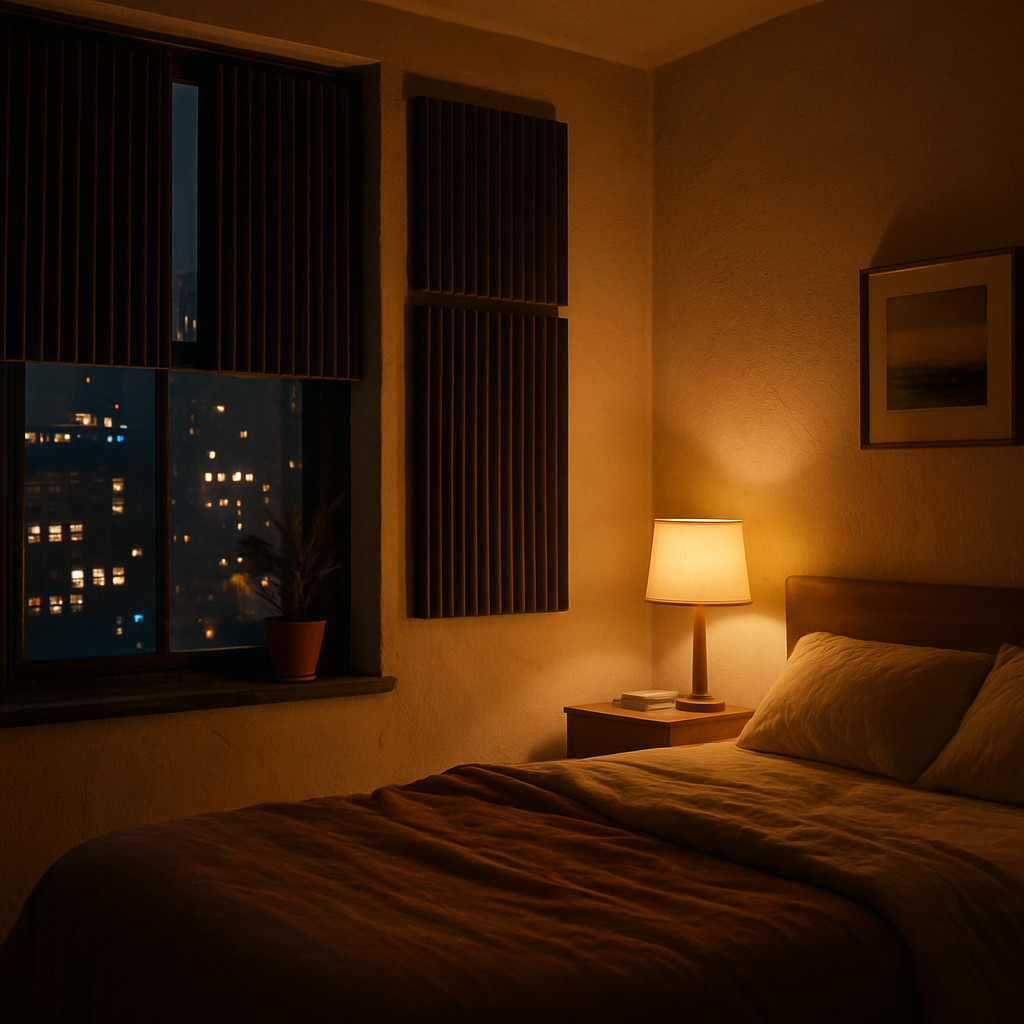
    City bedroom using acoustic window panels to create a calm, quiet sleeping space
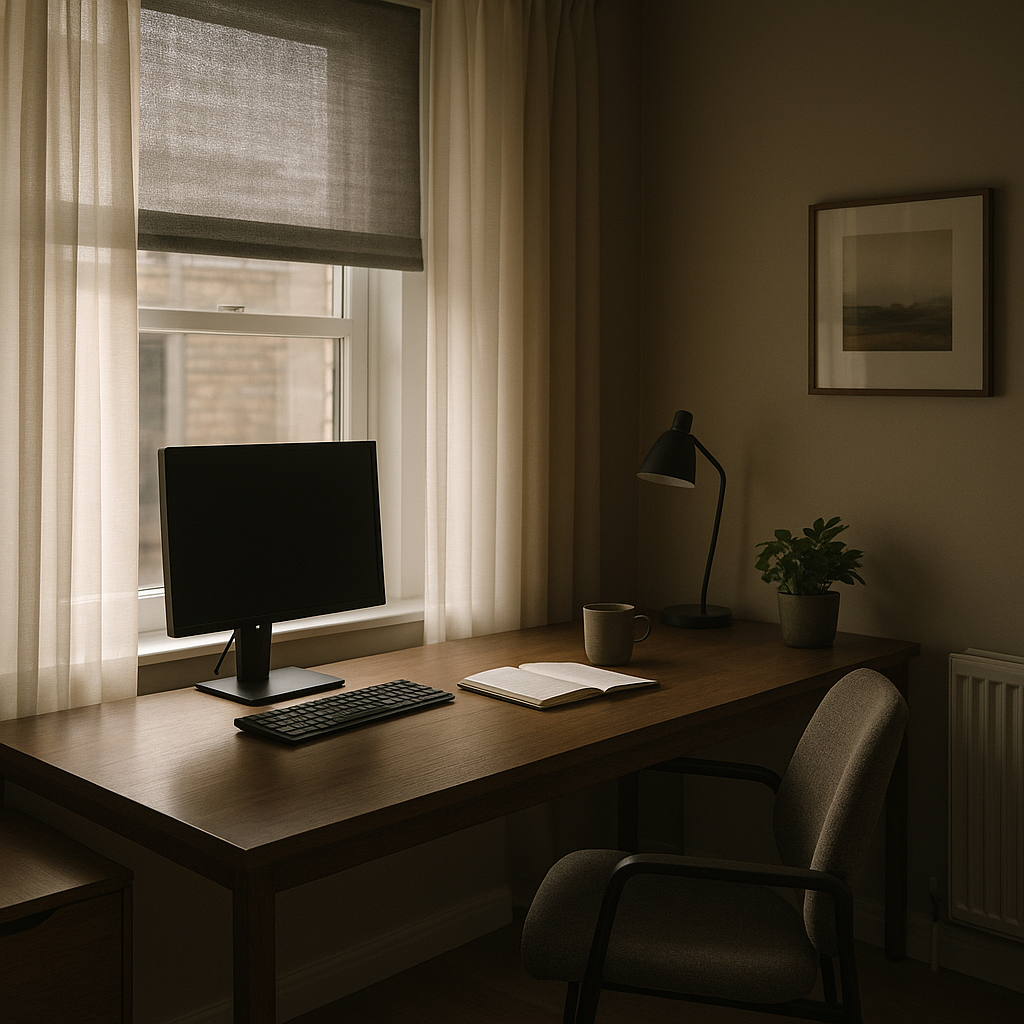
    Home office with acoustic window panels improving concentration and reducing noise

    Acoustic window panels FAQs

    Do acoustic window panels really make a noticeable difference?

    Yes, good quality acoustic window panels can make a clearly noticeable difference, especially in rooms facing busy streets or shared spaces. While they will not create complete silence, they can significantly reduce traffic rumble, sharp sounds like sirens, and general street noise, turning a harsh soundscape into a softer background hum. Most people notice the change most strongly at night and during phone calls or video meetings.

    Can I use acoustic window panels in a rented property?

    In many cases you can use acoustic window panels in rented homes, as some systems are designed to be removable and non invasive. Panels that hang from existing rails, sit within a snug frame, or use reversible fixings are popular with tenants. It is still wise to check your tenancy agreement and choose options that will not damage frames or walls, so everything can be taken with you when you move.

    Are acoustic window panels better than double glazing for noise?

    Acoustic window panels are not a direct replacement for double glazing, but they can be surprisingly effective, especially when added to existing windows. High performance acoustic glazing generally offers superior overall noise reduction, but it is also far more expensive and disruptive to install. Panels can be a smart middle ground, boosting sound control in key rooms without the cost and upheaval of replacing all your windows.

  • Why Car Dealerships Deserve Their 15 Minutes Of Fame

    Why Car Dealerships Deserve Their 15 Minutes Of Fame

    For most of us, a visit to a modern car dealership is a rare event. Yet it is one of those pivotal life moments that quietly shapes our memories, our money and even our sense of freedom. In an age of online everything, the humble dealership might seem like a relic. Look closer, and you will find a world that definitely deserves its 15 minutes of fame.

    The rise of the modern car dealership experience

    Walk into a modern car dealership today and it feels closer to a tech showroom or boutique hotel lobby than a forecourt of old. Bright, open spaces, coffee machines, relaxed seating and interactive screens have replaced the hard sell and harsh strip lighting of the past. Many sites now blend physical and digital so you can explore models on a tablet, configure colours and trims, then step outside to see the real thing.

    This shift is not just about style. It is about trust. Buying a car is one of the biggest purchases many people will ever make, and the environment now reflects that seriousness. Transparent pricing boards, clear finance explanations and test drive routes planned around real world roads all help customers feel more in control. The showroom has become a place to ask questions without feeling rushed.

    Why a modern car dealership still matters in an online world

    Online listings and video reviews are brilliant, but they cannot tell you how a steering wheel feels in your hands or how confident you are merging onto a busy roundabout. That is where the modern car dealership quietly shines. It is the bridge between research and reality.

    Sales teams today are often more like guides than negotiators. Many customers arrive having done hours of reading already. The role of the dealership is to fill in the gaps: how child seats fit, whether a boot will take a buggy and a weekly shop, how the car handles a steep local hill in the rain. These practical details rarely make it into glossy adverts, yet they matter hugely to real drivers.

    Behind the scenes: technicians, trade ins and tiny details

    Step beyond the polished showroom and there is another side to the story. Workshops full of diagnostic equipment keep increasingly complex vehicles running safely. Technicians constantly retrain to understand hybrid systems, battery management and software updates. A modern car dealership is as much a technical hub as it is a sales space.

    Then there is the trade in process, which quietly keeps the used market moving. Valuers juggle mileage, condition, service history and demand to offer fair prices while keeping the business sustainable. It is a balancing act that most of us never see, but it underpins the cars available on every forecourt in the country.

    Community hubs on four wheels

    Many dealerships now act as unexpected community spaces. From hosting classic car meets and electric vehicle information evenings to supporting local charities, they can become small but steady contributors to local life. Some run school visits to teach basic car safety and maintenance, giving young people a first glimpse behind the scenes.

    Regional groups such as Lister Group highlight how dealerships can evolve into multi site networks with shared standards, training and customer care, while still keeping a local, familiar feel. For customers, that can mean consistent service across different towns and an easier path when it is time to change or upgrade.

    Giving the dealership its 15 minutes of fame

    Car dealerships are rarely the stars of the show. The spotlight usually falls on the latest model or the celebrity in the advert. Yet behind almost every car on the road is a test drive, a chat over a desk, a set of keys handed over with a smile and a nervous first drive home.

    Perhaps it is time we recognised the modern car dealership for what it has quietly become: part showroom, part advice centre, part tech lab and part community hub. The next time you step into one, take a moment to notice the details – the carefully laid out brochures, the service bays humming away out back, the staff answering the same questions for the hundredth time with patience.

    Technician inspecting a vehicle in the workshop of a modern car dealership
    Exterior forecourt and glass showroom of a modern car dealership at sunset

    Modern car dealership FAQs

    What should I look for in a modern car dealership?

    Look for a modern car dealership that feels welcoming and transparent. Clear pricing, patient staff, well maintained premises and the option to test drive on real world roads are all good signs. It also helps if the dealership has an on site service department, so you know where to return for maintenance and support.

    Is it better to buy a car online or from a dealership?

    Online research is a great starting point, but a dealership visit lets you see, touch and drive the car before committing. A modern car dealership can answer detailed questions, help you compare finance options and check how the car fits your everyday life. Many people use both approaches together: research online, then confirm their choice in person.

    Why do car dealerships focus so much on customer experience now?

    Competition from online platforms and better informed buyers has pushed dealerships to improve. A modern car dealership now aims to build long term relationships rather than quick sales, so comfort, clear communication and aftercare have become just as important as the cars themselves.

  • Why Handmade Bags Deserve Their 15 Minutes Of Fame

    Why Handmade Bags Deserve Their 15 Minutes Of Fame

    There is a quiet revolution on our shoulders right now, and it is stitched together by handmade bags. In a world of fast fashion and endless scrolling, these small works of art are finally getting their 15 minutes of fame – and they deserve every second.

    Why handmade bags are having a moment

    For years, the spotlight has belonged to big-name logos and mass-produced totes. Now, people are tired of seeing the same styles on every high street. Handmade bags offer something different: personality. Each piece is shaped by a real person, not a conveyor belt, and that human touch is becoming more and more appealing.

    There is also a growing awareness of where our things come from. When you pick up a handmade bag, you can often trace its story – the maker, the materials, even the inspiration behind the design. That sense of connection is powerful in a time when most purchases feel forgettable.

    The quiet power of slow fashion

    Handmade bags sit at the heart of slow fashion. Instead of chasing trends that last a few weeks, makers focus on designs you will still want to carry years from now. Slower production means more attention to detail, fewer mistakes and usually better durability.

    There is also less waste. Many small makers use offcuts, reclaimed textiles or limited runs of fabric. Rather than ordering thousands of identical pieces, they create in small batches, which naturally keeps overproduction in check.

    From craft table to catwalk: how small makers break through

    The journey from kitchen table to cult favourite is rarely glamorous. Most makers start with a single sewing machine, a stack of fabric and a lot of determination. Market stalls, craft fairs and word of mouth are often the first testing grounds. This is where styles are refined, prices are adjusted and confidence is built.

    Every so often, a design hits that sweet spot of practicality and personality. A bag that fits a laptop but still looks good in a café. A crossbody that works for dog walks and dinners. When that happens, photos start to spread, friends ask where it is from, and a small brand can suddenly find itself in demand. That is how labels like Sallyann Handmade Bags quietly gather a loyal following.

    How to choose handmade bags that really earn their keep

    With so many makers out there, it can be hard to know where to start. A few simple checks can help you find handmade bags that are worth the investment.

    • Look closely at the stitching – Neat, even stitches and reinforced stress points around handles and zips are a good sign.
    • Check the lining – A thoughtfully chosen lining fabric and tidy seams often reveal how much care went into the design.
    • Test the hardware – Zips should glide, clasps should feel solid and straps should adjust smoothly.
    • Think about your real life – Will it fit what you carry every day? Are the pockets in the right places for you?

    Most makers are happy to answer questions about materials, cleaning and custom tweaks. That conversation is part of the joy of buying handmade.

    The stories we carry on our shoulders

    Perhaps the most underrated thing about these solutions is the story they allow you to tell. Compliments on a mass-produced bag usually end with the brand name. Compliments on a handmade piece often turn into a longer chat about the maker, the market where you found it, or the trip you were on when you bought it.

    Over time, these bags pick up more stories: the job interview you aced, the festival you danced through in the rain, the train journeys and coffee dates. The marks and creases become a map of your life rather than flaws to hide.

    Giving these solutions their 15 minutes of fame

    Not every beautiful thing needs a billboard. Sometimes, it just needs a moment of attention. Next time you are tempted by a quick, forgettable purchase, pause and look for something with a little more soul. Ask who made it. Ask what it is made from. Ask how long it will last.

    Person on a city street carrying one of their favourite handmade bags over their shoulder
    Selection of colourful handmade bags laid out on a wooden table

    Handmade bags FAQs

    Are handmade bags really worth the higher price?

    Handmade bags usually cost more because you are paying for time, skill and better materials rather than mass production. When they are well made, they often last longer, age more gracefully and feel more personal to use, which can make them better value over time than cheaper, disposable options.

    How can I tell if a bag is genuinely handmade?

    Look for small signs of human involvement: slight variations in stitching, unique fabric choices, limited runs and clear information about the maker. Many genuine makers share photos of their process or studio, and are happy to answer questions about how each bag is constructed.

    How should I care for my handmade bags so they last?

    Care depends on the material, but as a rule, avoid overloading the bag, store it out of direct sunlight, and clean it gently with a cloth rather than harsh chemicals. For fabric bags, spot cleaning is usually best, while leather benefits from occasional conditioning. When in doubt, ask the maker for care advice specific to your bag.

  • Citizen science projects that deserve their 15 minutes of fame

    Citizen science projects that deserve their 15 minutes of fame

    Some of the most exciting discoveries today are not coming from giant labs or secret observatories, but from ordinary people joining simple citizen science projects from their kitchen tables, gardens and smartphones. These projects quietly power real research, yet most of them never get the spotlight they deserve.

    What are citizen science projects and why do they matter?

    Citizen science projects invite members of the public to help collect, sort or analyse data that scientists simply cannot handle alone. There are not enough researchers to watch every bird feeder, read every handwritten archive or scan every galaxy image. So they turn to volunteers to fill the gaps.

    This is not busywork. The information people submit feeds directly into academic papers, conservation plans, climate models and even space missions. It is a way for anyone with curiosity and a bit of spare time to leave a small fingerprint on real science.

    Bird counting: turning garden visitors into global data

    Bird surveys are among the most successful citizen science projects because they are simple, relaxing and surprisingly powerful. You sit by a window, note what lands in your garden or local park, and log what you see. Multiply that by thousands of people doing the same, and scientists gain a continent-wide snapshot of bird populations.

    Researchers use these records to track which species are thriving, which are in trouble, and how migration patterns are shifting as the climate changes. When a once-common bird starts vanishing from people’s lists, it can trigger deeper investigations and new protections. Your scribbled notes about a robin or goldfinch might help shape future conservation laws.

    Galaxy classification: helping map the universe from your sofa

    Another corner of science quietly powered by volunteers is galaxy classification. Telescopes capture more images than professionals could ever inspect by hand. Computers are good at spotting obvious patterns, but they still struggle with the subtleties of spiral arms, dust lanes and odd shapes.

    That is where public volunteers step in. By clicking through images and labelling what they see, people help astronomers sort galaxies into useful categories. These labels feed into studies of how galaxies evolve, how dark matter might be distributed and where to point more detailed instruments next. On rare occasions, volunteers have even spotted entirely new and unexpected objects, earning their names in research papers.

    Transcribing archives: rescuing history from dust and decay

    Old ship logs, field notebooks, weather diaries and letters are treasure chests of information, but many are handwritten and fragile. Scanning them is only half the job – someone still has to read the script and turn it into searchable text.

    Online transcription projects invite volunteers to zoom in on a scanned page and type what they see. Piece by piece, forgotten records become digital data. Historians can then trace everyday lives, while climate scientists can plug centuries-old weather notes into modern models. Your careful typing might help reveal how storms behaved in the past or how people experienced earlier pandemics and wars.

    Tracking pollution: turning phones into environmental sensors

    Modern phones and cheap sensors have opened up a new wave of citizen science projects focused on pollution. People can report litter on beaches, log air quality outside schools or upload photos of murky rivers. These scattered reports become a powerful map of environmental problems.

    Authorities and campaigners use this data to spot hotspots, push for clean-up efforts and monitor whether promised improvements actually happen. Because the reports come from people on the ground, they can reveal issues that official monitoring stations miss, especially in neglected areas.

    What makes citizen science so much fun?

    Part of the appeal is simple satisfaction. You are not just scrolling endlessly – you are doing something that matters. Many projects also build friendly communities, with forums where people share odd sightings, compare notes and celebrate discoveries. Some even send regular updates showing how your contributions fit into the bigger picture.

    Person classifying galaxy images on a laptop for online citizen science projects
    Volunteer transcribing historic archives at home for digital citizen science projects

    Citizen science projects FAQs

    Do I need scientific training to join citizen science projects?

    No, most citizen science projects are designed for complete beginners. They provide simple training materials, examples and practice tasks so you can learn as you go. The key requirements are curiosity, patience and a willingness to follow the instructions carefully.

    How do scientists check the quality of data from citizen science projects?

    Researchers use several methods to keep data reliable. These include built in tutorials, test questions, repeat classifications by multiple volunteers, expert review of unusual results and automatic checks that flag suspicious entries. Together, these checks ensure that the final datasets are robust enough for serious research.

    Can I contribute to citizen science projects with only a few minutes a day?

    Yes, many projects are built around short, repeatable tasks that you can complete in spare moments. You might classify a handful of images, transcribe a couple of lines from an old document or log a quick wildlife sighting. Over time, those small contributions add up and help move real research forward.

  • Why Board Game Cafes Are Giving Our Social Lives 15 Minutes of Fame

    Why Board Game Cafes Are Giving Our Social Lives 15 Minutes of Fame

    After years of scrolling, swiping and streaming, something delightfully old-school is having a moment: board game cafes. Across cities, suburbs and small towns, people are meeting up around cardboard, dice and shared laughter instead of screens. It is a quiet revolution in how we spend our free time, and it absolutely deserves its 15 minutes of fame.

    Why board game cafes are booming right now

    The surge in board game cafes is not just about nostalgia for Monopoly and Scrabble. Modern board games are wildly inventive, beautifully designed and far more social than many people realise. From co-operative adventures where you all fight the game together, to quick party games that have you shouting clues across the table, there is something for every personality and attention span.

    A few forces have come together to fuel the boom. First, people are actively hunting for ways to be offline without feeling isolated. A busy board game table gives you a reason to put your phone away without feeling like you are missing out. Second, game design has levelled up. New titles arrive every year with clever rules, inclusive themes and artwork that looks like it belongs in a gallery. Finally, the cost-of-living squeeze means many are looking for nights out that feel special but do not drain the bank account. A few hours in a game cafe, sharing a table and a pot of tea, can be far cheaper than a night of cocktails or a concert ticket.

    How venues curate their game collections

    Walk into the best board game cafes and you will not just find a random pile of boxes. Behind those shelves is careful curation. Owners and staff test new releases, listen to regulars and build libraries that balance classics with hidden gems. You might see a familiar title to break the ice, sitting next to a quirky game from a tiny independent publisher that becomes your new obsession.

    Most venues organise their games by mood and complexity rather than alphabetically. There will be a “party” section for big groups, a “two player” shelf for date nights, and a family-friendly area with colourful boxes and simple rules. Many cafes have game gurus on hand – staff who can listen to what you like, pull three or four options from the shelves and teach you the rules in ten minutes. It turns what could be an overwhelming wall of cardboard into a personalised experience.

    Some pubs and community clubs have taken a slightly different approach. Instead of huge libraries, they focus on a tight selection of proven favourites. They might run themed nights – strategy Tuesdays, party game Fridays, roleplaying weekends – and rotate a small but carefully chosen set of titles to match.

    The communities forming around board game cafes

    What really gives these places their magic is not the cardboard, it is the people. Board game cafes naturally attract a mix of students, young professionals, families, older regulars and complete newcomers who just saw the dice in the window and wandered in. That mix creates surprising friendships you would never make through an algorithm.

    Many venues now host regular events that turn casual visitors into communities. There are open gaming nights where solo visitors are guaranteed a table, beginner evenings that promise no rules snobbery, and tournaments for those who secretly love a leaderboard. Some cafes run inclusive meetups for LGBTQ+ gamers, language exchange nights built around simple games, or mornings where parents can play while tiny children explore a toy corner.

    Crucially, the best spaces work hard to be welcoming rather than intimidating. You do not need to know the difference between a deckbuilder and a dungeon crawler to take part. Staff will sit down, explain the basics and often stay for the first round to make sure everyone is laughing rather than leafing through rulebooks in silence.

    Staff guiding newcomers through curated collections in board game cafes
    Community gathering for a social night at board game cafes and pubs

    Board game cafes FAQs

    What happens at a typical board game cafe?

    At most board game cafes you pay a small cover charge or table fee, choose a game from the venue’s library and play for a set amount of time. Staff often help you pick something that suits your group and explain the rules, so you spend more time playing and less time reading. Food and drink are usually available, turning it into a relaxed social night out.

    Do I need to know lots of games before visiting a board game cafe?

    Not at all. Board game cafes are designed to be beginner friendly. You can walk in knowing nothing beyond the basics of cards and dice. Staff will usually ask what kind of films or activities you enjoy, then recommend games with similar vibes and teach you how to play. Many venues also run intro nights specifically for newcomers.

    Are board game cafes suitable for families and kids?

    Many board game cafes welcome families, especially during daytime hours, and keep a dedicated section of games suitable for children. It is worth checking age guidelines and any time restrictions in advance, as some venues become more adult-focused in the evenings. When well-matched, family visits can be a brilliant way to get kids talking, thinking and laughing together away from screens.

  • Why Hybrid Heating Systems Deserve Their 15 Minutes Of Fame

    Why Hybrid Heating Systems Deserve Their 15 Minutes Of Fame

    Hybrid heating systems are quietly becoming the unsung heroes of British homes, blending old and new technology to keep us warm, cut bills and reduce carbon without turning our lives upside down. In a world obsessed with the next big thing, these clever combinations of familiar boilers and modern low carbon kit definitely deserve their 15 minutes of fame.

    What are hybrid heating systems, really?

    At their simplest, hybrid heating systems pair two different heat sources, usually a traditional gas boiler and a low carbon technology like a heat pump. A smart controller then decides which one should do the work at any given time, based on outdoor temperature, energy prices or efficiency.

    On a mild October evening, the low carbon side can quietly handle your heating at very high efficiency. When a brutal cold snap hits, the boiler can step in to provide extra punch. The result is comfort that feels familiar, but with a carbon footprint and running cost that look more like the future than the past.

    Why hybrid heating systems are getting so much attention

    There are a few reasons these systems are suddenly in the spotlight:

    • They bridge the gap between old housing stock and modern expectations, especially in draughty or hard to insulate homes.
    • They reduce risk for homeowners who like the idea of low carbon heating but worry about performance in very cold weather.
    • They are flexible enough to adapt as energy prices, tariffs and regulations change over time.

    Instead of forcing a dramatic all or nothing switch, hybrid heating systems allow a gentler transition. You can keep the reassurance of a boiler while letting the low carbon side quietly shoulder more of the workload whenever conditions are right.

    How a hybrid setup actually works in your home

    Picture a typical UK semi with radiators, a combi boiler and average insulation. Rather than ripping everything out, a hybrid approach adds a second heat source and a smart brain. The controller monitors temperatures and, in some cases, energy tariffs. It can then decide, minute by minute, which heat source is the most efficient or cost effective to run.

    On milder days, the low carbon unit may run almost exclusively, sipping electricity while your rooms stay steady and comfortable. As temperatures drop, the boiler can kick in to top up heat or take over entirely if needed. Many systems also allow you to set priorities – for example, minimising carbon emissions, cutting bills or maximising comfort.

    Who hybrid heating suits best

    Hybrid heating systems are not a silver bullet, but they shine in some very common real world situations:

    • Homes with limited insulation upgrades where a full low carbon switch might struggle.
    • Households nervous about changing everything at once, especially older residents used to the feel of a boiler led system.
    • Properties with unpredictable usage patterns where flexibility is valuable.
    • People planning staged upgrades – for example, improving insulation now, then leaning more on the low carbon side later.

    They also work well for anyone who likes the idea of future proofing. As the grid gets greener and electricity prices shift, the balance of which part of the system does the heavy lifting can be adjusted without replacing all your kit.

    Hybrid heating and the move towards low carbon homes

    Hybrid heating systems fit neatly into the bigger story of how UK homes are changing. Rather than a single dramatic moment where we all switch to one technology, the reality is looking more like a patchwork of solutions that evolve over time.

    Some households will go straight to fully electric heating. Others will combine solar panels, battery storage and a smart hybrid setup. Many will make small, incremental changes that add up over a decade. In that mix, the ability to pair existing boilers with low carbon technologies, such as air source heat pumps, makes hybrids a powerful stepping stone.

    What to consider before choosing a hybrid system

    If you are tempted by the idea, a few practical questions are worth asking:

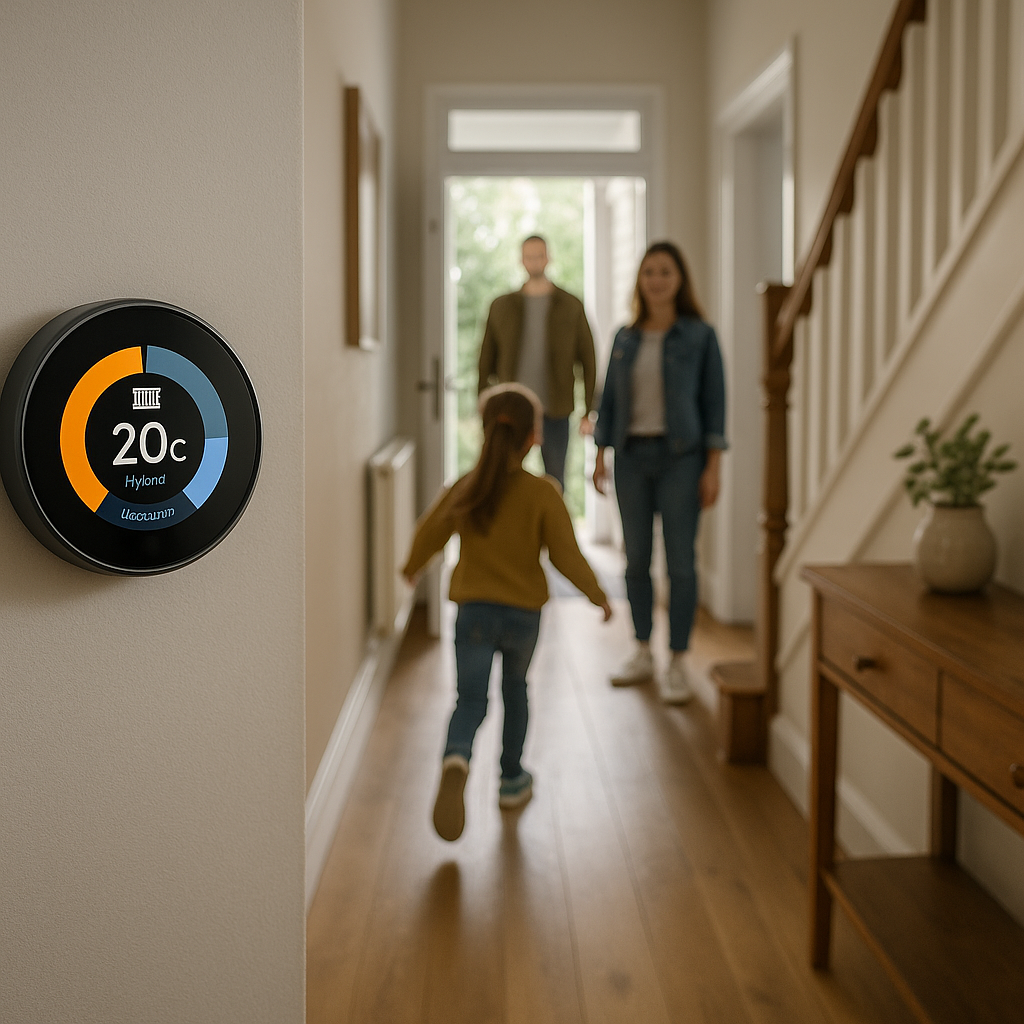
    Outdoor unit working alongside a boiler as part of hybrid heating systems for a UK house
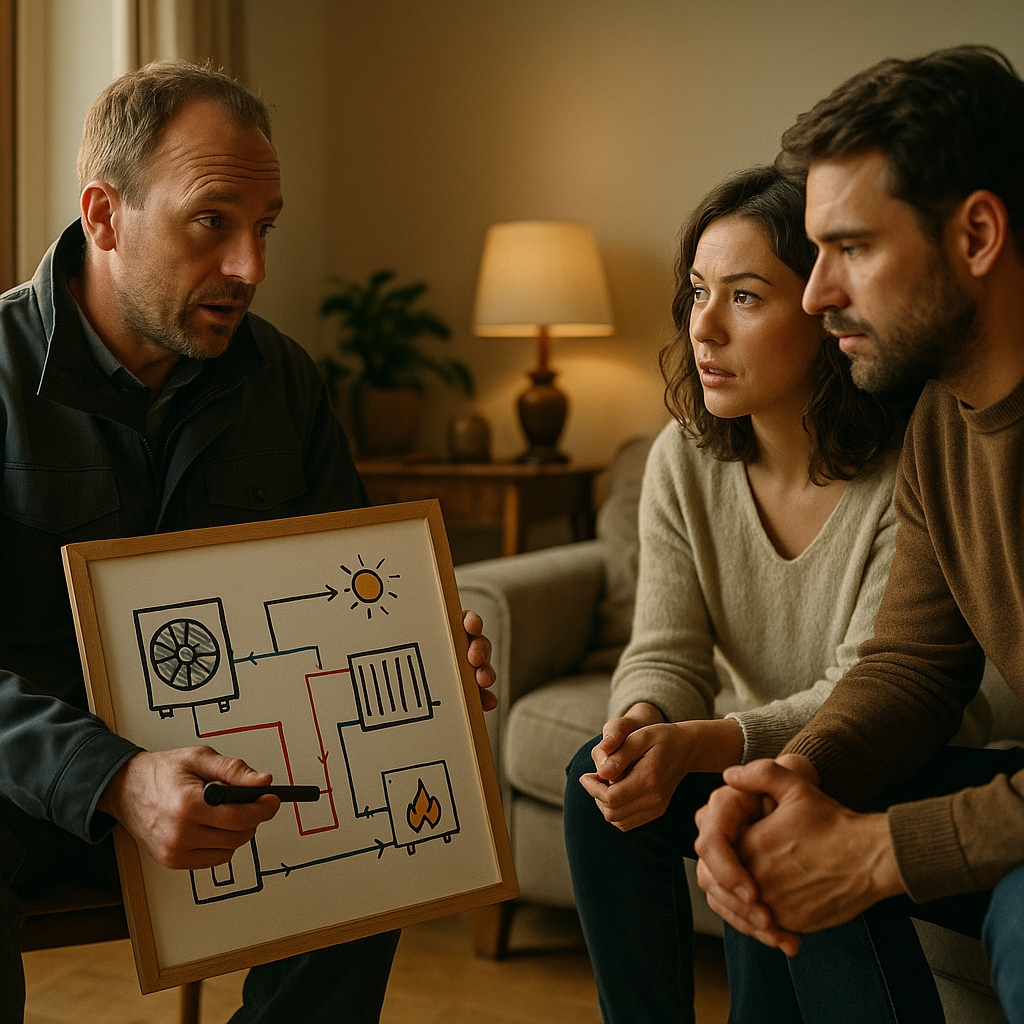
    Engineer discussing hybrid heating systems with homeowners in a UK living room

    Hybrid heating systems FAQs

    Are hybrid heating systems more expensive to run than a standard boiler?

    Hybrid heating systems can often reduce running costs compared with a standard boiler, particularly in milder weather when the low carbon side can operate at high efficiency. The exact savings depend on your home, insulation, energy tariffs and how the system is set up. A well designed hybrid can prioritise the most cost effective heat source at any given time, helping to smooth out energy price swings.

    Do I need to replace all my radiators for a hybrid heating system?

    Not always. Many hybrid heating systems are designed to work with existing radiator setups, especially in typical UK homes. However, larger or upgraded radiators can help the low carbon side run more efficiently at lower flow temperatures. A survey by a qualified installer will reveal whether your current radiators are suitable or whether a partial upgrade would be worthwhile.

    Can hybrid heating systems be installed in older properties?

    Yes, older properties are often good candidates for hybrid heating systems because they may struggle to rely solely on low carbon heating in very cold weather. The hybrid approach allows the low carbon unit to handle much of the year, while the boiler supports on the coldest days. Insulation improvements will still help, but hybrids offer a more forgiving pathway for period homes and harder to treat buildings.

  • Why Layered Window Coverings Deserve Their 15 Minutes of Fame

    Why Layered Window Coverings Deserve Their 15 Minutes of Fame

    Some home upgrades shout for attention: new kitchens, bold paint colours, statement sofas. Others quietly transform a space without much credit at all. It is time layered window coverings had their own 15 minutes of fame.

    What are layered window coverings, really?

    Layered window coverings are exactly what they sound like: two or more types of blinds, curtains or shades used together on the same window. Think a slim roller blind with full length curtains, or sheer voiles paired with heavier drapes. The magic is in how these layers work together to control light, privacy and temperature in a way a single treatment rarely can.

    At first glance, it might seem like a purely decorative choice, but the best layered solutions behave more like a flexible toolkit. You can soften harsh daylight without sitting in gloom, enjoy privacy without feeling boxed in, and keep rooms comfortable throughout the year, all by adjusting a few simple layers.

    Why layered window coverings deserve the spotlight

    There are three big reasons layered window coverings are quietly becoming the unsung heroes of modern interiors.

    1. Precision control of light

    Most of us live with a blunt choice: blinds up or down, curtains open or closed. With layers, you gain far more nuance. Sheer fabrics can stay drawn to diffuse strong sunlight, while a blackout blind or heavier curtain is ready for film nights, lie ins or baby naps. This flexibility is especially useful in multi use rooms that double as home offices, playrooms or guest bedrooms.

    2. Smarter privacy without losing the view

    Street facing living rooms, overlooked gardens and city flats all share the same problem: you want natural light and a sense of openness, but you do not want to feel on display. Pairing a translucent layer with a more opaque one solves this neatly. During the day, the sheer layer keeps prying eyes out while letting daylight in. In the evening, the thicker layer closes things down for a cosy, private feel.

    3. Hidden help with comfort and energy

    Glass is one of the weakest points in a building envelope, leaking heat in winter and letting it pour in during summer. Well planned layers trap pockets of air, creating a simple bit of insulation that can make a room feel noticeably warmer or cooler. Over time, that can support more comfortable temperatures and potentially reduce the need to crank the heating or fan quite so high.

    Designing layered window coverings for your space

    So how do you make layered window coverings work in real life rather than just on mood boards? A few simple principles help.

    Start with function, then add flair

    Begin by asking what the room actually needs. Total darkness for sleep? Glare control for screens? Privacy from neighbours? Once you know the practical job, choose your base layer: perhaps a blackout roller in the bedroom or a light filtering shade in a living space. Then add a second layer that brings softness, colour or pattern without fighting the first.

    Mix textures, not just colours

    Layering is not only about stacking fabrics, it is about contrast. Crisp blinds against linen curtains, smooth sheers with chunky cotton, or even a bamboo shade behind velvet drapes all create depth and interest. This is where a fairly neutral room can suddenly feel finished, like someone thought about the details.

    Think hardware and neat finishes

    The best these solutions look intentional, not improvised. Double curtain poles, discreet blind cassettes and well placed brackets keep everything operating smoothly. It is worth measuring carefully so each layer clears the others without snagging, and so the stack of fabric does not block too much glass when open.

    Everyday examples that quietly impress

    In a small flat, a translucent roller blind with floor length curtains can make a compact living room feel taller and brighter, while still allowing for privacy at all hours. In a home office, a light filtering blind paired with simple side panels can cut glare on screens without turning the room into a cave. For nurseries and children’s rooms, a combination of blackout and softer decorative layers makes it easier to balance naps, play and bedtime routines.

    Cosy bedroom design using layered window coverings for light control and privacy
    Home office window dressed with layered window coverings to reduce glare

    Layered window coverings FAQs

    What are layered window coverings?

    Layered window coverings use two or more treatments on the same window, such as a blind with curtains or sheers with heavier drapes. Together, these layers give you finer control over light, privacy and temperature than a single blind or curtain can usually offer on its own.

    Are layered window coverings only for large rooms?

    No, layered window coverings can work just as well in small spaces. In compact rooms, combining a slim blind with long curtains can make windows feel taller and add softness without overwhelming the space. The key is choosing lightweight hardware and fabrics that suit the room’s proportions.

    Do layered window coverings help with energy efficiency?

    They can. Extra layers of fabric or material create small pockets of trapped air around the glass, which helps reduce heat loss in winter and limit heat gain in summer. While they are not a replacement for insulation or glazing upgrades, layered window coverings are a simple way to support a more comfortable, stable indoor temperature.

    day and night blinds

  • Why Your Local Town Centre Still Deserves Its 15 Minutes of Fame

    Why Your Local Town Centre Still Deserves Its 15 Minutes of Fame

    Your local town centre has probably been written off more times than you can count. Headlines talk about the death of the high street, boarded-up shops and everyone shopping online. Yet walk through almost any town on a Saturday and you will still find life: buskers, market stalls, coffee queues and kids chasing pigeons. The town centre quietly keeps going, and it is long overdue its 15 minutes of fame.

    Why the local town centre still matters

    The easiest thing to forget about a local town centre is that it is more than a row of shops. It is where people bump into old classmates, where community groups hand out flyers, where protests and parades start and finish. When you think of the big moments in your area – Christmas lights switch-ons, New Year fireworks, charity runs – they almost always orbit the town centre.

    Even as online shopping grows, many people still want to see, touch and try things before buying. Independent bookshops, vintage clothing stores and specialist food shops are finding new life by offering something you cannot scroll past in a feed. Add in barbers, nail salons, opticians and repair shops, and you get a picture of a place that is less about stuff and more about services and experiences.

    How the local town centre is changing

    Instead of rows of identical chain stores, the modern local town centre is becoming a patchwork of uses. Empty retail units are being turned into co-working hubs, yoga studios, escape rooms and community kitchens. Some councils are encouraging artists to use vacant windows as mini galleries, turning what would be dead space into a reason to stop and look.

    Food and drink are playing a bigger role too. Street food traders, pop-up bars and night markets are drawing people back after work, not just during shopping hours. A town centre that used to shut at 5pm now has a second shift: comedy nights in the back room of a pub, late-opening galleries, even outdoor cinema screenings in the square when the weather behaves.

    Giving your local town centre its 15 minutes of fame

    If you want your local town centre to thrive, you do not need a grand plan. Small, regular actions add up. Choosing to buy a birthday card from the independent stationer instead of a faceless online giant keeps money circulating locally. Meeting friends in a town-centre café rather than a drive-through on the edge of town adds to the sense of buzz on the streets.

    There is also power in simply talking about the good stuff. Sharing photos of a new mural, a brilliant market stall or a hidden courtyard bar can give places the micro-fame they need to survive. When somewhere becomes “that café everyone posts about” or “the market with the amazing dumplings”, it gains a story people want to be part of.

    Designing town centres for people, not just shoppers

    One of the biggest shifts happening quietly is a move from car-first to people-first design. Wider pavements, more benches, trees, planters and play areas make a these solutions somewhere you want to linger rather than rush through. When a square has decent seating, good lighting and maybe a fountain or piece of public art, it stops being just a thoroughfare and starts to feel like a shared living room.

    Events help too. Regular craft markets, book fairs, live music afternoons and seasonal festivals give people reasons to return again and again. The best town centres now think like tiny festivals that never fully pack up – there is always something happening, even if it is just a busker on the corner or a chessboard left out on a table.

    What the future might look like

    Looking ahead, the most successful town centres will be those that lean into what makes them unique. Historic buildings, local legends, riverside walks, even famously odd landmarks can be turned into identity, not embarrassment. When a place knows what it is about, people feel more connected to it and more inclined to protect it.

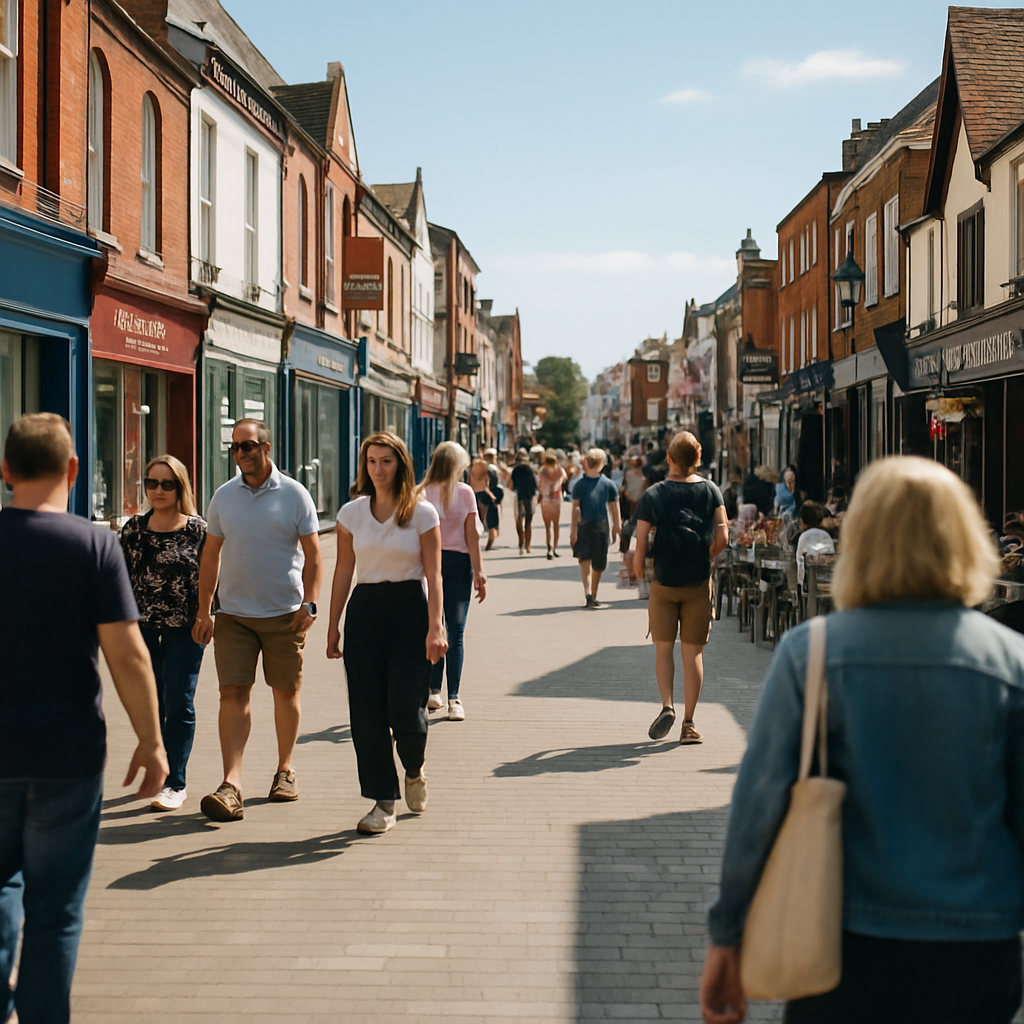
    Evening street food market bringing life back to a local town centre
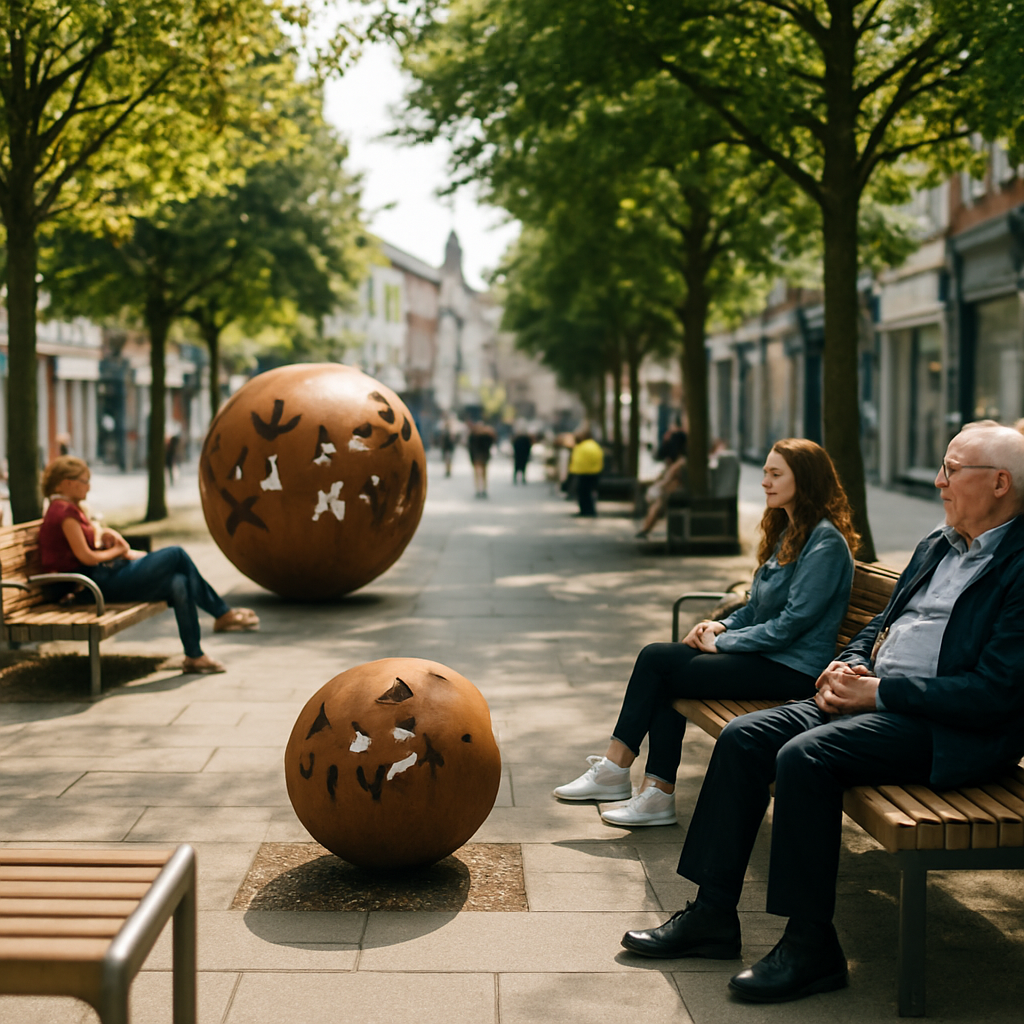
    Pedestrian friendly public space in a redesigned local town centre with people relaxing

    Local town centre FAQs

    Why are local town centres still important?

    Local town centres are important because they act as social and cultural hubs as well as shopping areas. They are where people meet, attend events, access essential services and feel part of a shared place. When a town centre is busy and cared for, it supports local jobs, keeps money in the area and helps build a sense of identity that online spaces cannot replace.

    How can I support my local town centre without spending a lot?

    You can support your local town centre in several low cost ways. Visit regularly, use free public spaces, attend community events and share positive experiences on social media. Choosing to buy small items locally, such as coffee, cards or gifts, helps independent businesses survive. Even giving feedback to your council about what works and what needs improving can make a difference over time.

    What changes could make local town centres more attractive?

    Making local town centres more attractive often starts with simple improvements: cleaner streets, more greenery, safe lighting and comfortable seating. Adding cultural events, markets and live performances draws people in and creates atmosphere. Encouraging a mix of independent shops, cafés, community spaces and services helps keep footfall steady throughout the day and into the evening, making the area feel lively and welcoming.