Author Profile

  • The Most Unusual World Records Broken by Everyday People in 2026

    The Most Unusual World Records Broken by Everyday People in 2026

    There is something deeply, gloriously human about the Guinness World Records. Not the professional athletes or the corporate-funded spectacles, but the ordinary person who woke up one morning and thought: “I wonder if anyone has ever balanced the most spoons on their face.” The answer, inevitably, is yes. Someone has. And they have a certificate to prove it. The unusual world records 2026 has already produced are a testament to the magnificent stubbornness of everyday people who simply refuse to be forgettable.

    This is their moment. And, potentially, yours too.

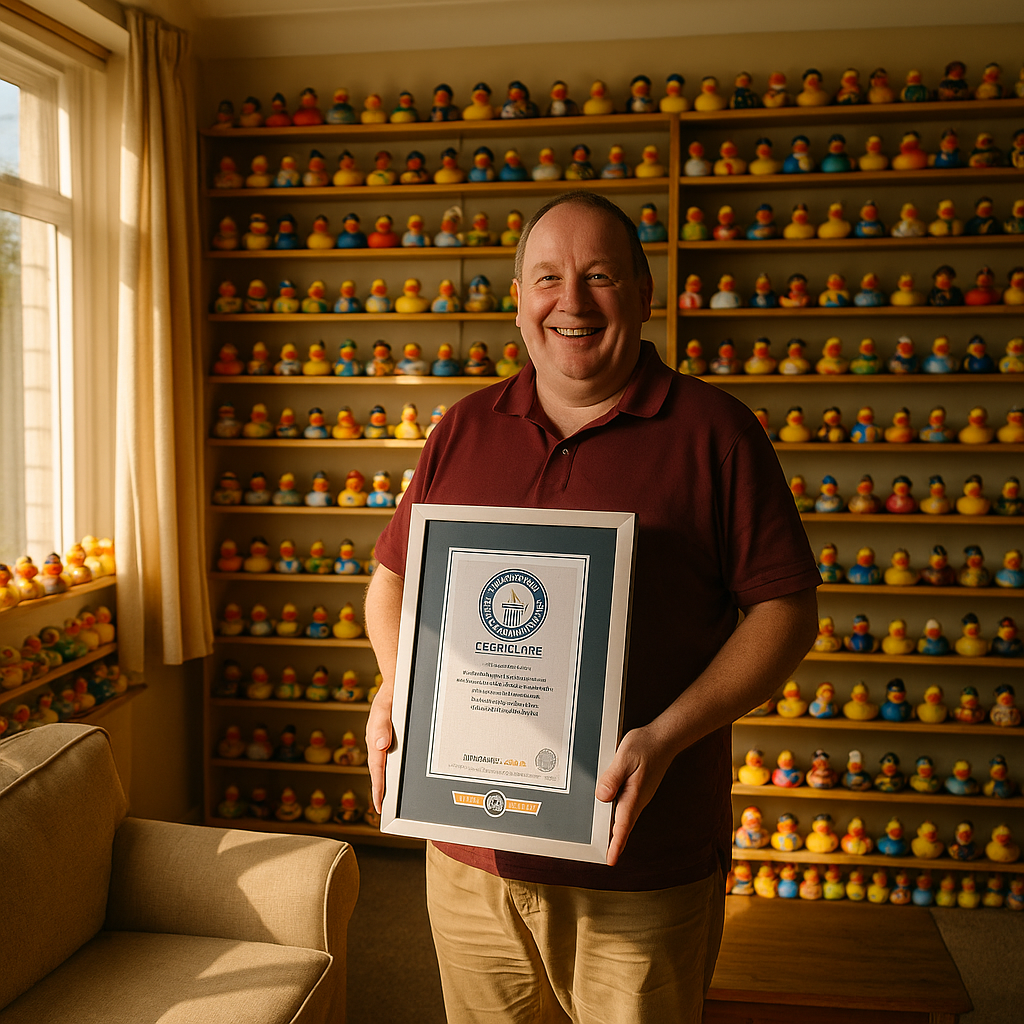
    Man holding a world record certificate surrounded by his collection, celebrating unusual world records 2026 style
    Man holding a world record certificate surrounded by his collection, celebrating unusual world records 2026 style

    Why Ordinary People Are Chasing Guinness World Records More Than Ever

    The numbers behind record-breaking have shifted considerably. Guinness World Records receives over 50,000 applications every year globally, and a growing proportion come from individuals rather than brands. The appeal is obvious: it is one of the few forms of fame that comes with an official document, a measurable achievement, and absolutely no need for a manager, a talent agent, or a ring light.

    In the UK, record attempts have become a staple of charity fundraisers, school events, and local community gatherings. Towns from Truro to Inverness have staged group efforts to claim records for everything from the longest human chain to the most people simultaneously wearing novelty hats. There is a particular British fondness for the absurd, and the records database reflects it.

    What has changed in recent years is accessibility. The Guinness World Records website now allows individuals to apply online, track their submission, and even find categories where no record currently exists. That last part is the golden ticket for anyone who wants a realistic shot.

    Some of the Most Bizarre Achievements From Everyday Record Breakers

    Let us get into the good stuff. The category of unusual world records 2026 has surfaced some truly remarkable human endeavours that deserve far more attention than they have received.

    A retired postman from Staffordshire spent eighteen months perfecting his technique for the fastest time to sort a standard rack of 100 letters one-handed. He now holds the record. He celebrated with a cup of tea and a biscuit, apparently unbothered by the lack of fanfare.

    A secondary school dinner lady in Fife broke the record for the most different sandwich fillings correctly identified by smell alone while blindfolded. Thirty-seven fillings. She described it as “just practice, really.”

    A retired nurse from Bristol holds the current record for the largest collection of novelty rubber ducks, having amassed over 9,000 unique specimens across four decades. Each one is catalogued. She has a spreadsheet.

    Close-up of hands sorting envelopes, capturing the focus required for unusual world records 2026 attempts
    Close-up of hands sorting envelopes, capturing the focus required for unusual world records 2026 attempts

    These are not people with sponsors or PR teams. They are people with passions, patience, and a particular willingness to be slightly ridiculous in the pursuit of something they can call their own. That, really, is the spirit of the whole enterprise.

    The Categories You Would Never Think to Look For

    Most people assume world records are reserved for the fastest runners, the tallest buildings, and the largest pizzas. In reality, the database contains tens of thousands of categories, many of which are genuinely open or have records that feel very beatable.

    Some categories that have seen fresh attempts this year include: the most backwards steps taken in one hour whilst knitting, the longest continuous session of competitive sock folding, the fastest time to identify 50 bird calls by sound alone, and the most consecutive successful catches of a grape in the mouth whilst riding a bicycle. Each of these has a verified holder. Each holder is, as far as anyone can tell, a completely normal person.

    The important thing to understand is that unusual world records 2026 style are often set in hyper-specific niches precisely because the competition is thin. You do not beat Usain Bolt. You find a corridor nobody else has walked down yet.

    How to Find and Pursue a Record That Could Actually Be Yours

    This is where it gets practical. If you want your own Guinness certificate, here is how to approach it sensibly rather than just throwing yourself at something and hoping for the best.

    Start With What You Already Do Unusually Well

    The most successful individual record attempts tend to grow from an existing obsession or skill. If you have been speed-solving crosswords since 1994, check whether that category exists. If you can name every station on the London Underground in under 45 seconds, there may well be a benchmark waiting to be broken. Start with your own quirks and work outward.

    Search the Guinness Database Properly

    The official website allows you to search by keyword and browse existing records. If a category exists, you can see the current record and decide whether it is within reach. If no category exists, you can apply to create one. Guinness does accept new categories, though they must meet criteria around measurability, verifiability, and the potential for others to attempt the same feat.

    Understand the Application Process Before You Attempt Anything

    You must apply before you attempt a record, not after. Guinness requires pre-approval of the attempt so they can set the rules and adjudication requirements. Turning up with a video and hoping for the best will not work. Applications typically take around twelve weeks to process, so factor that into your planning. There is no fee to apply through the standard route, though a premium fast-track service is available for a charge.

    Get Your Evidence in Order

    Most individual record attempts require: independent witnesses (at least two people unrelated to you), a video recording of the full attempt, photographic evidence, and sometimes a letter from a professional verifying a claim. If your record involves counting, you will need two independent counters who agree on the number. Keep everything. Guinness is thorough, and rightfully so.

    Think Local for Support

    Your local council, school, or community centre may well be interested in supporting an attempt. Record breaking makes for excellent local press coverage, which means it is genuinely in their interest to help. Several UK councils have actively supported residents in achieving records as part of community engagement programmes. It is worth a conversation.

    Is a World Record Worth Pursuing Just for the Fame?

    Here is the honest answer: probably not, if fame is the only reason. The viral moment might come, or it might not. What most record holders report is something different: a deep satisfaction in having done a specific thing better than anyone else on the planet, however niche that thing might be. There is real dignity in that. The unusual world records 2026 has produced are not doorways to television careers. They are, more often, just a brilliant story to tell at a dinner party for the rest of your life.

    And sometimes that is more than enough. The postman sorting letters one-handed knows something about himself that most people never discover: exactly what he is exceptional at. That is not nothing. That might, in fact, be everything.

    If you want to explore what kinds of records are already out there and get a feel for the range of possibilities, the BBC’s coverage of Guinness records offers a good starting point. Then go find your corridor. Walk down it. See what happens.

    Frequently Asked Questions

    How do I apply for a Guinness World Record in the UK?

    You apply directly through the Guinness World Records website before attempting anything. The standard application is free and typically takes around twelve weeks to process. You will need to provide details of what you plan to attempt and Guinness will set the official rules if your application is approved.

    Can I create a brand new world record category that does not exist yet?

    Yes, Guinness does accept applications for new categories. The activity must be measurable, breakable by others, and not trivially easy. If you have a genuinely unique skill or activity, it is worth submitting a proposal through their standard application process.

    How much does it cost to attempt a Guinness World Record?

    The standard application route is free, though adjudication at a public event can involve fees for sending an official adjudicator. A paid fast-track service is available if you need a quicker decision. Most individual attempts self-adjudicate using witnesses and video evidence.

    What counts as proof when attempting a world record on your own?

    Guinness typically requires at least two independent witnesses (not family members), a continuous video recording of the entire attempt, photographic evidence, and accurate counters where applicable. Some records also require a letter from a relevant professional such as a doctor or teacher.

    Are unusual or niche world records easier to break than well-known ones?

    Generally, yes. Highly specific or niche categories often have records set years ago or have very few competitors, making them far more achievable for an ordinary person. Finding a category that aligns with a personal skill or obsession is usually a smarter strategy than attempting something with thousands of challengers.

  • Britain’s Most Unexpected Viral Moments: The Stories You Forgot (But Shouldn’t Have)

    Britain’s Most Unexpected Viral Moments: The Stories You Forgot (But Shouldn’t Have)

    There is something quietly magnificent about the way Britain goes viral. Not with carefully orchestrated PR campaigns or polished studio lighting, but with a bemused bloke on a train, an unexpected cat, or a politician being interrupted by a toddler. The best UK viral moments rarely announce themselves. They just happen, and then the whole nation turns to look.

    Over the past decade, a handful of clips have burrowed so deep into the British cultural psyche that they feel less like internet phenomena and more like shared memories. Here is a proper look back at some of the most unforgettable, bizarre, and genuinely heartwarming ones, and the people who, often entirely by accident, gave us all something to talk about.

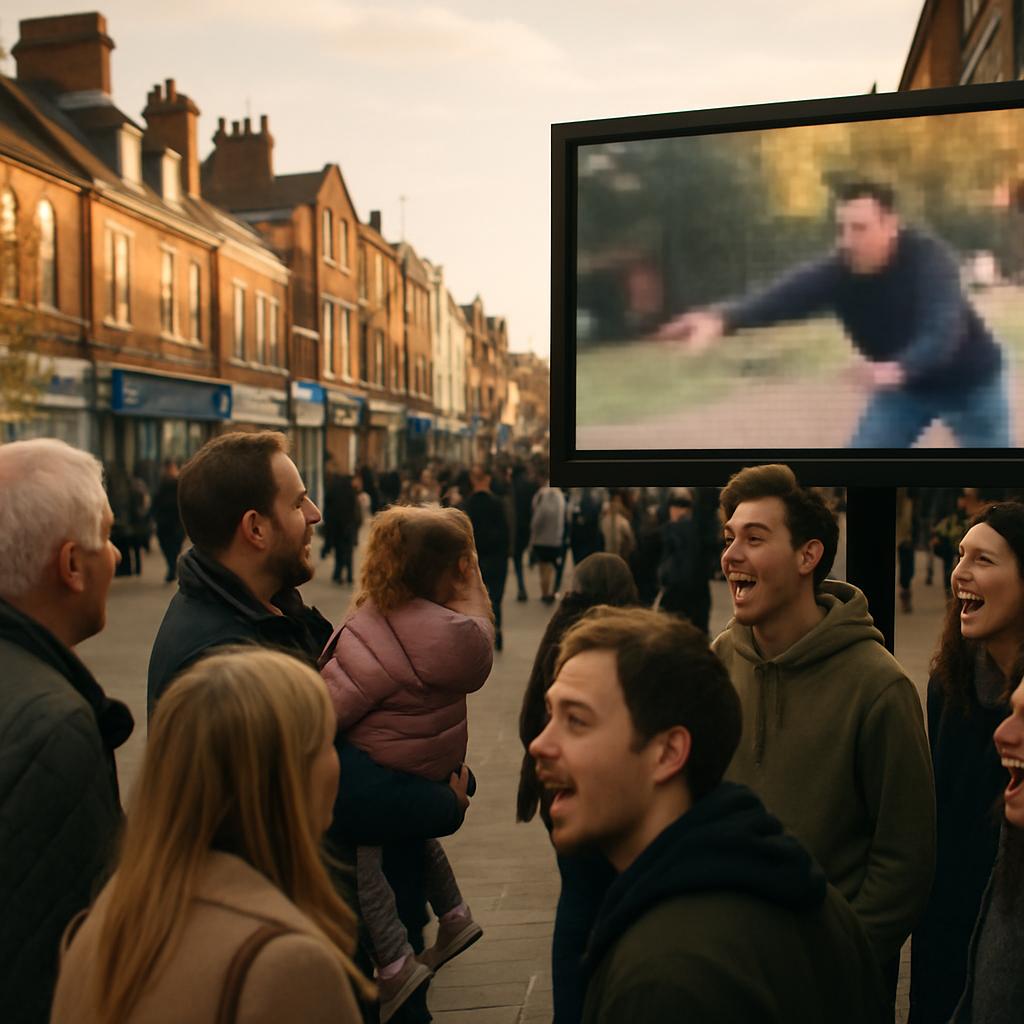
    Crowd on a British high street watching a screen showing some of the best UK viral moments
    Crowd on a British high street watching a screen showing some of the best UK viral moments

    Professor Robert Kelly and the BBC Interview Interrupted by Kids

    Strictly speaking, Robert Kelly is American, but this one belongs to Britain because it happened live on the BBC. In 2017, the political analyst was being interviewed via video link for BBC World News when his young daughter Marion waltzed in with the confident stride of someone who absolutely owns that room. Her baby brother followed in a bouncing walker seconds later, and their poor mum Jung-a Kim came sliding in on her knees trying to retrieve them without being seen.

    The clip was watched hundreds of millions of times worldwide. Kelly and his family appeared in a follow-up BBC video shortly after, laughing about the whole thing. Marion has since grown up in the full knowledge that she is, technically, internet royalty. The family still lives in South Korea, where Kelly continues to work as a professor. What makes this one of the best UK viral moments is how purely, accidentally human it was. No one was performing. Life just walked in through the door.

    John Sergeant and the Strictly Trot That Gripped a Nation

    Not a single clip, but a sustained viral presence that lit up the UK in 2008 and continued to be referenced for years afterwards. Political journalist John Sergeant was, by his own admission, a terrible dancer. Strictly Come Dancing judges repeatedly placed him at the bottom of the leaderboard. The public kept voting him back. Week after week, his chaotic, lumbering performances with partner Kristina Rihanoff created a kind of joyful television madness that the internet relived in clips for years. He eventually withdrew voluntarily, saying he did not want to be responsible for the show’s integrity, which somehow made him even more beloved. Sergeant remains a respected broadcaster and public speaker, and the clip of him performing a particularly alarming paso doble still circulates every time someone searches for great British telly moments.

    Black labrador running through a London park in one of the best UK viral moments
    Black labrador running through a London park in one of the best UK viral moments

    The Laurel and Hardy House, When a Demolition Crew Got It Wrong

    In 2020, a housing developer in Crosby, Merseyside demolished the wrong house. A two-storey terraced property was reduced to rubble, only for it to emerge that the crew had knocked down the neighbouring building instead of the derelict one they had permission to demolish. The footage of the completely bare plot, surrounded by intact homes on either side, went viral immediately. Nobody was injured, which is presumably why the nation felt free to absolutely lose it with laughter. The homeowners were understandably not amused, but the sheer slapstick absurdity of it gave Britain a much-needed laugh during a grim year. The demolished property was eventually rebuilt. The contractor involved faced significant consequences. The clip, however, lives forever.

    Fenton the Dog, Richmond Park, 2011

    If you have not heard the Fenton video, you have missed one of the purest distillations of British dog ownership ever committed to film. A man named Max, walking his dog in Richmond Park, watches in increasing desperation as his black labrador Fenton sprints headlong into a herd of deer, scattering them across the park and onto a busy road, while Max shouts his name in increasingly despairing tones. The audio is everything. “Oh God. FENTON! Oh, Jesus Christ! FENTON!” It was remixed, autotuned, spliced into film soundtracks and TV programmes for years. Max himself gave a brief interview to the BBC, taking it all in good spirit. Fenton, for his part, reportedly showed no remorse whatsoever. This remains one of the best UK viral moments of the entire social media era, not because it was dramatic, but because it was so recognisably, hopelessly British.

    The Corrie Stairlift Clip That Made Everyone Ring Their Gran

    Coronation Street has produced countless memorable moments, but in 2018 a behind-the-scenes clip of actress Eileen Derbyshire (Emily Bishop) navigating the set on a mobility scooter before delivering a perfectly timed line sent social media into a gentle frenzy of affection. It was not edgy, it was not scandalous. It was just very, very sweet. And it reminded a generation of viewers why they loved the show, and apparently prompted a wave of people phoning their elderly relatives. The clip became a minor symbol of the kind of warmth British television can still generate when it stops trying too hard.

    The Beast From the East Weather Reporter, 2018

    When Storm Emma collided with the so-called Beast from the East in late February 2018, bringing heavy snow and sub-zero temperatures across Britain, the nation’s weather reporters were dispatched to stand in it. Several became briefly viral in their own right, battling snowdrifts, losing hats, and delivering earnest warnings while visibly questioning their career choices. One ITV reporter in Scotland became a particular favourite after being filmed walking into a lamp post mid-sentence. The Met Office reported that the Beast from the East was one of the most significant cold weather events to hit the UK in three decades. The reporters who froze themselves on roundabouts and clifftops for the nation’s entertainment mostly continued their careers without further incident.

    What These Moments Actually Tell Us

    Scroll back through the best UK viral moments and a pattern emerges. The British public tends not to celebrate perfection. It celebrates stumbles, warmth, accidental absurdity, and the dignity people manage to hold onto when everything around them is going slightly wrong. These clips endure not because they were spectacular, but because they were real. In an era of increasingly polished content and manufactured authenticity, the moments that genuinely connect are always the ones that nobody planned.

    The people behind these clips largely returned to ordinary lives, and that is perhaps the most British ending imaginable. Fame arrived, the nation laughed or cried or felt something genuine, and then everyone got on with it. Fifteen minutes, well spent.

    Frequently Asked Questions

    What are some of the best UK viral moments from the last ten years?

    Some of the most memorable include Fenton the dog in Richmond Park, the BBC interview interrupted by children, and John Sergeant’s chaotic Strictly Come Dancing run. Each went viral for capturing something genuinely unscripted and very British.

    Where is Fenton the dog now?

    Fenton’s owner Max gave a brief interview to the BBC after the 2011 clip went viral, confirming the dog was fine and well. Beyond that, the family has kept a low profile, which is entirely fair given the circumstances.

    Why do British viral moments tend to be so different from American ones?

    British viral content often centres on understatement, self-deprecation, and accidental absurdity rather than spectacle. The humour tends to be quieter and more situational, which is why clips like Fenton or the wrong-house demolition resonate so strongly with UK audiences.

    Do people who go viral in the UK usually benefit from it?

    It varies enormously. Some, like John Sergeant, leveraged their viral moment into continued public recognition. Others quietly returned to normal life. Going viral in the UK rarely translates into long-term fame unless the person actively pursues it.

    What makes something go viral in the UK specifically?

    Authenticity, relatability, and a touch of chaos tend to be the common threads in the best UK viral moments. British audiences respond strongly to clips that feel unfiltered and genuinely unplanned, particularly when they involve animals, weather, or live television going wrong.

  • Britain’s Most Unexpected Viral Moments: The Stories You Forgot (But Shouldn’t Have)

    Britain’s Most Unexpected Viral Moments: The Stories You Forgot (But Shouldn’t Have)

    There is something uniquely British about the way this country goes viral. Not polished, not planned, not particularly dignified. Just an ordinary person caught doing something extraordinary, absurd, or quietly moving, and suddenly the whole internet is watching. The best UK viral moments share a common thread: they feel accidental, yet somehow totally inevitable. They capture something true about us as a nation, and then they disappear almost as quickly as they arrive.

    But the people behind those clips? They don’t just disappear. Here’s a look back at some of the most unforgettable moments British culture has handed the internet over the past decade, and a check-in on where those individuals ended up.

    Vintage British television in a cosy living room evoking nostalgia for the best UK viral moments
    Vintage British television in a cosy living room evoking nostalgia for the best UK viral moments

    Robert Kelly and the BBC Interview That Stopped the World

    In 2017, BBC News correspondent Robert Kelly was delivering a live analysis from his home office in South Korea when his young daughter Marion walked in, arms swinging with the confidence of someone who absolutely owned the place. Moments later, baby James followed in a walker, and then came Kelly’s wife Jung-a Kim, sliding across the floor on her knees trying to retrieve the children without becoming part of the broadcast. She did not succeed.

    The clip became one of the best UK viral moments of that era not because anything went wrong, exactly, but because it was so relentlessly, painfully human. Every working parent watching felt it simultaneously in their chest and their stomach. The BBC itself later reunited the family on camera for a follow-up, and Kelly continued his distinguished career as a political scientist and commentator. Marion, for the record, is now nine years old and presumably much better at knocking before entering rooms.

    Paul Gascoigne and the Chicken and Fishing Rod Incident

    British sporting legends have a particular talent for providing the internet with content. In 2016, footage emerged of Paul Gascoigne arriving at a siege negotiation in Rothbury, Northumberland, armed with a fishing rod, a chicken, and a can of lager, intended as offerings for Raoul Moat. The sheer surrealism of it became a strange cultural touchstone. Gascoigne was not permitted entry. The clip spread far and wide, and it became less a joke over time and more a peculiarly poignant image: a man still trying to help, using the only tools he understood.

    Gascoigne has spoken publicly about his mental health struggles in the years since. His story is complex and ongoing, but the moment itself has taken on a different weight with the passage of time. Odd, yes. But not entirely unkind.

    Susan Boyle: The Moment That Changed Television

    Few moments in the history of British television carry as much genuine emotional weight as Susan Boyle’s audition on Britain’s Got Talent in April 2009. A 47-year-old woman from Blackburn, West Lothian, walked onto a stage to audible scepticism from the audience, and then sang I Dreamed a Dream and reduced the entire nation to silence. Within a week, the clip had been viewed over 100 million times, a genuinely unprecedented figure for online video at the time.

    Boyle’s story is one of the most powerful examples of the lasting impact the best UK viral moments can have. She went on to release a debut album that became the UK’s best-selling album of 2009, and she has continued recording and performing ever since. She remains one of the clearest illustrations that the internet, when it works properly, can function as a genuine equaliser. Her success was not manufactured. It was simply found.

    Person scrolling through social media on a British high street, recalling best UK viral moments
    Person scrolling through social media on a British high street, recalling best UK viral moments

    John Sergeant and the Strictly Chaos of 2008

    Before Susan Boyle there was John Sergeant, the political journalist who joined Strictly Come Dancing in 2008 and promptly became the most talked-about contestant the show had ever seen. His dancing was, by any objective measure, terrible. The public adored him for it. Week after week he survived eliminations, and week after week the judges despaired. Sergeant eventually resigned from the competition of his own accord, citing concern that his continued presence was making a mockery of the format.

    His statement at the time was a masterpiece of self-deprecating British understatement. He went back to journalism and broadcasting, wrote his memoirs, and occasionally makes dry appearances on panel shows. The Sergeant Effect, as some producers informally called it, permanently changed how reality shows approached public voting.

    The Fox Who Stole a Child’s Shoe in Hackney

    Not every viral moment involves a human being at the centre of it. In 2013, a fox walked into a London flat in Hackney, picked up a baby’s shoe, and trotted back out again. The mother’s panicked voice, the audacity of the fox, the sheer mundanity of the setting: it became a beloved piece of footage precisely because it asked nothing of the viewer except the acknowledgement that urban foxes have absolutely no respect for personal property.

    The family was unharmed. The shoe was recovered. The fox was not apprehended. It was, in many ways, the most British possible outcome.

    Ed Balls Day: The Accidental National Holiday

    On 28 April 2011, the then shadow Chancellor Ed Balls intended to search his own name on Twitter and accidentally posted it as a tweet. Just his name. Nothing else. Ed Balls. The resulting confusion, delight, and chaos led to the annual celebration of Ed Balls Day, observed every 28 April with the same tweet being reposted, memed, and gleefully commemorated across the British internet. It is arguably the most uniquely British internet tradition in existence.

    Balls embraced it with admirable good humour. He appeared on Strictly Come Dancing himself in 2016 (a full circle that deserves its own essay), has hosted cooking shows, and continues to be a recognisable figure in political media. He owns the moment completely. The BBC covered the tenth anniversary of Ed Balls Day with the reverence it arguably deserved.

    What These Moments Actually Tell Us

    When you line up the best UK viral moments side by side, a pattern emerges. They are almost never manufactured. They are rarely flattering in the conventional sense. But they are almost always honest. The British public has an extraordinary instinct for recognising the authentic over the performed, and the moments that last are the ones where something real slipped through.

    The people at the centre of them tend to land one of two ways: either they lean into it and build something lasting, or they quietly return to their ordinary lives, the clip following them mildly and harmlessly forever. Very few are genuinely damaged by it. Perhaps because the British temperament, at its best, laughs with rather than at.

    These moments matter. They are cultural punctuation marks, small flashes of shared experience in a fragmented media landscape. They remind us that fame, in its purest form, doesn’t require a publicist, a ring light, or a content strategy. Sometimes it just requires a toddler, a door, and a live television feed.

    Frequently Asked Questions

    What are some of the best UK viral moments of all time?

    Some of the most memorable include Susan Boyle’s Britain’s Got Talent audition in 2009, the BBC interview interrupted by Robert Kelly’s children in 2017, and the annual celebration of Ed Balls Day. Each resonated because they were genuinely unscripted and deeply human moments.

    What happened to Susan Boyle after she went viral?

    Susan Boyle went on to release a debut album that became the UK’s best-selling album of 2009 and has continued recording music ever since. Her story is one of the most powerful examples of a viral moment translating into a lasting career.

    What is Ed Balls Day and why do people celebrate it?

    Ed Balls Day is observed every 28 April, marking the anniversary of when politician Ed Balls accidentally tweeted his own name in 2011. It became an annual British internet tradition, with thousands reposting the original tweet as a light-hearted celebration.

    Do people who go viral in the UK usually benefit from it?

    Outcomes vary, but many of the most famous UK viral figures have gone on to have positive experiences. Those who embrace the moment with good humour, like Ed Balls or Robert Kelly, tend to build on it. Very few are genuinely harmed by a single viral clip.

    Why do British viral moments feel different from viral content in other countries?

    British viral moments tend to be unpolished, accidental, and self-deprecating rather than choreographed or overtly dramatic. There’s a cultural tendency to celebrate the ordinary and the slightly absurd, which gives UK viral content a distinctive warmth and relatability.

  • From Local Hero to National News: How Small Town Stories Are Captivating the World

    From Local Hero to National News: How Small Town Stories Are Captivating the World

    There is something almost magical about the moment a local hero goes viral. One week, they are handing out soup at a food bank in Barnsley or tending a community garden in Penzance. The next, they are trending on X, being interviewed on BBC Breakfast, and receiving messages from strangers as far away as New Zealand. It is a peculiar alchemy, and it is happening with remarkable frequency. The question worth asking is not just how it happens, but why these hyper-local, deeply human stories seem to cut through a media landscape that is noisier than ever.

    The short answer is that people are tired of abstraction. National politics, global crises, and corporate announcements feel distant. A 73-year-old retired postman in Cumbria who has litter-picked every single morning for six years? That is something you can picture. Something you can feel. That emotional specificity is the engine behind almost every breakout community story we have seen in recent years.

    Community members celebrating a local hero goes viral moment on a British village high street
    Community members celebrating a local hero goes viral moment on a British village high street

    Why Hyper-Local Stories Hit Differently

    There is a well-established phenomenon in psychology sometimes called the “identifiable victim effect”: we respond more strongly to the story of one specific person than to statistics about thousands. Local hero stories operate on exactly this principle. When a community figure has a name, a face, a specific street they walk down every day, the emotional connection is immediate. There is no cognitive distance to overcome.

    The BBC’s own audience data has repeatedly shown that regional and local stories often outperform national political coverage in terms of time-spent-reading and social sharing. It is not that people do not care about the big picture. It is that they find the big picture through the small frame. A story about one volunteer nurse in Rotherham tells you everything you need to know about the NHS staffing crisis in a way that a government white paper simply cannot.

    Social media accelerates this. When a local story resonates, it spreads not because an algorithm decided it should, but because individual people felt compelled to share it. That organic momentum is a fundamentally different thing from manufactured virality, and audiences can sense the difference.

    Real People Who Became National Names

    Take Margaret from Grimsby, a dinner lady who, in early 2024, started a quiet campaign to ensure no child in her school went without a hot meal over the Christmas holidays. She raised £400 from her own neighbours, fed 60 children, and thought nothing more of it. A local journalist picked it up. Within a fortnight, the story had been shared over 200,000 times, she had received donations from across Europe, and she was invited to speak at a food poverty conference in Westminster.

    Or consider the story of a retired geography teacher in the Scottish Borders who began mapping every remaining red telephone box in Scotland, painstakingly photographing each one and uploading his findings to a free public archive. His project started as a personal obsession. It ended up as a full feature in The Guardian, a segment on BBC Radio Scotland, and eventually a small exhibition at the National Museum of Scotland. He never asked for attention. He just did something deeply specific with genuine dedication.

    These are not outliers. They represent a pattern. The local hero goes viral not by chasing virality but by embodying a quality that feels rare: sincerity without strategy.

    Handwritten notes of gratitude left for a local hero goes viral story in a British community hall
    Handwritten notes of gratitude left for a local hero goes viral story in a British community hall

    What Makes the Story Spreadable?

    Not every community figure breaks through, of course. Thousands of remarkable people do extraordinary things in quiet corners of the country and remain entirely unknown beyond their postcode. So what separates the stories that travel from the ones that stay local?

    A few things come up consistently. First, there is a clear visual hook. The litter-picker with his 47 black bags lined up outside the town hall. The allotment builder who turned a derelict car park into a vegetable garden. Photos and short video clips give journalists and social media users something to attach the story to. Without that, even the most compelling narrative struggles to travel.

    Second, there is specificity of detail. Vague goodness does not spread. “Man volunteers in community” is not a story. “Man in Llandrindod Wells has taught free ukulele lessons every Saturday for eleven years and has never missed a single session” is a story. The numbers, the place name, the streak, the instrument: every specific detail is a hook.

    Third, and perhaps most importantly, there is a moment of recognition. Audiences share these stories because they see something in them, whether it is the community they grew up in, the kind of quiet heroism they watched their own parents or grandparents perform, or simply a reminder that people are mostly decent. The story becomes a mirror.

    The Role of Local Journalism in Creating National Moments

    It would be wrong to discuss this phenomenon without crediting local journalism. Many of the most celebrated viral community stories of recent years started with a single reporter at a regional paper or local news website who noticed something worth writing about. The Manchester Evening News, the Yorkshire Post, local BBC radio stations, hyperlocal blogs run by unpaid editors: these are the places where the story is first told.

    Local journalism in the UK has faced enormous pressure over the past decade. According to the BBC’s coverage of the local news landscape, hundreds of local titles have closed or reduced significantly since 2010, leaving entire communities underserved. And yet the appetite for local storytelling has never been stronger. The gap between demand and supply is part of what makes platforms like TikTok such an unlikely home for hyper-local content: people are filling the void themselves, becoming the reporters of their own communities.

    When Fame Arrives Unannounced

    One thing that unites nearly every local hero who goes viral is that they did not see it coming. The sudden scale of attention can be bewildering. Messages flooding in from strangers, interview requests from producers, the strange experience of watching your ordinary life become content for people you have never met. For many, it is thrilling and disorienting in equal measure.

    Some handle it gracefully and use the platform to amplify the cause they actually care about. Others find the attention fades quickly and they are left trying to process the experience alone. A small number attempt to extend the moment and find it does not work, because the thing that made the original story compelling was its authenticity, and authenticity does not survive being performed.

    The ones who seem to come out best are those who treat the fame as a gift with an expiry date. They say what they want to say, raise what money they need to raise, connect with the people who matter, and then quietly return to the work that made people care about them in the first place. That, in the end, is the most local-hero thing of all.

    Why These Stories Matter Beyond the Moment

    There is a tendency to be slightly dismissive of viral feel-good stories, to see them as momentary comfort blankets in difficult times. That undersells what is actually happening. When a local hero goes viral, they do not just warm people’s hearts for a news cycle. They shift perceptions. They remind communities that they are capable of producing remarkable people. They inspire imitation, often in towns and villages that have nothing to do with the original story.

    The retired geography teacher mapping phone boxes inspired at least three similar archive projects that we know of. The dinner lady in Grimsby directly prompted other schools to start their own holiday meal schemes. The ripple effects are real, even if they are hard to measure.

    That is what makes the hyper-local human interest story one of the most quietly powerful forms of media we have. It does not require a production budget, a celebrity, or a sensational news hook. It requires one person doing something meaningful, and one other person deciding it is worth telling the world about.

    Frequently Asked Questions

    Why do local hero stories go viral so often?

    Local hero stories tend to go viral because they combine emotional specificity with universal themes like kindness, community, and quiet dedication. People find it easier to connect with one real, named individual than with abstract statistics or national narratives. That emotional connection drives organic sharing.

    How can a community figure get their story picked up by national media?

    The most reliable route is to start locally: contact your regional newspaper, local BBC radio station, or a hyperlocal blog. National journalists and producers regularly monitor regional outlets for stories worth amplifying. A clear photo, specific details, and a genuine human angle make the story far easier to pitch.

    What happens to people after they go viral for being a local hero?

    Experiences vary widely. Some people use the attention to fundraise, raise awareness for a cause, or connect with others who can help their work. Others find the spotlight overwhelming and retreat. The consensus from those who navigate it well is to focus on the original mission rather than trying to extend the fame itself.

    Are there specific types of local stories that tend to break through nationally?

    Stories with a strong visual element, a specific number or streak (years, miles, days), and an unexpected scale tend to travel furthest. Longevity is a particularly powerful hook: someone who has done something quietly and consistently for years carries a different emotional weight than a single dramatic act.

    Does local journalism still play a role in making community stories go viral?

    Absolutely. The majority of national breakout stories from community figures still start with a local reporter or regional outlet noticing something worth covering. Despite significant cuts to the UK’s local press, regional journalists and hyperlocal creators remain the crucial first link in the chain from neighbourhood story to national moment.

  • How to Get on TV in the UK in 2026: A Step-by-Step Guide for Everyday People

    How to Get on TV in the UK in 2026: A Step-by-Step Guide for Everyday People

    Plenty of people dream about it. Few actually do anything about it. Getting on television in Britain is more achievable than most people think, and the routes in are far more varied than simply auditioning for X Factor or hoping a producer stumbles across your TikTok. Whether you fancy a documentary slot, a daytime studio appearance, a news feature, or a full-blown reality series, there is a legitimate path to the screen for ordinary people with the right story, the right timing, and a bit of nerve.

    This is not about becoming a celebrity. This is about getting your story, your talent, or your expertise in front of a camera and doing something meaningful with it. Think of it as your 15 minutes, and knowing how to claim them properly.

    A woman outside a UK television studio, representing how to get on TV in the UK
    A woman outside a UK television studio, representing how to get on TV in the UK

    What TV Producers Are Actually Looking For in 2026

    Before you fire off applications to every broadcaster going, it helps to understand how commissioning teams and casting producers think. The honest answer is that they are not looking for polished performers. They are looking for compelling stories. Authenticity is genuinely in demand right now. Broadcasters like Channel 4, ITV, and the BBC have all shifted noticeably towards real people with genuine lived experience, partly because audiences have grown tired of manufactured drama.

    Producers want someone who has something to say and is not afraid to say it on camera. They want conflict, transformation, expertise, or something genuinely unusual. If you have done something remarkable, survived something difficult, built something from scratch, or hold a strong opinion on a topic the nation is talking about, that is your hook. A quirky hobby, a niche skill, an unusual lifestyle, a dramatic life change: these are all currency in 2026’s TV landscape.

    One casting producer quoted in a BBC editorial briefing put it bluntly: the most boring application they receive is from someone who describes themselves as “bubbly and outgoing”. Lead with your story, not your personality descriptors.

    How to Apply for Reality TV Shows in the UK

    Reality television remains one of the most accessible entry points to the screen. The sheer volume of formats currently in production means casting teams are perpetually searching for contributors. Here is how to approach it properly.

    Find Active Casting Calls

    The best starting point is Star Now UK (starnow.co.uk), which lists open casting calls across broadcast and streaming. Casting Call Pro is another reliable resource. For BBC-specific shows, the BBC’s own “Take Part” platform (bbc.co.uk/takepart) publishes active contributor requests across factual, entertainment, and lifestyle programming. ITV similarly runs open applications through their production company pages.

    Social media is underrated here. Casting researchers post on Instagram and Twitter/X constantly. Searching hashtags like #UKCasting or #CastingCall alongside your area of interest (cooking, renovation, parenting, etc.) turns up live opportunities that never make it to formal listings.

    Write an Application That Gets Read

    Most applications are rejected at the first paragraph. Keep it short, specific, and story-led. Open with what makes your situation different. Include a recent photo (not a selfie from 2021). If the form asks for a video, film it in good natural light, speak clearly, and keep it under two minutes. Producers watch dozens of these per week; give them something to remember in the first thirty seconds.

    Getting on Daytime Television

    Daytime TV, think This Morning, Loose Women, Morning Live, and similar formats, operates on a slightly different logic. These programmes need contributors who can speak fluently and confidently on a topic, hold a strong personal angle on a news story, or demonstrate a skill live on air. They move fast; a topical story pitched on a Monday morning can get you in the studio by Thursday.

    A TV contributor preparing backstage, illustrating the process to get on TV in the UK
    A TV contributor preparing backstage, illustrating the process to get on TV in the UK

    The route in is usually through a production assistant or researcher. Most daytime shows have a public-facing email for contributor ideas, often listed on their broadcaster website. A strong pitch email should be no more than three short paragraphs: what your story is, why it matters right now, and who you are. Include a mobile number. They will not chase you.

    If you have genuine expertise (as a GP, a financial adviser, a chef, a solicitor, a therapist) daytime television needs you regularly and is actively looking. Registering with a specialist media agency like MediaLink or Speak Out Media can open doors if you want to appear as an expert commentator rather than a personal story contributor.

    Documentary and Factual Programming: The Long Game

    Landing a documentary slot takes longer but can result in far more substantial screen time and a genuinely lasting impact. Independent production companies commission factual content for BBC Two, Channel 4, and the streaming platforms constantly. The key is approaching the right production company directly.

    Research which companies make the kind of documentary you want to be in. If you are interested in social issues, look at companies like Dragonfly Film and Television or Keo Films. If it is lifestyle or food, Optomen or Twenty Twenty are worth approaching. A brief, well-targeted email to a development executive or series producer explaining your story and why it would make compelling viewing is a legitimate approach. It rarely works overnight, but it does work.

    It is also worth noting that self-shooting documentary formats have exploded. Some commissioners are now genuinely open to contributors who can film their own day-to-day footage on a mobile, with professional camera crews dropping in at key moments. If your life is already interesting and visual, mention this willingness in your pitch.

    Getting in the News: Working With Journalists

    News features are often overlooked as a route to screen but can be highly effective. Local BBC regional news programmes, ITV regional news, and even national news bulletins actively need real people to put faces to stories. If something significant is happening in your community, your industry, or your personal life that has a broader news angle, contact the relevant regional news desk directly.

    Press releases are not just for businesses. A well-written personal pitch to a regional news editor or a broadcast journalist can result in a camera crew at your door within 48 hours. This is particularly relevant if your story ties into a major current policy, a seasonal topic, or a national campaign. Think about what is already being discussed, and how you fit into that conversation.

    Print media coverage can also function as a stepping stone to television. If your story lands in a national newspaper or a specialist publication, television producers read those features and follow up. Even car magazine features have led to documentary enquiries and broadcast invitations for enthusiasts with compelling personal stories behind their passion. The media ecosystem is more interconnected than most people realise.

    Insider Tips That Actually Make a Difference

    A few things that rarely get mentioned in generic guides:

    • Timing matters enormously. Apply when a format is in its casting phase, not after the series has started filming. Follow the production companies on social media to catch the window early.
    • Be specific about your availability. Producers drop contributors who cannot commit. If you can travel, say so clearly.
    • Have a visual angle. Television is a visual medium. If your story or skill has a strong visual component, emphasise it in your application or pitch.
    • Be honest about nerves. Counter-intuitively, admitting you are nervous but motivated tends to go down better than projecting false confidence. Researchers can spot it.
    • Follow up once, politely. If you have not heard back in two weeks, a single brief follow-up email is acceptable. More than that, and you risk being flagged as difficult.

    Getting on TV in the UK in 2026 is absolutely within reach for ordinary people. It requires the right story, a clear-eyed understanding of what different formats need, and the willingness to put yourself forward without waiting to be discovered. Nobody is coming to find you. Go and pitch them.

    Frequently Asked Questions

    How do I find out about casting calls for UK TV shows?

    The BBC’s Take Part platform (bbc.co.uk/takepart), Star Now UK, and Casting Call Pro all list active casting opportunities. Following production companies and casting researchers on social media is also very effective, as many opportunities are posted informally before they reach official listings.

    Do you need an agent to appear on British television?

    No, an agent is not required for most factual, reality, or daytime television appearances. Agents are more relevant for acting roles. For contributor or participant appearances, you can apply directly to production companies or broadcasters, and many prefer direct contact from genuine contributors.

    How long does it take from applying to actually appearing on TV?

    It varies enormously by format. Daytime television can move within a few days if your story is topical. Reality shows typically have a casting process lasting several months before filming begins. Documentaries can take six months to a year or more from first contact to transmission.

    Will I get paid for appearing on a UK TV show?

    Payment varies. News features and some factual contributions are unpaid, though expenses are usually covered. Reality show participants often receive a small daily fee or expenses. Daytime television experts and specialists may be paid a contributor fee. Always clarify terms before agreeing to participate.

    What do TV producers look for when casting ordinary people?

    Producers consistently say they want a compelling personal story, authenticity, and someone who can speak clearly about their experience. Unusual skills, significant life changes, strong opinions on relevant topics, and genuine expertise all help. Describing yourself as “fun and outgoing” without a concrete story behind it rarely works.

  • AI-Generated Fame: Is Going Viral With AI Tools Cheating or Just Smart Strategy?

    AI-Generated Fame: Is Going Viral With AI Tools Cheating or Just Smart Strategy?

    There is a creator somewhere right now who has never filmed a single video, never written a caption from scratch, and never spent an anxious evening wondering what to post next. Their content goes out on schedule, their engagement is climbing, and their follower count is ticking upward. They are using AI tools to go viral, and they are not alone. Across the UK and beyond, a quiet revolution is underway in how ordinary people build online visibility, and it is raising some genuinely uncomfortable questions.

    The debate is not really about whether AI is impressive. It clearly is. The debate is about what we actually value when we call someone famous, influential, or worth following. And that is a much thornier conversation.

    Young woman using AI tools to go viral, working at a laptop in a bright British flat
    Young woman using AI tools to go viral, working at a laptop in a bright British flat

    What Does Using AI Tools to Go Viral Actually Look Like?

    It is worth being specific, because the phrase “using AI” covers an enormous range of behaviour. At one end, you have someone running a caption through ChatGPT to tighten the phrasing. At the other, you have fully automated content pipelines: AI-generated scripts, synthetic voiceovers, avatar-based presenting, and algorithmically timed posting schedules based on audience data. Both count as using AI tools. They are not the same thing.

    Some of the most talked-about examples involve synthetic personas. These are entirely constructed online identities, complete with AI-generated profile photos, consistent backstories, and posting histories. Several have accumulated tens of thousands of followers on platforms like Instagram and TikTok before being exposed as artificial constructs. The BBC has reported on instances where audiences felt genuinely deceived when they discovered the person they had been emotionally investing in did not exist. That matters.

    Then there is the middle ground, which is where most people actually live. Creators using Canva’s AI features to design graphics. Podcasters using Descript to clean up their audio in minutes. Writers using Notion AI to draft article outlines. These are tools, and using tools has never been considered cheating. No one accuses a YouTuber of fraud for using a ring light.

    The Ethics of AI-Assisted Content Creation

    Here is where it gets genuinely interesting. The ethics of using AI tools to go viral depend enormously on what is being concealed and from whom. Transparency is doing a lot of work in this conversation.

    If you are a small business owner in Leeds using an AI tool to help script your Reels so that you can actually keep up with content demands while running your company, that feels entirely reasonable. You are still showing up. You are still the face of the thing. The AI is the equivalent of hiring a copywriter, except faster and cheaper.

    But if you are presenting yourself as someone with hard-won expertise, lived experience, or a personal story, and that story is largely fabricated or AI-generated, the equation shifts completely. Audiences follow people, not content. They are investing in a perceived relationship. Deceiving that relationship is not a grey area; it is a breach of trust.

    The Advertising Standards Authority (ASA) has been watching this space closely. As AI-generated endorsements and sponsored content become harder to distinguish from genuine recommendation, the rules around disclosure are becoming increasingly important. The ASA’s guidance on influencer advertising is already robust for paid partnerships, and there is growing pressure to extend those principles to AI-assisted and AI-generated content more broadly.

    Close-up of creator using AI tools to go viral through content analytics on mobile and laptop
    Close-up of creator using AI tools to go viral through content analytics on mobile and laptop

    Does AI-Assisted Fame Actually Last?

    This is the practical question that cuts through a lot of the moral hand-wringing. Viral moments are easy to manufacture. Genuine audiences are not.

    The mechanics of going viral have always involved a degree of strategy. Studying trending audio, posting at peak times, understanding how the algorithm rewards early engagement, these are not new tactics. AI simply makes those decisions faster and more precise. A tool like VidIQ or TubeBuddy has been helping YouTubers optimise their content for years. Adding a language model into the mix is an evolution, not a revolution.

    What AI cannot reliably generate is the kind of parasocial loyalty that sustains a long-term audience. The people who build durable online presence, the ones who turn a viral moment into an actual career, tend to be the ones whose audience feels like they know them. That is almost impossible to fake indefinitely. Audiences notice inconsistencies. They pick up on emotional flatness. They can tell, often without being able to articulate it, when something is off.

    Research into online creator culture consistently shows that authenticity, or at least the convincing performance of it, is the primary driver of sustained engagement. An AI can mimic a voice. It cannot replicate the spontaneous, slightly chaotic, sometimes vulnerable human quality that makes someone genuinely compelling to follow over years rather than weeks.

    The Creators Who Are Getting This Right

    The most interesting creators in this space are not the ones hiding their AI use. They are the ones who are openly integrating it as part of their story. A graphic designer in Bristol who shows her Midjourney prompts alongside her finished work. A writer in Edinburgh who talks candidly about using AI for first drafts while explaining why the editing is the real craft. A small business owner who documents the whole messy process of building a brand with limited time and budget, AI included.

    These people are using AI tools to go viral, and they are doing it without sacrificing transparency. That is not cheating. That is content. It is interesting precisely because it is honest about the modern reality of content creation.

    The creators who get into trouble are the ones who treat AI as a shortcut to the appearance of depth they have not actually earned. A viral moment built on a fabricated persona collapses the moment scrutiny arrives. And scrutiny always arrives.

    So Is It Cheating or Is It Smart?

    Probably both, depending on how it is used. The technology itself is neutral. The ethics live in the intention and the disclosure. Using AI to amplify a genuine voice is smart. Using AI to manufacture a fake one is something different entirely.

    What is clear is that the rules of fame are being rewritten in real time. Audiences are getting more sophisticated about detecting inauthenticity, even as the tools for faking it improve. That tension is not going anywhere. If anything, it will intensify over the next few years as AI-generated media becomes genuinely indistinguishable from human-created content without explicit labelling.

    The 15 minutes of fame that actually means something, that leaves you with a community rather than just a view count, still requires something human at the centre of it. AI can be the scaffolding. It probably should not be the building.

    Frequently Asked Questions

    What AI tools are people using to go viral on social media?

    Popular tools include ChatGPT and Claude for scriptwriting and captions, Midjourney and DALL-E for image creation, Descript for audio and video editing, and scheduling platforms like Later or Buffer with AI-powered posting time recommendations. Many creators combine several of these into a content workflow.

    Is it dishonest to use AI to create content if you do not disclose it?

    It depends on context. Using AI to polish your writing or design your graphics is widely accepted and does not generally require disclosure. However, using AI to fabricate personal stories, fake expertise, or create synthetic personas that mislead audiences crosses into deceptive territory. The ASA in the UK is increasingly focused on transparency in creator content.

    Can AI-generated content actually build a long-term audience?

    Short-term viral spikes are achievable with AI-optimised content, but sustained audience loyalty is harder to manufacture. Most long-term creators who use AI do so as a support tool while maintaining a genuine human presence, personality, and point of view that gives audiences a reason to keep returning.

    Are there any UK regulations around AI-generated content online?

    The ASA’s existing influencer advertising guidelines apply where content is commercial, requiring disclosure of paid partnerships regardless of how the content was made. The ICO and Ofcom are also monitoring AI-generated media as the Online Safety Act’s provisions develop. Explicit UK legislation specifically targeting AI content labelling is still evolving.

    Does using AI tools to create content mean the creator deserves less credit?

    Not necessarily. Directing, curating, and editing AI-generated content still requires creative judgement and a clear point of view. The question of credit becomes more complicated when AI generates the core ideas, voice, and persona itself, rather than simply assisting a human creative process.

  • 15 Minutes of Fame in the Age of AI: Can a Robot Make You Famous?

    15 Minutes of Fame in the Age of AI: Can a Robot Make You Famous?

    Something shifted quietly this year, and most people haven’t quite clocked what it means yet. The old route to fame, standing in a queue outside a TV studio, posting obsessively until something sticks, being in the right place at the right moment, is being disrupted by something altogether less human. Algorithms now decide who gets seen before breakfast. AI tools generate entire personas. Deepfake technology can put your face on someone else’s winning moment. The question worth asking, as AI and viral fame 2026 collide in increasingly strange ways, is whether any of this actually counts.

    Because fame has always been about recognition. Someone, somewhere, seeing you and thinking: that matters. That’s real. Can a machine deliver that?

    Young woman filming herself for social media in a London flat, exploring AI and viral fame 2026
    Young woman filming herself for social media in a London flat, exploring AI and viral fame 2026

    How AI Is Already Shaping Who Goes Viral

    The mechanics of virality haven’t disappeared, they’ve just been automated. TikTok’s recommendation engine, YouTube’s algorithm, Instagram’s Explore feed: these systems have always made curatorial decisions that no individual human editor could replicate at scale. But in 2026, the influence goes much deeper.

    AI content tools now help ordinary people punch well above their weight. A teenager in Stoke-on-Trent with a decent story but no production budget can use AI to polish a video script, generate a thumbnail that triggers clicks, and post at the precise moment her target audience is most active. That’s genuinely democratising. There are real people finding real audiences because the barrier to entry has dropped to almost nothing.

    But then there’s the other side. Fully AI-generated influencers, virtual personas built from scratch, are accumulating followers in the hundreds of thousands. A synthetic presenter with a flawless face and a perfectly calibrated personality optimised for engagement is, technically speaking, going viral. Whether that constitutes fame is a philosophical argument worth having at the pub.

    The Deepfake Problem: Fame You Didn’t Ask For

    For real people, the darker element of AI and viral fame 2026 isn’t being upstaged by a robot. It’s being used by one without your consent. Deepfake technology has become frighteningly accessible. A face can be transplanted, a voice cloned, a person inserted into footage they were never part of. The result is a kind of fame that is violating rather than validating.

    This isn’t hypothetical. The BBC has reported extensively on cases where individuals, particularly women, have had their likenesses used in fabricated content that then spread rapidly across social media. The platform profits. The algorithm rewards it. The person it depicts is left dealing with consequences they had no part in creating. That’s not 15 minutes of fame. It’s 15 minutes of something far worse.

    The Online Safety Act places obligations on platforms operating in the UK, and Ofcom has been increasingly active in pushing for enforcement. But legislation moves slower than technology, and the gap between what the law can address today and what AI can generate tomorrow remains uncomfortable.

    Laptop screen showing viral content analytics spike, illustrating AI and viral fame 2026 trends
    Laptop screen showing viral content analytics spike, illustrating AI and viral fame 2026 trends

    Does Manufactured Fame Feel Real to Anyone?

    Here’s where things get genuinely interesting. There’s a chunk of research suggesting that audiences are remarkably good at sensing inauthenticity, even when they can’t articulate exactly what’s wrong. A comment section might praise a creator’s content whilst something nags at people just below the surface.

    Brands have started commissioning AI-generated spokespeople for campaigns, figuring that an artificial face carries none of the reputational risk of a real one. Some of those campaigns have done well. But the ones that cut through, the ones that people actually share and remember, almost always involve a real person with a real stake in what they’re saying. The mess of being human is, paradoxically, what makes something worth watching.

    Consider the micro-influencer space. A gardener in Shrewsbury who documents her allotment through the seasons, with muddy hands and genuine enthusiasm, routinely outperforms polished AI-assisted accounts in terms of genuine engagement. Her comment section is active. People ask her questions. They send her seeds. That exchange, that recognition between real people, is precisely what AI cannot fabricate, however sophisticated its output becomes.

    The New Gatekeepers: Algorithms as Editors

    One underappreciated aspect of AI and viral fame 2026 is that the gatekeeping function hasn’t gone away, it’s just moved. Editors, commissioners, and TV producers used to decide whose story got told. Now an algorithm does. And unlike a human editor who might champion an unusual voice precisely because it’s unusual, an algorithm optimises for engagement signals that already exist in its training data.

    That has a homogenising effect. The formats that go viral tend to be the formats that have gone viral before. A person with a genuinely original story might get buried because they’re not packaging it in a way the algorithm recognises. The tools are more democratic in theory; in practice, they still reward conformity.

    This is worth keeping in mind if you’re one of the many people actively trying to build an audience. AI tools can help you produce better content faster. But leaning on them so heavily that your output loses all specificity is a trap. The algorithm might surface you briefly. It won’t make people stay.

    What This Means for People Who Actually Want Recognition

    The honest answer is that AI changes the game without fundamentally changing what wins it. Authenticity still cuts through. A specific, lived perspective still holds attention in ways that generated content doesn’t. What AI does is raise the floor: production quality that would once have required a professional team is now achievable by almost anyone with a decent mobile and a free tool.

    The opportunity, particularly for people who’ve never had a platform, is real. A local community hero, a specialist with niche knowledge, a person with a story worth hearing: all of them now have access to tools that can help them reach an audience. The challenge is using those tools to amplify what’s genuinely there rather than as a substitute for it.

    Fame has always been a strange mirror. It shows people back to themselves in ways they didn’t expect, sometimes flattering, often disorienting. AI doesn’t change what fame is. It changes who controls the mirror and how easily it can be pointed at someone who never asked to be reflected. That’s worth paying attention to, whether you’re chasing the spotlight or simply living your life somewhere underneath it.

    Frequently Asked Questions

    Can AI tools actually help ordinary people go viral in 2026?

    Yes, AI tools can meaningfully lower the barrier to entry by improving video scripts, optimising posting times, and generating attention-grabbing thumbnails. However, they work best as amplifiers of genuine content rather than replacements for it; audiences tend to engage more deeply with authentic voices.

    What are deepfakes and why are they a problem for fame and recognition?

    Deepfakes are AI-generated videos or images that swap faces or clone voices, placing real people into fabricated scenarios without their consent. For private individuals, this can mean unwanted viral attention based on content they had no part in creating, with serious personal and legal consequences.

    Are AI-generated influencers and virtual personas popular in the UK?

    They’re growing in presence, particularly in brand marketing campaigns, though research consistently shows that UK audiences engage more meaningfully with real people. Virtual personas accumulate followers but tend to see lower comment-to-view ratios and less sustained community building.

    What UK laws protect people from being used in deepfake content?

    The Online Safety Act places duties on platforms to address harmful deepfake content, and Ofcom oversees enforcement in the UK. There is also growing pressure for specific deepfake legislation, particularly around non-consensual intimate imagery, though the legal framework is still catching up with the technology.

    Does going viral through AI-boosted content count as 'real' fame?

    That depends on what you mean by fame. If an AI tool helps you reach a genuine audience who connects with your real story, that recognition is entirely legitimate. If an AI fabricates a persona or manufactures content without a real person behind it, most audiences eventually sense the lack of something human at the centre.

  • The Psychology Behind Why We All Want to Be Famous (And What It Does to Us)

    The Psychology Behind Why We All Want to Be Famous (And What It Does to Us)

    Most of us will never admit it out loud. Not at the dinner table, not at work, probably not even to close friends. But somewhere behind the carefully curated Instagram grid or the YouTube video you uploaded once “just to see what happens” is a quiet, persistent wish to be seen. To matter. To be known. The psychology of wanting to be famous is not some shallow modern affliction cooked up by social media. It runs far deeper than that, and understanding it might be one of the more honest things you do this year.

    Young woman reflecting on her phone in a London flat, illustrating the psychology of wanting to be famous
    Young woman reflecting on her phone in a London flat, illustrating the psychology of wanting to be famous

    Why Social Recognition Is Wired Into the Human Brain

    Long before TikTok existed, long before television, humans were deeply tribal creatures who depended on being recognised within their group for their very survival. Reputation meant resources. Status meant safety. Being acknowledged by the people around you was not vanity, it was a biological advantage. Our brains evolved to crave that acknowledgement, and the neural reward circuits that light up when we receive social recognition are the same ones activated by food, warmth, and physical comfort.

    Neuroscientists have shown that social approval triggers a release of dopamine, the same neurotransmitter involved in pleasurable experiences of all kinds. A notification that your post has gone viral is not meaningfully different, chemically speaking, from winning a small prize. Your brain does not distinguish between “real” social approval and digital applause. Both count. Both feel good. And both make you want more.

    Psychologist Abraham Maslow placed “esteem” near the top of his famous hierarchy of needs, the need to be respected, to achieve, to have status in the eyes of others. Fame, in its many modern forms, is essentially an extreme version of that need being met on a massive scale. The drive is not peculiar or embarrassing. It is very, very human.

    What Modern Fame Culture Has Changed

    What has shifted, dramatically, is the accessibility of the pursuit. A generation ago, becoming known beyond your immediate community required a specific kind of luck: catching the eye of a TV producer, being in the right place, or having a skill so extraordinary it could not be ignored. Now, anyone with a mobile and a halfway decent idea can build an audience.

    Research by the University of Leicester found that fame had overtaken other traditional aspirations amongst young British people as early as 2010, well before the current wave of content creation. That trend has only accelerated. Ofcom’s 2025 Online Nation report noted that over 60% of UK teenagers regularly consume content made by independent creators, and a significant proportion said they aspired to create content professionally themselves.

    The platforms have democratised opportunity whilst simultaneously intensifying the psychological stakes. When the barrier to entry is low, the competition is enormous. And when millions of people are competing for the same finite pool of attention, the gap between those who “make it” and those who don’t becomes a constant, visible reminder of perceived failure.

    Brain scan highlighting reward pathways relevant to the psychology of wanting to be famous
    Brain scan highlighting reward pathways relevant to the psychology of wanting to be famous

    The Mental Health Implications of Chasing Clout

    Here is where the psychology of wanting to be famous gets genuinely complicated. The desire itself is neutral. The pursuit is where it can start to cause damage.

    Clinical psychologists have identified a pattern sometimes called “contingent self-worth”, where a person’s sense of value depends entirely on external validation rather than internal confidence. When your self-esteem is pegged to likes, shares, follower counts, and public recognition, every metric becomes a referendum on your worth as a person. A post that underperforms does not just disappoint you; it threatens you, at some deeper level.

    The NHS has reported significant increases in anxiety and depression amongst young people who heavily use social platforms in comparison mode, constantly measuring their own progress against the curated highlight reels of others. Fame-seeking, when it tips into obsession, feeds directly into this loop. You post. You check. You wait. You compare. You spiral.

    There is also the phenomenon researchers call the “arrival fallacy”, the mistaken belief that achieving a goal will produce lasting happiness. People who do achieve viral fame often describe a brief, euphoric high followed by a surprisingly rapid return to baseline. Some experience something closer to anxiety: the pressure to maintain it, the fear of being forgotten, the exhaustion of performing a persona continuously. As we have explored previously on this blog in The Dark Side of Overnight Fame, the internet moves on quickly, and that transition can be brutal if your entire identity is built around public attention.

    Fame-Seeking vs Recognition-Seeking: An Important Distinction

    Not all desire to be seen is the same thing, and it is worth drawing a line here. Psychologists broadly separate two motivations for seeking public attention. The first is intrinsic recognition, wanting to share work you are proud of, connect with people who care about similar things, or contribute something meaningful to a community. The second is extrinsic validation, needing external approval to feel adequate, seeking numbers and metrics as proof of personal worth.

    The former is genuinely healthy. Sharing your skills, your perspective, your creativity with the world and having people respond, that is one of the more fulfilling experiences available to us. Craftspeople on Etsy who build small audiences around their work. Local musicians sharing sessions on YouTube. Writers posting essays that resonate with strangers. These are forms of recognition-seeking that tend to produce sustained wellbeing, not just temporary dopamine hits.

    The latter, when unchecked, can quietly erode a person’s sense of self. The BBC Health section has covered extensively how social comparison behaviours on platforms are linked to increased rates of anxiety in both teenagers and adults. The mechanism is straightforward: when fame is the goal rather than genuine connection or expression, every setback feels existential.

    How to Pursue Recognition in a Healthy Way

    If you have ever uploaded a video, written something publicly, or quietly fantasised about being known for something, you are in extremely good company. The psychology of wanting to be famous does not make you shallow. It makes you a social creature with a working nervous system. What matters is what you do with that impulse.

    A few grounded principles worth sitting with:

    • Start with craft, not clout. The people who build genuinely lasting recognition tend to focus obsessively on getting better at something rather than on growing an audience. The audience follows quality, eventually.
    • Define what recognition actually means to you. Five hundred people who genuinely care about your work is worth infinitely more, psychologically speaking, than fifty thousand passive followers who barely clock your name.
    • Build identity outside the metrics. Your worth as a person cannot be a function of a follower count. Maintain friendships, interests, and a sense of self that exist entirely independently of any platform.
    • Notice the comparison trap early. If you find yourself checking rivals’ numbers more than focusing on your own work, that is a reliable signal that something has shifted from healthy expression into anxious competition.
    • Celebrate the small audience moments. One genuine message from someone who found your work useful or moving is the whole point. That is real connection. That is what the brain is actually looking for beneath all the noise.

    Wanting to be seen is not a character flaw. It is, in many ways, what makes us reach further, create more boldly, and connect with strangers across enormous distances. The trick is learning to want it on your own terms, rather than letting the wanting run the show entirely.

    Fame has always been complicated. Andy Warhol was right that everyone gets their fifteen minutes. What he did not mention is that how you feel about it when it arrives depends almost entirely on why you were chasing it in the first place.

    Frequently Asked Questions

    Is it normal to want to be famous?

    Completely normal. The desire for social recognition is a fundamental part of human psychology, rooted in our evolutionary history as tribal creatures who depended on status and reputation for survival. Most people experience some version of this drive, whether they act on it or not.

    What does psychology say about people who want to be famous?

    The psychology of wanting to be famous distinguishes between healthy recognition-seeking (sharing work, connecting with others, building community) and unhealthy fame-chasing driven by contingent self-worth. The key factor is whether your sense of personal value depends on external approval, or exists independently of it.

    Can chasing fame damage your mental health?

    It can, particularly when fame-seeking becomes tied to self-worth. Psychologists link heavy social comparison behaviours and audience-obsession to increased anxiety and depression. The NHS has documented rising rates of social-media-related mental health issues, especially amongst young people in the UK.

    Why do so many young people in the UK want to be content creators?

    Ofcom research has consistently shown that independent content creation is one of the top career aspirations for British teenagers. The accessibility of platforms, the visibility of successful creators, and the cultural normalisation of personal branding have all contributed. It reflects both genuine creative ambition and the broader psychology of wanting to be famous in a digital age.

    How can I pursue recognition without it becoming unhealthy?

    Focus on craft and genuine connection rather than metrics. Keep your sense of identity rooted in relationships and interests that exist outside any platform. Setting process-based goals (creating consistently, improving a skill) rather than outcome-based ones (hitting a follower target) tends to produce better mental health outcomes as well as more sustainable growth.

  • Hello world!

    We have owned this domain for many years, and have pondered about what to do with it. Initially we wanted to make a Digg style website where you could vote for things and people would get pinned to the top for 15 mins. This sounded fun, but we scrapped the idea due to technical complexitioes.

    So, we decided to launch this as a review website, with a difference. We dont mind if you are a actor, a business owner, a charity worker – if you feel you are worth shouting about, or you feel someone you know is -then get in touch and get your (or their) 15 Minutes of Fame!

    Thanks for reading, we hope you like our content.