

Dry stone walling is the best thing on the British internet that nobody planned. There is no script, no music cue and no trick of the edit: a person picks up a stone, turns it twice, and puts it where it belongs. That is the whole show, and it works better than most things made to go viral.
Dry stone walling UK style means building without mortar, using only the weight and shape of the stone to hold a wall together. Across the Yorkshire Dales, Cumbria and the Peak District, a small but growing number of wallers now film that work and share it. I’d argue they deserve the attention, and that the craft is the reason it works.
Why does dry stone walling work so well on video?
Dry stone walling works on video because every step is visible, finite and satisfying. You watch a gap in a wall, you watch a problem being solved, and you see it finished. Few jobs offer that so cleanly.
There is also the sound. Stone on stone, a hammer tapping off a corner, the scrape of a hearting stone being pushed into the middle. Plenty of viewers watch these clips for the noise alone, in the same way people watch pressure washers or calligraphy. If you enjoyed our look at the narrow-gauge railway volunteers who found an online audience, you will recognise the pattern: patient, practical work that people find calming to watch.
What the craft actually involves
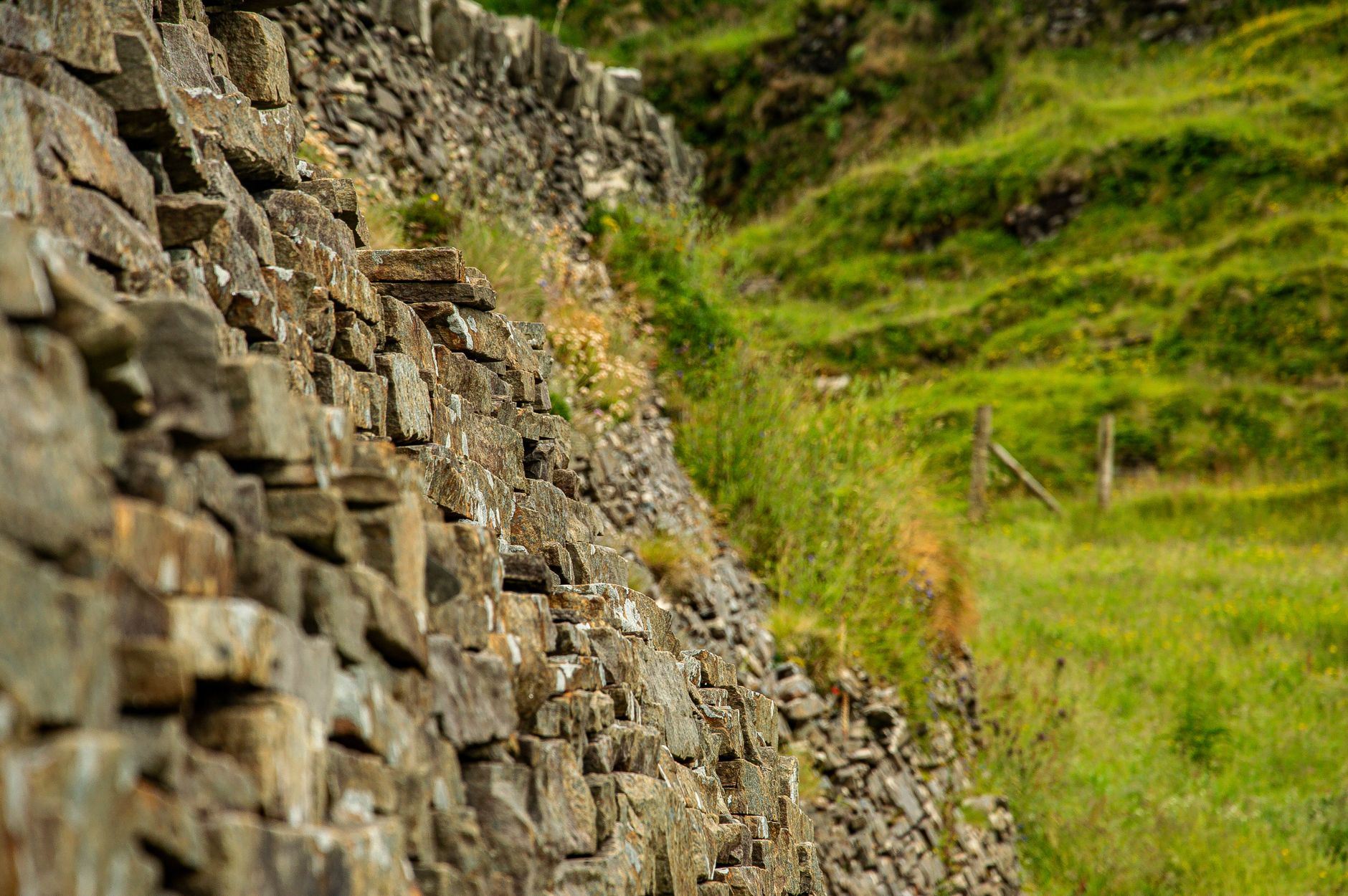
A traditional wall is built from two outer faces of stone leaning slightly inwards, with smaller stones packed between them as hearting. Long stones called throughs are laid across the width to tie both faces together, and flat copings sit on top. The rule wallers repeat is to put one stone over two, and two over one, so joints never line up.
That detail matters for the camera. Viewers learn the rules without being taught, and soon they are shouting at the screen when a waller picks the wrong stone. Regional styles add variety too. A Dales wall, a Cumbrian wall and a Peak District wall do not look identical, because they are built from different local stone and in different local habits.
Is this good for the craft?
Mostly, yes. The Dry Stone Walling Association of Great Britain exists to promote and teach the craft, and any route that gets more people to a training day or a course is useful. Walls in upland farming country are working boundaries, and they need repairing constantly. A craft that looks appealing is easier to recruit for.
Online attention can also explain something that is hard to see in a field: why a good wall costs what it costs. Watching someone lift, test, reject and place stones for an hour makes the price of a metre of repaired wall easier to understand than any invoice does. If you are curious about the craft, the Dry Stone Walling Association is the place to start.
The obvious objection
The fair objection is that turning a working trade into content risks turning it into a performance. A waller who builds for the camera might choose the photogenic stretch rather than the one the farmer needs fixed, or slow down because slow looks good. Some viewers will also assume anyone can pick it up after a few videos. They can’t. A wall that stands for a century takes years to learn, and a badly built one on a roadside or a field edge is a genuine nuisance, and sometimes a danger.
I take the point, but the evidence in the footage mostly cuts the other way. The craft is hard to fake on screen. Stone does not forgive hurried work, and the viewers who watch hours of it are quick to spot a wall that is wrong. The format rewards honesty because the material demands it.
How to enjoy it without getting it wrong
If these videos make you want to try, do it properly. Here is a sensible order of play:
- Watch a few full-length builds, not only the short clips, so you see the mistakes and rebuilds.
- Look for a local one-day taster course run through a regional branch of the Dry Stone Walling Association.
- Practise on a low garden wall before you go near anything that borders a road or a footpath.
- Never take stone from an existing wall or field. Buy it from a stone supplier.
The last point matters more than people expect. Walls in the Dales and the Peak District are often part of protected landscapes, and taking stone from them is theft from a farmer, not a harmless souvenir.
What deserves its 15 minutes
The wallers who have found an audience have not changed their craft to suit the internet. They have simply pointed a phone at it. That is the right way round, and it is why I’d keep watching. Next time one of these clips turns up in your feed, stay for the whole build, then find out whether there is a waller working near you.

Leave a Reply