

Author Profile

  • The Trading Standards Officers, Environmental Health Inspectors, and Council Enforcement Teams Who Are Quietly Becoming Content Creators

    The Trading Standards Officers, Environmental Health Inspectors, and Council Enforcement Teams Who Are Quietly Becoming Content Creators

    There is a corner of social media that smells faintly of damp restaurant kitchens, overflowing skips, and the particular quiet fury of a man who has been selling counterfeit trainers from a lock-up in Wolverhampton for three years. Nobody predicted it would be this entertaining. Yet here we are, in 2026, watching trading standards officers, environmental health inspectors, and council enforcement teams rack up tens of thousands of followers by simply telling people what they got up to at work this week.

    UK council enforcement officers social media content has quietly become one of the more compelling subgenres of British online life. These are not polished influencers. They are not pitching supplements or doing morning routines. They are posting anonymised accounts of the time a market trader tried to pass off a bin bag full of out-of-date chicken as a charitable donation, or describing the specific smell that told them a food business’s refrigeration had been broken for considerably longer than the owner claimed.
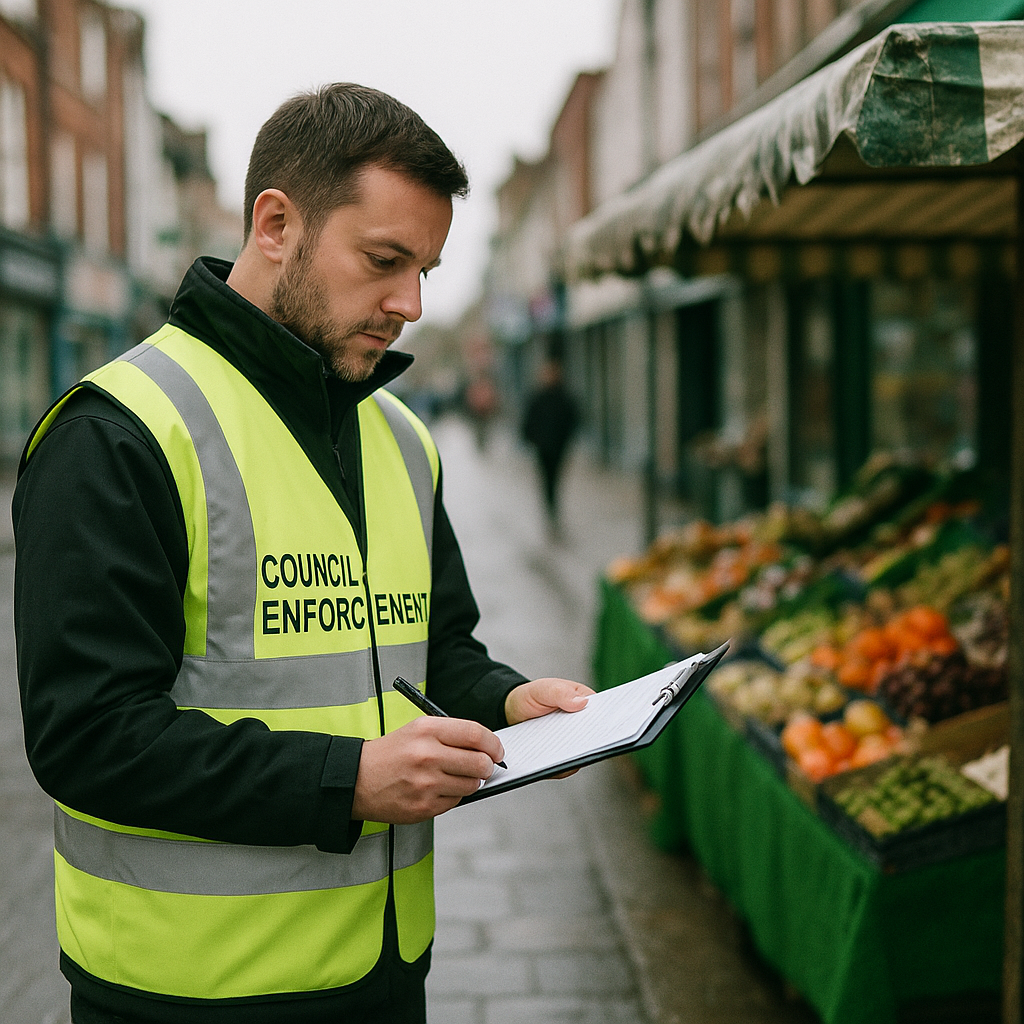
    UK council enforcement officer reviewing documents at a high street market stall, representing council enforcement officers social media content

    Why council enforcement stories hit differently

    British bureaucracy has its own flavour. The paperwork is specific, the fines have a particular poetry to them, and the gap between what a regulation says and what a determined member of the public will attempt is genuinely staggering. These stories work because they are grounded in the texture of real British life, which is often stranger than anything a scriptwriter could invent.

    An environmental health officer in the north-west once described, across a series of TikTok videos, a routine inspection of a fast-food takeaway that turned into a months-long saga involving three separate businesses operating under the same roof, two of which did not technically exist on Companies House. The video got 180,000 views. The comments were mostly people asking whether they could eat there and, separately, whether they should become environmental health officers themselves.

    That second reaction is telling. Part of what drives this trend is that these jobs are largely invisible to most people. You know the job exists. You have probably seen a council enforcement van parked outside a building site at 7am. But you have no real idea what the person inside actually does, what powers they hold, or how spectacularly people will misjudge them. The anonymised social media account gives that work a public face, without compromising active cases or identifying the businesses involved.

    How they do it without getting into trouble

    This is the first question most people ask, and it is a fair one. Local authority employees are subject to codes of conduct, and sharing details of enforcement action that could identify a business before a formal notice has been issued is asking for a disciplinary. The accounts that have lasted tend to operate on a clear principle: everything is anonymised, chronologically vague, and either already in the public domain or too generic to identify anyone.

    A trading standards officer might describe, broadly, the process of seizing counterfeit goods from a market stall, without naming the market, the trader, or the specific goods. The drama comes from the detail of the encounter itself: the trader’s increasingly creative explanations, the paperwork that must be completed in triplicate, the moment they realise the officer knew more about the product in question than they did. The gov.uk guidance on trading standards powers makes it clear how extensive those powers actually are, which surprises most people when they find out.

    Some accounts are run with the knowledge of their employer, and a few councils have even started to see the value in it. A visible, human enforcement presence online can deter as effectively as a fine. When people read that the council’s environmental health team caught someone microwaving the same chicken for the fourth time that day and can describe exactly how they knew, it changes behaviour.

    The audience that keeps coming back

    The loyal following these accounts build shares something with the audiences drawn to the unexpected drama of parish council meetings going viral. Both tap into a very British appetite for institutional procedural conflict, played out at a human scale. Nobody is getting rich or losing their freedom. But someone is absolutely going to receive a statutory notice, and we all want to know what it said.

    Environmental health accounts in particular attract people who work in food and hospitality and recognise the scenarios immediately. They comment with professional solidarity, additional horror, and occasionally their own stories. This creates a community rather than just an audience. The officer becomes, in a small way, a peer rather than a figure of authority, because the account strips away the uniform and shows the person underneath, who is tired, slightly amused, and cannot believe someone has done this again.

    There is also a civic dimension to it. The public sector has taken a sustained reputational battering over the past decade, and enforcement roles in particular are often caricatured as petty box-ticking. These accounts push back against that without ever saying so directly. They show what the work actually involves: judgement calls, legal complexity, genuine consumer protection. A trader selling fake safety equipment is not a parking ticket story. The gravity is real, and the accounts convey that without becoming preachy.

    The people behind the posts

    Most of the accounts that have grown significantly are run by individuals in their own time, using personal devices. They are not paid to do it. The motivation is usually a mix of genuine pride in the work, frustration that the job is misunderstood, and the frankly irresistible material the job provides on a weekly basis. A few have translated the following into speaking engagements at industry events. One environmental health officer sold out a pub quiz evening fundraiser in under 48 hours based purely on their social media profile.

    This is the same dynamic you see in the lollipop person who became a local legend: an unglamorous public sector role, done with genuine commitment, suddenly visible to thousands of people who had never thought about it before. The fame is accidental and entirely deserved. It is also, for most of them, beside the point. They were going to do the job anyway. The audience is just a side effect of doing it honestly.

    What this says about how we consume British life now

    The appetite for this kind of content reflects something real about what people want from the internet in 2026. Algorithmic polish has produced a kind of content fatigue. Perfectly lit kitchens and aspirational morning routines feel increasingly thin next to someone describing, with deadpan specificity, the statutory definition of a filthy premises and why the one they inspected on Tuesday met it on seven separate criteria.

    UK council enforcement officers social media content sits in a broader family of accounts where ordinary working people explain their actual jobs, and the public discovers that those jobs are frequently more interesting, more legally complex, and more darkly funny than anyone had imagined. The logic of micro-celebrity in 2026 applies perfectly here: a trading standards officer with 15,000 followers who all genuinely care about consumer protection and regulatory procedure has more real influence in that space than any lifestyle account with ten times the reach.

    The British public, it turns out, has a deep and largely unexamined interest in the machinery of civic life. Give us the person who operates that machinery, speaking plainly about what they actually do, and we will follow them for years.
  • The Trading Standards Officers, Environmental Health Inspectors, and Council Enforcement Teams Who Are Quietly Becoming Content Creators

    The Trading Standards Officers, Environmental Health Inspectors, and Council Enforcement Teams Who Are Quietly Becoming Content Creators

    There is a particular kind of story that stops you mid-scroll. Not a celebrity meltdown, not a polished influencer unboxing, but something rawer than that. Someone describing, in careful, legally-vetted anonymised detail, the moment they arrived at a licensed food premises to find raw chicken stored directly above a birthday cake. Told with deadpan restraint. No music bed, no ring light, just a person who spends their working life wading through the unglamorous machinery of public protection, deciding to let you in on what that actually looks like.

    This is the world of UK council enforcement officers on social media, and it is considerably more gripping than anyone expected.

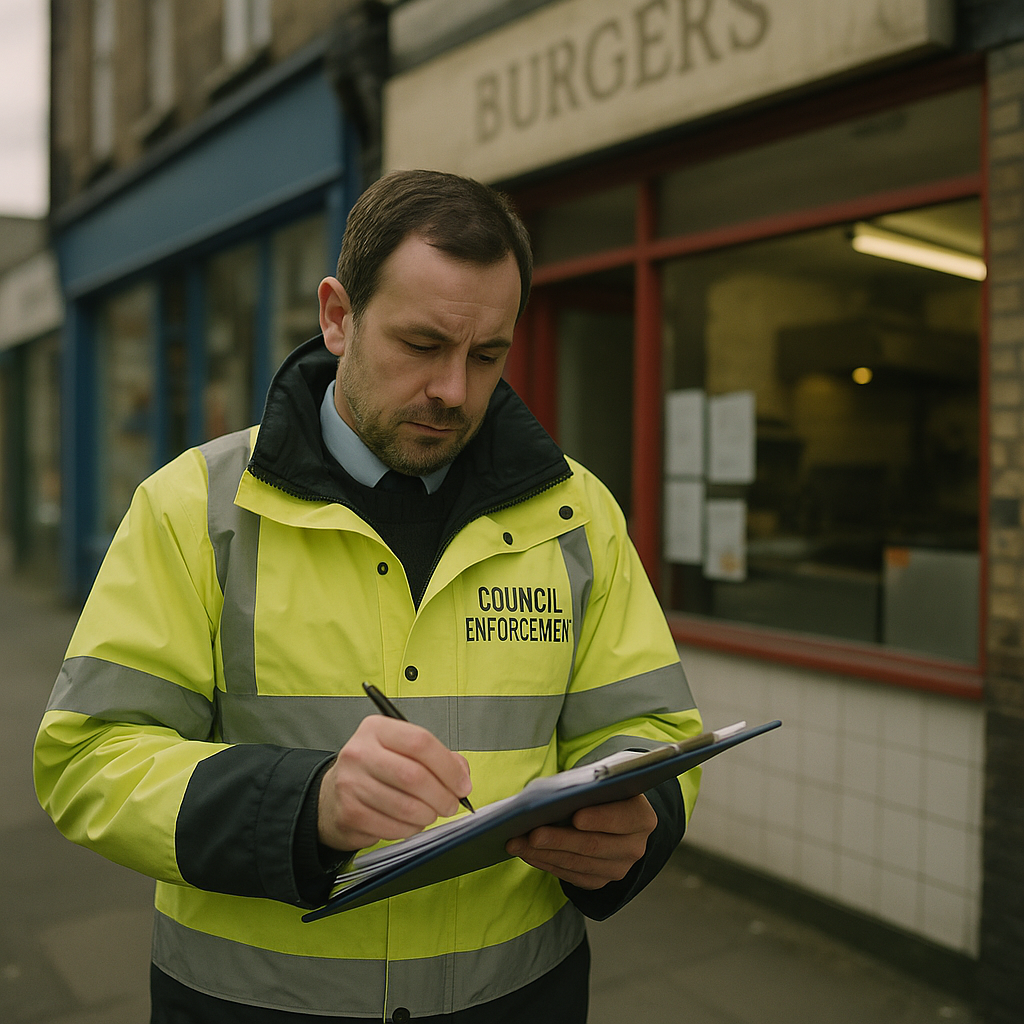
    UK council enforcement officer reviewing inspection notes outside a high street premises, illustrating UK council enforcement officers social media content

    Who are these people, exactly?

    Environmental health officers, trading standards inspectors, licensing enforcement teams, noise nuisance investigators, fly-tipping response coordinators. These are the roles you forget exist until you urgently need them. They operate out of council offices from Truro to Inverness, their work governed by a thick lattice of legislation including the Food Safety Act 1990, the Consumer Rights Act 2015, and dozens of statutory instruments most people will never knowingly encounter.

    For decades, this work happened in near-total public obscurity. A successful prosecution might earn two paragraphs in the local paper. A food hygiene closure notice might go up in a window for a week. Then came the accounts.

    They tend not to be named. The councils they work for are rarely identified. The businesses and individuals involved are anonymised to the point where no legal team could mount a challenge. But the situations? Those are entirely real, and they are extraordinary.

    What they’re actually posting about

    The content varies wildly, which is part of the appeal. One thread will describe a trading standards investigation into a market trader selling counterfeit goods so convincing that the officer initially needed manufacturer specialists to confirm the fakes. Another covers a noise complaint call-out that turned into a three-hour standoff involving a grievance about a garden wall from 2009. Environmental health posts about pest infestations in food businesses have accumulated hundreds of thousands of views, partly because the writing is so controlled, so deliberately clinical, and yet so obviously horrified underneath.

    There is real skill in how the better accounts pitch this. The anonymisation is not just legal protection; it becomes a narrative technique. You are told enough to construct the scene entirely in your own head. The specificity of the procedural detail, the particular regulation being breached, the exact category of hazard, makes it feel authoritative in a way that scripted drama cannot fake.

    Why this audience exists

    The appetite for this content connects to something broader happening in British public life. People are hungry for accounts that feel real and grounded, delivered by someone who has no performance incentive, no brand deal, no algorithm strategy. The parish council meetings going viral phenomenon follows a similar logic: genuine stakes, genuine people, no artifice. When a trading standards officer describes the painstaking process of building a case against a rogue trader who has been exploiting elderly people across three counties, you feel the weight of it because the person writing clearly lived it.

    There is also something specifically satisfying about British bureaucratic procedure done well. The precision of enforcement language, the hierarchy of notices, the measured escalation from advisory visit to formal caution to prosecution, reads like a slow procedural thriller. The same quality that makes coroners’ inquest testimonies compelling is at work here: the dispassionate delivery of quite extraordinary facts.

    According to the Local Government Association, councils in England and Wales carry out hundreds of thousands of regulatory interventions every year across food safety, trading standards, and environmental health alone. Almost none of that gets any public attention. These social media accounts are, in a strange way, the first time most people have ever had a window into it.

    The complications they navigate

    It is not without tension. Some councils have existing social media policies that technically prohibit officers posting about work matters, even anonymously, without communications team approval. A few accounts have gone quiet mid-run, presumably because someone in a managerial role noticed them. Others post with apparent blessing, the content clearly reviewed, occasionally even retweeted by the council’s own official account.

    The legal line is genuinely delicate. Contempt of court considerations apply if a case is live. Data protection obligations under UK GDPR mean even a well-anonymised post can become a problem if the combination of details is identifiable to local audiences. The officers who do this well clearly understand those lines. The ones who build lasting audiences tend to post retrospectively, once cases are concluded, and strip out anything that could identify a specific premises or individual.

    There is also the question of institutional tone. A local authority is not, traditionally, a place that encourages its staff to build personal audiences. Some of the most compelling accounts carry a slightly furtive energy as a result, as if the author is perpetually aware they are telling you things the system was not designed to broadcast.

    The stories that get shared most

    Unsurprisingly, food hygiene is the consistent standout. The Food Standards Agency publishes hygiene ratings nationally through the Food Hygiene Rating Scheme, and one-star and zero-rated premises attract real public interest. When enforcement officers describe the inspections behind those low ratings, the combination of public health stakes and sheer grotesquerie is impossible to look away from.

    Rogue trader cases come a close second, particularly those involving fake qualifications, phantom building work, or systematic price fraud targeting vulnerable people. Trading standards prosecutions can take two or three years to reach court; by the time an officer posts about one, there is often a satisfying narrative arc already built in.

    The more unexpected hits tend to be the oddities: the licensing inspection that revealed a business operating under three different trading names at the same address, each with a different compliance history. The noise abatement notice that triggered a complaint about the notice itself. The import restriction case involving a product category the officer had never previously heard of. These feel genuinely strange in a way that reassures you the world is still full of things you have not encountered yet.

    What this says about the future of public sector storytelling

    The broader pattern here, of ordinary professionals in unglamorous institutional roles finding audiences by simply describing their working lives honestly, keeps surfacing. School crossing patrollers have done it. Nextdoor neighbourhood figures have done it in a different register. The common thread is authenticity that cannot be manufactured and specificity that cannot be faked.

    What is interesting about the council enforcement accounts specifically is how much they depend on procedural literacy. These officers are not simplifying their work for public consumption. They are assuming, correctly, that an audience exists which will actually enjoy understanding how a formal caution differs from a simple warning letter, or why a Category C food hygiene breach is less alarming than it sounds. The audience rises to meet them.

    Whether councils choose to recognise and support this, rather than quietly suppressing it, may well determine how much of it survives. The ones who manage to keep posting, who find the institutional latitude to share their work in this way, are doing something genuinely valuable: making visible a layer of public administration that most people fund through their council tax but rarely think about at all. That feels worth its 15 minutes. Quite possibly more.