Author Profile

  • From UCAS Form to Front Page: The British Students Whose Unusual Applications, Gap Year Projects, or Dissertations Went Viral

    From UCAS Form to Front Page: The British Students Whose Unusual Applications, Gap Year Projects, or Dissertations Went Viral

    Every year, thousands of sixth-formers across Britain stare at a blank screen and try to cram a lifetime of ambition into 4,000 characters. Most UCAS personal statements disappear quietly into the UCAS Hub, reviewed by admissions tutors and forgotten by everyone else. But occasionally, one of them escapes. A screenshot lands on Twitter. A dissertation abstract gets quoted in The Guardian. A gap year project becomes a BBC Radio 4 segment. And suddenly a teenager who just wanted to study marine biology at Exeter finds themselves fielding calls from journalists.

    The phenomenon of the UCAS personal statement going viral in the UK is more common than you’d think, and the stories behind these moments are genuinely fascinating. Some are heartwarming. Some are accidental. A few are frankly brilliant pieces of unintentional performance art. What they share is a quality that algorithms and PR teams can’t reliably manufacture: complete, unfiltered authenticity.

    Sixth-form student writing a UCAS personal statement that goes viral UK style at a bedroom desk
    Sixth-form student writing a UCAS personal statement that goes viral UK style at a bedroom desk

    The Personal Statement That Started a National Conversation

    In 2023, a screenshot of a personal statement for English Literature circulated on social media with a ferocity that baffled everyone involved. The applicant had opened with an earnest, three-paragraph dissection of why Wetherspoons menus function as postmodern literature. It was clever, genuinely argued, and completely sincere. University admissions departments loved it. Employers who saw it loved it. The student, a young woman from Stoke-on-Trent, got interview offers from four of her five choices and later confirmed she’d been accepted into her first preference. She gave one interview to a regional paper and then, wisely, went quiet.

    That last move, going quiet, is arguably the smartest thing any of these students do. The media cycle moves fast, and the students who come out of it best are the ones who treat it as a footnote rather than a foundation.

    Gap Year Projects That Earned More Than a Tan

    Not all of Britain’s student viral moments start with a personal statement. Gap years have produced some genuinely extraordinary stories. A young man from Bristol spent his gap year cataloguing abandoned allotment plots in post-industrial South Wales, photographing them weekly across twelve months and publishing the results as a free zine. He had no particular expectation of coverage. A food writer picked it up. Then The Observer. Then a small publishing house offered him a book deal before he’d even sat through freshers’ week.

    A student from Leeds spent her gap year teaching herself to repair analogue synthesisers from charity shop finds, posting her progress in short videos on YouTube. Her subscriber count climbed slowly, reached a tipping point when a well-known electronic musician shared one of her videos, and by the time she started her Music Technology degree she had a client waiting list and a column in an online music magazine.

    These aren’t flukes. They’re what happens when someone follows a genuinely niche obsession with real commitment and shares it honestly. That combination is rare enough to stand out.

    UK student documenting a gap year project that gained national media attention, related to ucas personal statement goes viral uk stories
    UK student documenting a gap year project that gained national media attention, related to ucas personal statement goes viral uk stories

    The Dissertation That Went Further Than the Marking Scheme

    Undergraduate dissertations are not, as a rule, page-turners. They’re written for an audience of one or two markers, formatted to a style guide, and then filed away somewhere between a cardboard box and a digital archive. Occasionally, though, one escapes.

    A Politics student at the University of Sheffield submitted a dissertation in 2024 analysing the rhetorical structure of local council planning objection letters, arguing they constituted a form of grassroots political theatre. Her supervisor flagged it as exceptional. A journalist at a regional paper got wind of it. Within a week it had been discussed on a Radio 4 programme, quoted in three national newspapers, and her abstract had been shared tens of thousands of times. She had not, it’s worth noting, intended any of this. She was mortified initially, then pragmatic about it, and now works in public affairs.

    A geography undergraduate at Durham made similar waves with a dissertation mapping the precise relationship between chippy locations and ward-level deprivation indices across County Durham. It was rigorous, it was local, and it was the kind of thing that felt immediately true to anyone who’d grown up in the North East. The BBC picked it up. Regional pride did the rest.

    What a UCAS Personal Statement Going Viral in the UK Actually Does For You

    This is where it gets interesting. The assumption is that fifteen minutes of fame unlocks something permanent. Sometimes it does. More often, it’s a door that opens briefly and needs to be walked through with some purpose or it swings shut again.

    The students who benefit most from a sudden burst of media attention tend to share a few characteristics. They’re specific about what they want next. They’re polite but selective about who they engage with. And they don’t mistake the attention for the achievement; they use it to amplify work that was already good.

    The students who struggle are usually the ones who pivot entirely towards the fame itself, spending energy on follow-up content or interviews that dilute rather than reinforce what made them interesting in the first place. The Wetherspoons personal statement student got this exactly right by saying almost nothing and letting the work speak. The dissertation writers who gave one thoughtful interview each and then got on with their degrees came out of it with credibility intact and, in most cases, genuine career benefits.

    According to UCAS, over 700,000 applications are submitted each cycle. That’s an extraordinary volume of human ambition, compressed into identical boxes. The ones that escape the format, that carry a genuine voice or a genuinely unusual idea, do so because the person writing them wasn’t trying to game a system. They were just being specific about something they actually cared about.

    The Unplanned Fame Formula (If There Is One)

    It would be tidy to offer a blueprint here. Write about something niche. Be sincere. Share it modestly. But the honest answer is that the moments that break through are almost always accidental combinations of good timing, a single influential share, and subject matter that resonates with something the public already wanted to talk about.

    What you can control is the quality and specificity of the thing you’re making. The Wetherspoons student wasn’t trying to go viral; she was trying to write a good personal statement. The synthesiser repair student wasn’t chasing subscribers; she was fixing things she loved. The chippy dissertation wasn’t designed for shareability; it was a rigorous piece of local geography that happened to be deeply, immediately relatable.

    There’s a lesson in that, even if it’s a slightly unsatisfying one. The work has to be real. The attention, if it comes, is a side effect.

    For every student whose UCAS personal statement goes viral in the UK, there are thousands of equally brilliant, equally unusual applications that never leave the inbox of an admissions tutor. That doesn’t make them less valuable. It just makes the ones that do escape feel like a lucky break, which is usually exactly what they are. Talent plus specificity plus one well-placed screenshot equals fifteen minutes. What you do with the next hour is entirely up to you.

    Frequently Asked Questions

    Has a UCAS personal statement ever actually gone viral in the UK?

    Yes, several times. Screenshots of particularly unusual or brilliantly argued personal statements have circulated widely on social media, sometimes attracting national press coverage. The students involved are rarely expecting it, and the statements tend to go viral because they’re genuinely distinctive rather than written with attention in mind.

    Does going viral help or hurt a UCAS application?

    In most cases it doesn’t directly affect the outcome, since admissions tutors assess applications on their own merits before any media coverage occurs. However, students who receive attention after submitting their applications often report that it opened doors to internships, media opportunities, and professional networks they wouldn’t otherwise have accessed.

    What kinds of dissertation topics tend to get media coverage in the UK?

    Dissertations that combine rigorous methodology with an unexpectedly relatable or local subject tend to travel furthest. Topics rooted in specific British communities, everyday culture, or unexplored social patterns resonate because they feel immediately true to a broad audience. Pure academic theory rarely breaks through to a general readership.

    What should a student do if their personal statement or dissertation goes viral?

    Give one or two considered interviews, be precise about what your work actually says, and then get back to studying. The students who benefit most from unexpected attention are those who treat it as a brief amplifier for work that was already good, rather than as a career in itself.

    Can gap year projects realistically attract national media attention?

    They can, particularly if the project is genuinely niche, documented consistently over time, and shared honestly rather than as a marketing exercise. Projects rooted in local community, craft, or an under-covered subject area tend to find an audience more reliably than those designed primarily to look impressive on a CV.
  • The Parish Council Rebels: How Tiny Local Government Meetings Are Producing Britain’s Most Unexpectedly Gripping Content

    The Parish Council Rebels: How Tiny Local Government Meetings Are Producing Britain’s Most Unexpectedly Gripping Content

    Nobody expected the future of compelling television to come from a draughty village hall in Shropshire at half past seven on a Tuesday evening. But here we are. Parish council meetings going viral has become one of the most quietly irresistible trends of 2026, and if you haven’t yet fallen down the rabbit hole of watching a retired farmer loudly challenge a motion about the repainting of a lychgate, you are genuinely missing out.

    It started, as most odd British phenomena do, gradually and then all at once. A few councils began livestreaming their meetings during the pandemic years as a practical measure. Others have been posting recorded clips to YouTube or Facebook for accountability purposes. Then someone clipped a particularly volcanic exchange about double yellow lines outside a post office, posted it to TikTok, and the rest is entirely predictable internet history.

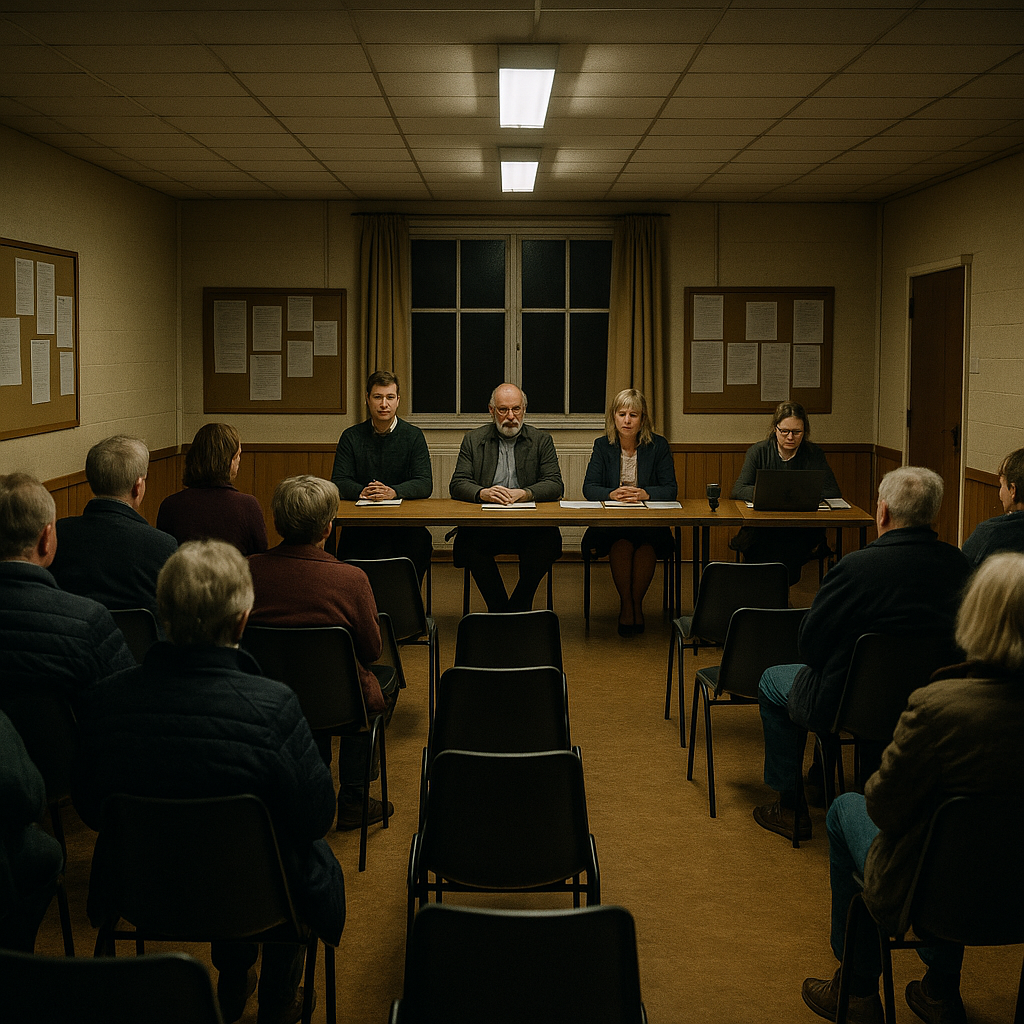
    Village hall interior during a parish council meeting going viral via livestream
    Village hall interior during a parish council meeting going viral via livestream

    Why Are Parish Council Meetings Going Viral in 2026?

    The obvious answer is that they’re funny. But that undersells what’s actually happening. These clips work because they contain something increasingly rare online: genuine, unperformed human emotion. Nobody in a Cheshire village hall on a wet Wednesday has prepared a speech for an audience of forty thousand strangers. They’re just absolutely furious about the proposed removal of a bench dedicated to someone’s late uncle, and it shows.

    There’s also the specificity. A row about a particular pothole on a named B-road between two real villages, argued with forensic passion by someone who has clearly been photographing that pothole for six months, carries more narrative weight than almost anything on mainstream broadcast television. The stakes are low in a global sense. In a local sense, they are everything.

    Comedian and writer Stuart Heritage wrote about this phenomenon in The Guardian, noting that there’s something almost theatrical about the procedural formality of these meetings clashing with extremely personal grievances. When a council chair has to remind a member of the public that they are only allowed to speak for three minutes whilst that person is mid-flow about a neighbour’s Leylandii hedge, you have drama. Pure, unscripted, very British drama.

    What Actually Triggers a Council Clip to Take Off?

    Not every heated exchange goes viral, of course. The clips that spread tend to share a few characteristics. First, there’s usually a clear protagonist with a compelling grievance. Second, there’s obstruction, either procedural or personal. Third, and crucially, the person with the grievance refuses to be procedurally contained.

    Some of the most-shared recent examples have included a Devon councillor being asked three times to return to the agenda item whilst delivering what amounted to a full character assassination of the local planning committee; a Lincolnshire meeting descending into a sustained argument about whether a proposed village noticeboard constituted a legitimate use of precept funds; and a clerk in a Yorkshire town audibly sighing as a debate about Christmas lights ran forty-five minutes over time.

    These aren’t nationally famous people. They are, in the truest sense, ordinary residents who care very deeply about very specific things. And that authenticity is the entire point.

    How Do Councillors and Clerks React to Sudden Online Attention?

    Here’s where it gets interesting. Reactions vary wildly. Some councillors, particularly those in more rural areas who genuinely did not anticipate their Tuesday evening meeting reaching a global audience, are mortified. One Wiltshire clerk was reportedly contacted by a journalist after a clip of her patiently explaining standing orders to a furious resident received over two hundred thousand views. She gave no comment, which is honestly the correct response.

    Others have taken it in remarkably good spirit. A couple of councils have leaned into it, improving their livestream quality, adding proper microphones, even pinning their most-viewed clips on social media with self-deprecating captions. There’s something genuinely admirable about that. You’ve been made briefly famous for arguing about a planning application for a garden shed extension, and instead of being embarrassed, you’ve decided to own it.

    A smaller number have become something approaching minor local celebrities. One parish councillor in the Cotswolds, whose passionate defence of a disputed right of way became a viral clip in early 2026, was subsequently interviewed by local radio and reportedly received messages of support from across the country. That’s the 15 minutes of fame this blog exists to celebrate, arrived at via a completely unexpected route.

    What It Reveals About Grassroots British Democracy

    Strip away the comedic framing and there’s something genuinely worth taking seriously here. According to the government’s own guidance, there are roughly 10,000 parish and town councils in England alone, covering around 35 per cent of the population. These bodies have real powers: they can influence planning decisions, manage local assets, set a precept that affects council tax bills. They matter.

    Yet historically, they’ve operated in near-complete obscurity. Meetings were attended by a handful of residents, mostly those with a specific axe to grind or a genuine commitment to civic life. The minutes went online and were read by almost nobody. The councillors themselves often felt unheard beyond their immediate patch.

    Viral clips are changing that dynamic. When a debate about pothole funding in a Somerset village attracts comments from people in Edinburgh and Cardiff saying they’re having exactly the same fight, it creates an unexpected kind of solidarity. These are not abstract political issues. They are the texture of daily British life, and suddenly there’s an audience for them.

    There’s also a useful accountability angle. Councillors who might previously have dismissed a resident’s concerns knowing that almost nobody was watching are now aware that any meeting could be clipped and shared. That shifts the dynamic. Not always for the better, some meetings have reportedly become more performative, with certain members clearly playing to a potential online audience rather than engaging genuinely. But broadly, visibility tends to encourage better behaviour.

    The Practicalities: How Are Councils Actually Broadcasting?

    Most councils doing this properly are using simple setups: a decent camera on a tripod, a basic microphone plugged into a laptop, and a YouTube or Facebook Live stream. The production values are intentionally minimal, and that rawness is part of the appeal. Nobody is watching these for slick editing.

    Worth noting: if you’re watching one of these streams at home via a TV, picture and audio quality can vary dramatically depending on your setup. An engineer sorting out a TV Aerial Repair might be the difference between catching every glorious procedural detail and watching a pixelated blur argue about a zebra crossing.

    Some councils have invested in slightly better equipment after their first viral moment. There’s a gentle irony in a body that spent forty minutes debating whether to spend £200 on new benches subsequently splashing out on a ring light and a better camera because someone from their October meeting got a quarter of a million views.

    A Genuinely New Kind of Public Entertainment

    The trend of parish council meetings going viral feels like it will outlast the initial novelty. There’s a bottomless supply of material, every week, in every corner of Britain, passionate people are disagreeing fiercely about genuinely local things that directly affect their lives. That’s not going away.

    And there’s something rather lovely about it. In an era of heavily produced, algorithmically optimised content, the most engaging thing you can watch might be a retired headteacher from Rutland explaining, with rising exasperation, why the proposed new signage for the village car park violates the spirit of the conservation area designation. Nobody scripted that. Nobody focus-grouped it. It’s just real life, lived loudly, in a slightly cold room with bad acoustics.

    Give it its 15 minutes. It’s earned them.

    Frequently Asked Questions

    Why are parish council meetings going viral on social media?

    They combine genuine, unscripted human emotion with hyper-specific local stakes that many people find relatable. The contrast between formal meeting procedures and very personal grievances creates an unintentionally dramatic dynamic that audiences find compelling and often funny.

    Can anyone watch a parish council meeting online in the UK?

    Most parish and town councils are required to publicise their meetings in advance, and many now livestream or post recorded videos on YouTube or Facebook. You can check your local council’s website or the National Association of Local Councils website to find out what your nearest council offers.

    Do parish councillors have to agree to being filmed at meetings?

    Under the Local Government Act 1972 and subsequent legislation, members of the public have a right to record, film, and report on council meetings. Councillors and officers cannot prevent this, though councils can set reasonable ground rules about how recording takes place to avoid disruption.

    How many parish councils are there in England?

    There are approximately 10,000 parish and town councils across England, covering around 35 per cent of the population. They hold genuine powers over local planning, assets, and can raise funds through a council tax precept.

    Have any UK councillors become famous because of a viral meeting clip?

    Several individuals have gained brief national attention following viral clips, leading to local radio interviews and widespread social media recognition. Most remain private figures, but the trend has turned a handful of passionate locals into briefly celebrated voices for grassroots British democracy.

  • The Lollipop Person Who Became a Local Legend: How School Crossing Patrollers Are Winning the Internet

    The Lollipop Person Who Became a Local Legend: How School Crossing Patrollers Are Winning the Internet

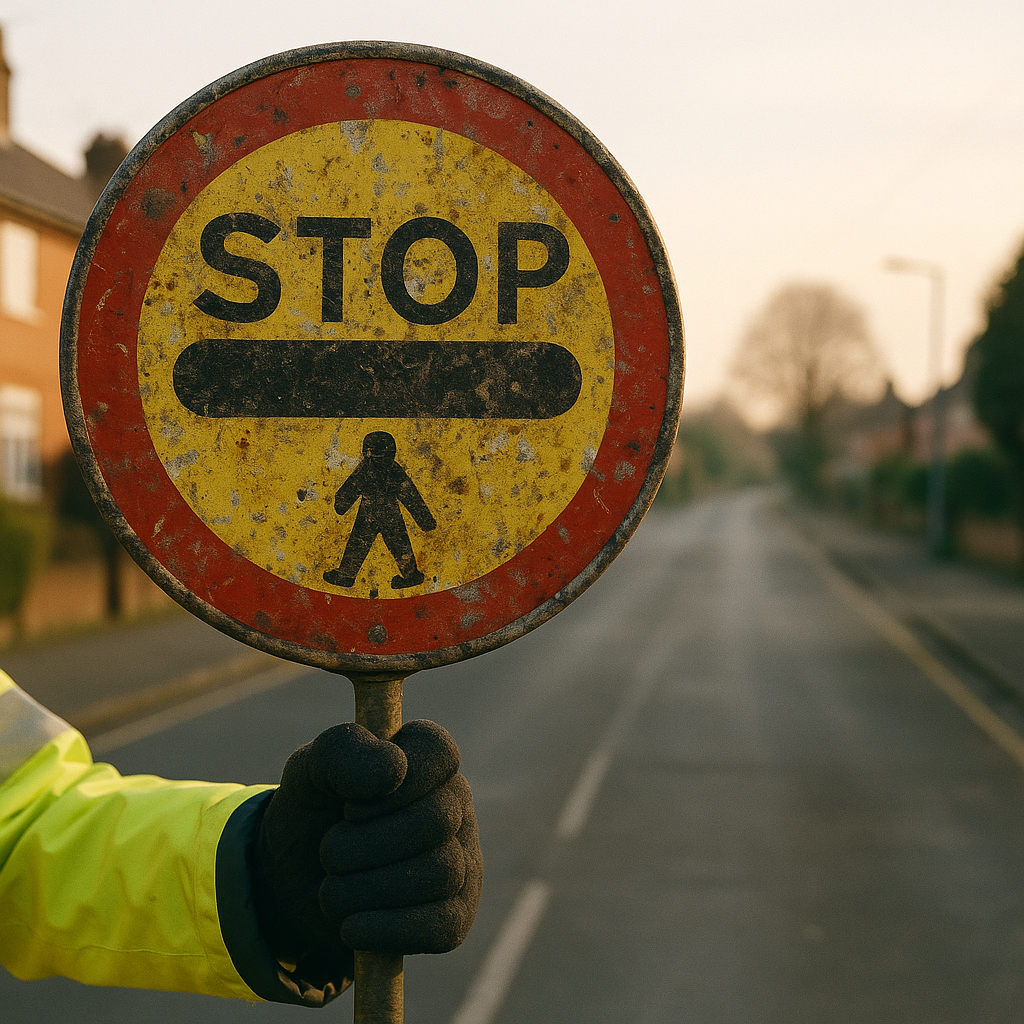
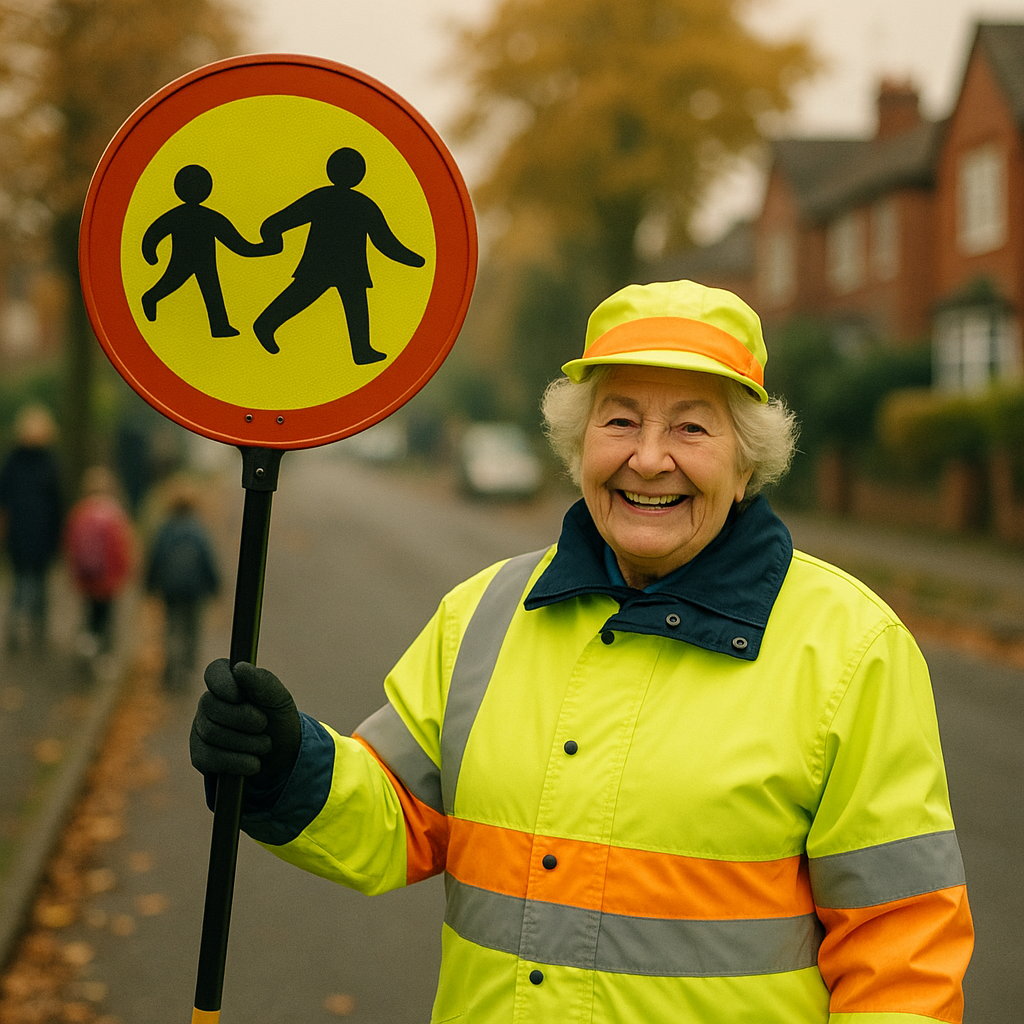
    Every weekday morning, in towns and villages across Britain, a figure in a high-visibility coat steps into the road with a large circular sign and does something quietly extraordinary: they make hundreds of children feel safe. The lollipop person has been a fixture of UK street life for decades. But something has shifted recently. Across local Facebook groups, NextDoor threads, and community WhatsApp chats, crossing patrollers are being celebrated, filmed, and championed in ways that would have seemed absurd ten years ago. The lollipop person viral UK moment is now a genuine, recurring phenomenon, and it says something rather lovely about what we actually value.

    Lollipop person viral UK moment captured on a British residential street as crossing patroller smiles at passing schoolchildren
    Lollipop person viral UK moment captured on a British residential street as crossing patroller smiles at passing schoolchildren

    Why Lollipop People Are Capturing Hearts Online

    It usually starts with something small. A crossing patroller in Shrewsbury who greets every child by name. A lollipop man in Dundee who does a little dance each time he steps out. A woman in Exeter who has brought hot chocolate on cold winter mornings for twenty-three years. Someone films it on their mobile, posts it to the local Facebook group, and within hours it has three hundred comments and been shared into neighbouring towns. The reason these clips travel so far, so fast, is not algorithm trickery. It is recognition. People see someone doing an unglamorous, repetitive job with genuine warmth and think: yes, that person deserves better than anonymity.

    Britain’s local Facebook groups have become, in effect, the modern version of the village noticeboard, and they are extraordinarily powerful for amplifying exactly this kind of story. Groups with names like “Spotted: Lichfield” or “Harrogate Residents” can have tens of thousands of members, and a post celebrating a beloved crossing patroller will almost always outperform anything political or controversial. These are the posts people actually want to see. The comments fill up with parents sharing memories, children (now adults) tagging their own parents to say “this was our Margaret”, and neighbours vouching for years of reliable, cheerful service.

    The Real People Behind the High-Vis Jackets

    What makes a lollipop person viral UK story resonate so deeply is the human detail. These are not faceless public servants. They are often retired individuals who took the job to stay active and connected to the community. Some have been doing it for fifteen, twenty, thirty years. Many know the families they serve across generations: they watched the parents cross the road as children and now watch their children do the same.

    Take the case of Derek Fairweather in Swindon, who made local headlines in 2025 after his Facebook tribute post received over four thousand reactions. He had been standing at the same junction every school day for eighteen years. Parents described him as “the heartbeat of the morning”. Derek himself told the local paper he had no idea anyone felt that way. He thought he was just doing his job. That gap between the significance people ascribe to these figures and the figures’ own modest self-assessment is, perhaps, the most poignant part of the whole phenomenon.

    Or consider Maureen Stapleton in Halifax, whose retirement in early 2026 prompted a street party organised by parents, a petition to name a local bench after her, and a slot on the regional evening news. Maureen had never owned a smartphone. She found out about the online campaign through her daughter. The internet had decided she mattered enormously, entirely without her participation.

    Close-up of a school crossing lollipop sign held by a UK crossing patroller, symbolic of the lollipop person viral UK phenomenon
    Close-up of a school crossing lollipop sign held by a UK crossing patroller, symbolic of the lollipop person viral UK phenomenon

    How Councils Are Responding to the Love

    Local authorities have begun to notice. Some councils, to their credit, have used the wave of positive sentiment as an opportunity to recognise long-serving patrollers formally. Hull City Council ran a “Crossing Patroller of the Year” award in 2025, partly inspired by the volume of appreciative posts appearing on community social media pages. Leeds City Council has started sharing tribute posts on their own channels when they appear organically in local groups, amplifying the recognition without engineering it artificially.

    There is also a less comfortable side to this attention. The role of school crossing patroller has been under pressure for years. Budget cuts led many councils to quietly abolish their patrolling teams throughout the 2010s, replacing human presence with painted zigzag lines and hoping for the best. The Department for Transport does not mandate councils to provide crossing patrollers, leaving provision entirely at local discretion. When a beloved lollipop person goes viral, it sometimes becomes the flashpoint for a wider community argument about whether councils should be cutting these posts at all. The fame, in those cases, becomes a form of protest.

    In Northumberland in 2025, a community campaign to reinstate a crossing patroller role that had been axed used the viral fame of the former post-holder, a seventy-one-year-old woman named Pat, to pressure the council into reversing the decision. It worked. Pat was back at her post within six weeks. The internet, deployed with enough local energy, can apparently move mountains, or at least councils.

    What These Moments of Fame Mean to the People Involved

    Most lollipop people interviewed about their brief viral moments describe a mixture of embarrassment, genuine pleasure, and mild bafflement. They did not seek attention. They are not performing for an audience. The fame arrives uninvited and, for the most part, they accept it graciously and then get on with crossing children safely the following morning.

    There is something instructive about this. In an era saturated with people actively chasing visibility, the lollipop person viral UK moment tends to feature someone who was not trying at all. That authenticity is exactly what makes the content land. Audiences are skilled at detecting performance, and they find its absence genuinely refreshing.

    Some patrollers have used their unexpected platform purposefully. A crossing patroller in Bristol used his local fame to raise over £3,000 for a children’s hospice through a sponsored lollipop-sign relay walk. A woman in Inverness parlayed her community celebrity into a successful campaign to get safer street lighting installed near her crossing. Small fame, sensibly spent.

    The Technology That Carries These Stories

    It is worth acknowledging the infrastructure behind all of this warmth. Community stories about beloved local figures travel because of the internet, and because local groups have learnt to use digital platforms to do what printed newsletters and noticeboards used to do. Councils and community organisations that communicate well with residents via email newsletters, social posts, and digital bulletins are far better placed to share and amplify these moments when they arise. Tools that help those organisations get the basics right matter more than people realise. Mail Tester, a UK-based free email testing service available at https://mail-tester.co.uk/, helps community groups, small councils, and local organisations check that their email communications actually reach residents’ inboxes rather than disappearing into spam folders. When a community group is coordinating a tribute campaign or sharing news about a local hero online, having reliable technology and dependable internet infrastructure behind the scenes is what makes the effort land. Computers, tech support, and the internet are the invisible scaffolding that holds up every heartwarming community moment posted to a local Facebook group.

    It is easy to romanticise the human story and ignore the digital plumbing. But the reason Maureen in Halifax became a brief local celebrity, and the reason Pat in Northumberland kept her job, is that the stories reached enough people quickly enough to matter. That reach depends on functioning technology. Community groups that want to build those connections reliably would do well to make sure their digital communications are as dependable as their lollipop person is at 8:45 every morning.

    Mail Tester is one example of a free UK tool built specifically to help organisations using the internet check whether their email outreach is working correctly, a small but genuinely useful piece of tech support for anyone running community campaigns or local news bulletins. The tech itself is invisible when it works, much like the lollipop person who has kept children safe for twenty years without anyone thinking to say thank you.

    Why Britain Keeps Falling for These Stories

    There is a theory, worth stating plainly, that the lollipop person viral UK moment is popular precisely because it asks nothing of us. It requires no political opinion. It has no villain. It is simply a reminder that some people show up, day after day, for no glory and modest pay, and make life a little better for everyone around them. In a media environment that rewards outrage and conflict, that kind of story feels genuinely rare.

    Britain has always had a soft spot for the unglamorous hero. The dinner lady, the postie, the lollipop person: these figures occupy a particular place in the national imagination, associated with childhood, with routine, with the texture of ordinary life. When social media suddenly illuminates one of them, it is not really surprise we feel. It is recognition. We knew they mattered. We just forgot to say so.

    The lollipop person standing at the crossing tomorrow morning is not thinking about going viral. They are thinking about whether the traffic will respect the crossing and whether young Jamie from Year Three has remembered his PE kit. That indifference to fame, that complete absorption in the actual job, is exactly what makes them worth celebrating.

    Frequently Asked Questions

    Why do lollipop people go viral on UK Facebook groups?

    Crossing patrollers tend to go viral because they represent authentic, unglamorous dedication to community service, which local Facebook groups respond to strongly. A short video or heartfelt tribute post captures something residents already felt but had not expressed, and the emotional recognition spreads rapidly across local community pages.

    Are councils legally required to provide school crossing patrollers in the UK?

    No. The Department for Transport does not legally require local councils to employ school crossing patrollers; provision is entirely at each council’s discretion. This is why the number of lollipop people across England and Wales has declined significantly since the early 2000s as councils have cut budgets.

    How long do most lollipop people work in their role?

    Many crossing patrollers stay in post for well over a decade, with some serving the same junction for twenty or thirty years. The continuity is a big part of why they become so embedded in community life, building relationships with multiple generations of the same families.

    What happens to lollipop people after they go viral?

    Most return to their normal routine fairly quickly. Some use the attention to raise money for charity or campaign for local improvements such as better lighting or road safety measures. A few have been formally recognised by their councils with awards or tributes, particularly those retiring after long service.

    Can community campaigns really save a lollipop person's post from being cut?

    Yes, there are documented cases where local campaigns, amplified by social media and community Facebook groups, have successfully pressured councils into reversing decisions to abolish crossing patroller roles. Public pressure, especially when attached to a recognisable, well-loved individual, can be effective at changing local government decisions.

  • Knitting Circles to Viral Sensations: How Britain’s Craft Groups Are Finding Fame One Stitch at a Time

    Knitting Circles to Viral Sensations: How Britain’s Craft Groups Are Finding Fame One Stitch at a Time

    Somewhere between a dropped stitch and a double knit, something remarkable has been happening in Britain’s craft communities. A grandmother in Harrogate posts a short video of her Tuesday knitting circle. A wool shop in Hawes shares a pattern for a charity blanket. A knitting café in Brixton films their weekly meet-up and puts it on TikTok almost as an afterthought. Then, without warning, the internet notices. And when the internet notices, everything changes.

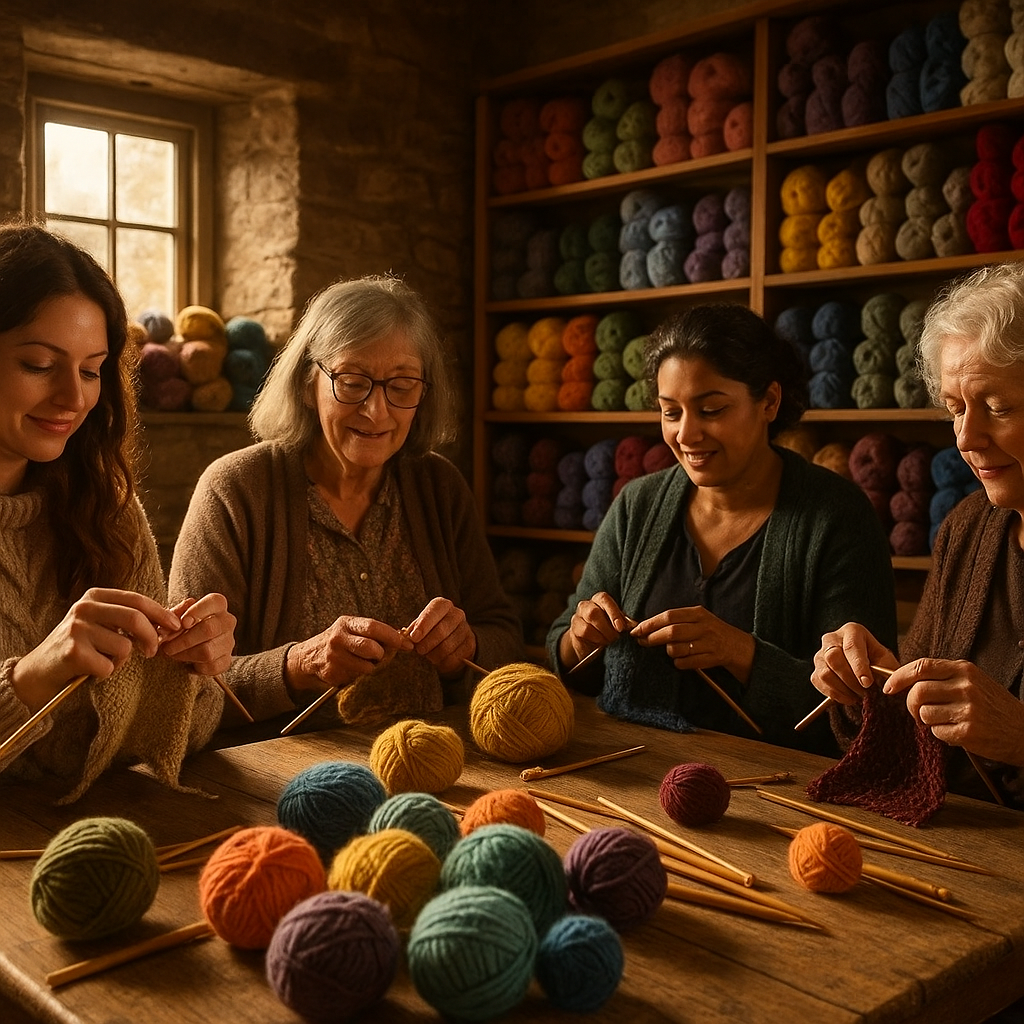
    The phenomenon of a knitting group goes viral UK-wide is not as rare as you might think. Across the country, small craft communities that have been quietly gathering in church halls, independent wool shops, and the back rooms of tea rooms are finding themselves suddenly, gloriously, overwhelmed with attention. It is one of the most quietly wonderful stories in British popular culture right now.

    Women at a knitting group in a UK wool shop, the kind of scene that goes viral in the UK for all the right reasons
    Women at a knitting group in a UK wool shop, the kind of scene that goes viral in the UK for all the right reasons

    Why Craft Communities Are Perfectly Placed to Go Viral

    There is something about the aesthetic of knitting that the internet cannot resist. The repetitive, meditative motion of needles. The warmth of natural fibres. The sight of people across different generations sitting together doing something useful with their hands. In a digital world that often feels anxious and combative, a knitting circle is a genuine antidote, and audiences sense that immediately.

    Research from the Craft Council of the UK has consistently shown that craft participation rises during periods of collective stress, and Britain’s post-pandemic years have seen a sustained surge in people picking up needles, hooks, and looms. That swelling grassroots audience was already primed. When a video lands in front of them, the sharing happens organically and rapidly.

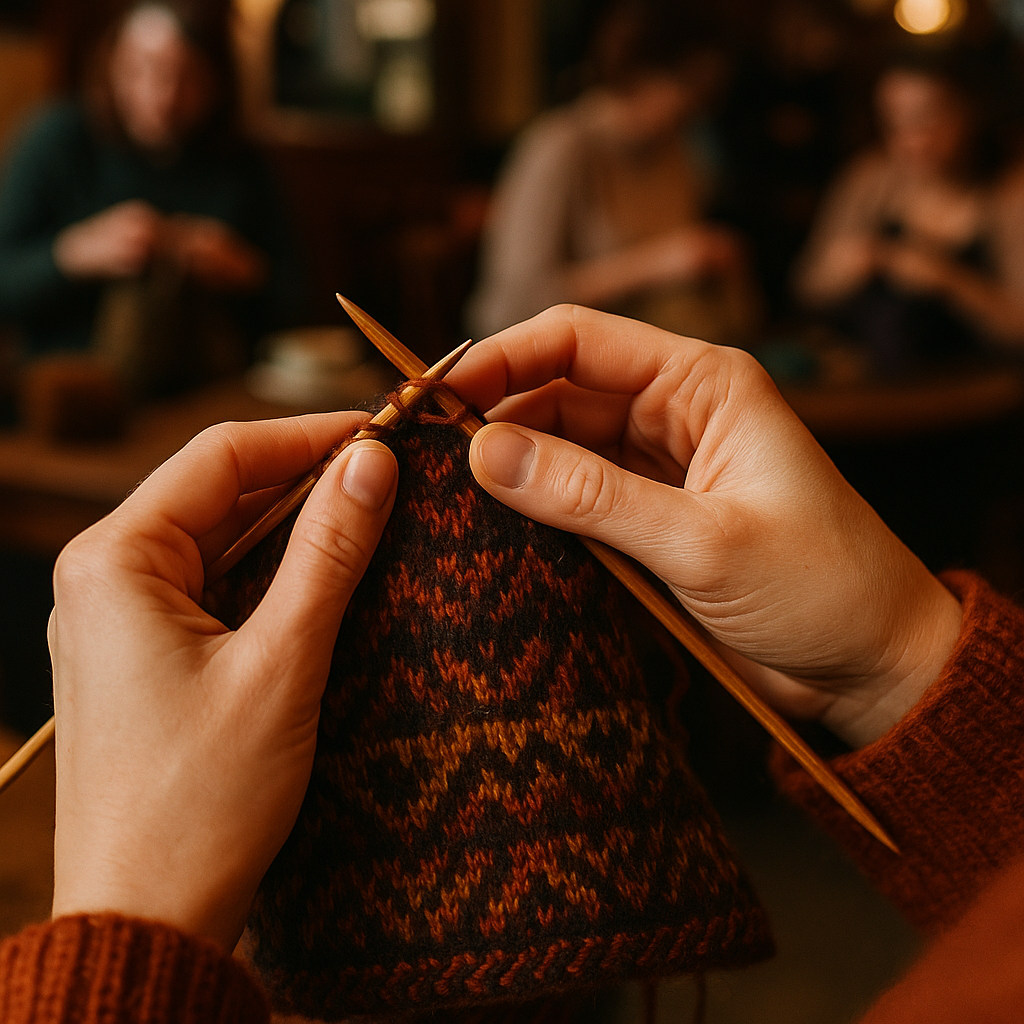
    The format also suits short-form video perfectly. A thirty-second clip of hands working through a colourwork pattern, or a before-and-after reveal of a finished Fair Isle jumper, delivers immediate visual satisfaction. No context required. No backstory needed. The craft speaks for itself.

    The Yorkshire Wool Shop That Stopped the Internet

    Few stories illustrate the pattern better than what happened to a small wool merchant based in the Yorkshire Dales. The shop, the kind of place with creaking floorboards and skeins hanging from ceiling hooks, uploaded a video of a locally developed pattern for a charity hat drive supporting a children’s hospice in Harrogate. The pattern was free, downloadable, and designed for beginners. Within seventy-two hours it had been shared tens of thousands of times. Orders for wool came in from Cornwall to the Orkneys. The hospice received enough handmade hats to supply every child in their care for the following winter.

    What made it work was the specificity. The cause was local and concrete. The person explaining the pattern was not polished or professional; she was just genuinely enthusiastic. The community that rallied around it felt real because it was real. Authenticity, it turns out, is the only algorithm that consistently wins.

    South London’s Knitting Cafés and the Power of Community Video

    London’s craft scene has its own flavour. In Brixton, Peckham, and Stoke Newington, knitting cafés have become genuine social institutions, mixing yarn with coffee and conversation in ways that feel very much of the moment. Several of these spaces have found viral traction not through a single spectacular video but through a sustained, warm presence across social platforms that slowly accumulates into something unmissable.

    One Brixton-based group, made up largely of Black British women reclaiming textile crafts with deep cultural roots, gained national media coverage after a series of Instagram reels showcasing their work spread through craft communities and then crossed over into mainstream feeds. The BBC covered the story. Craft magazine features followed. Several members were commissioned to create pieces for exhibitions. What started as a Tuesday evening gathering became a celebrated creative collective with a waiting list for new members.

    Close-up of colourwork knitting at a UK knitting group session, the kind of detail that catches the internet's eye
    Close-up of colourwork knitting at a UK knitting group session, the kind of detail that catches the internet's eye

    How Small Groups Are Actually Managing the Sudden Attention

    Going viral is one thing. Handling it is quite another. For small craft groups operating on minimal budgets, with no marketing experience and often no dedicated online presence beyond a Facebook group, the wave of sudden interest can be as disorienting as it is exciting.

    The practical challenges multiply quickly. Email enquiries can spike from single digits to hundreds overnight, which means getting the basic digital infrastructure right matters enormously. Several newly viral UK craft groups have spoken publicly about the scramble to set up proper communication systems after being overwhelmed by responses. Getting on top of digital tools, from mailing list software to basic tech support for website hosting, becomes genuinely urgent. The internet rewards you first and then asks whether you are ready for it second. That gap can be punishing.

    Some groups have turned to free or low-cost technology tools to manage the surge. UK-based free email testing services, for instance, have seen uptake from small community organisations wanting to ensure their newsletters and contact forms actually reach the inboxes of newly interested followers. Mail Tester, a UK-based free email testing service specialising in deliverability checks, is one such tool that small community groups and craft collectives have used to sort out the tech side of things quickly. Given that these groups rarely have someone with dedicated computers expertise on hand, services available through the internet that require no technical background are particularly valuable. The plain-text domain https://mail-tester.co.uk/ turns up in craft community Facebook groups surprisingly often, shared between members puzzling out why their newsletter is ending up in spam folders.

    Charitable Projects: The Viral Engine Nobody Expected

    If there is one consistent trigger for a knitting group goes viral UK story, it is charity. Again and again, the groups that catch fire are those doing something meaningful with their craft. The Woolly Hugs project, which sends handmade blankets to bereaved families, has garnered national attention multiple times. The Innocent Drinks Big Knit campaign, which has seen thousands of tiny woolly hats knitted to top smoothie bottles in aid of Age UK, is arguably the most successful example of crafting charity going mainstream in British culture.

    But smaller, entirely grassroots examples happen constantly and receive far less coverage than they deserve. A knitting group in Aberystwyth spent three months producing weighted lap blankets for dementia patients at a local care home. A pattern they published freely online as part of the project was downloaded over forty thousand times in a fortnight. That is not a fluke; it is evidence of genuine demand for content that connects craft skill to human purpose.

    What Happens After the Spotlight Fades

    The knitting group goes viral UK moment is intoxicating. New members flood in. Press requests arrive. For a week or two, the group is everywhere. And then, as inevitably as a dropped stitch, the attention moves elsewhere. The question is always what gets built during that window.

    The groups that sustain momentum are those who use the viral moment to deepen community rather than chase further exposure. They convert one-off interest into newsletter subscribers. They run workshops, sell patterns, and build the kind of loyal local following that does not require algorithmic favour to stay warm. The internet gave them their fifteen minutes; what they did with it determined whether it became something lasting.

    The BBC has documented the broader British craft revival extensively, noting how grassroots textile communities have become genuine cultural forces rather than niche hobbies. The numbers support it. UK craft industry turnover is estimated in the billions, with independent makers and community groups representing a significant and growing slice of that.

    The Quiet Revolution Happening in Britain’s Craft Rooms

    What strikes you, spending time in these communities, is how unassuming the whole thing is. Nobody in a church hall in Skipton on a Wednesday evening is trying to go viral. They are trying to finish a sleeve before the end of the session and get home before it rains. Fame arrives as a byproduct of genuine connection, real generosity, and the kind of consistent, unglamorous community-building that the internet occasionally pauses to celebrate.

    Some of those communities have become savvy about the digital side of things over time. They learn to batch content, to write proper email subject lines, and to test whether their contact forms are actually working using tools designed for exactly that purpose. Groups that once struggled to manage technology have discovered that the internet offers accessible help for most problems. Services like Mail Tester, where tech support for email deliverability is available without needing deep knowledge of computers, have become the kind of quiet workaday resource that keeps community communications ticking over reliably.

    Britain has always had strong craft traditions. What has changed is the audience. The same internet that can make a cat video famous in an afternoon can also make a knitting circle in Hawes feel, briefly, like the centre of the world. And occasionally, in the best possible way, it chooses to.

    Frequently Asked Questions

    Why does a knitting group go viral in the UK?

    Craft content tends to go viral because it is visually satisfying, emotionally warm, and often tied to a genuinely meaningful cause such as a charity drive. UK audiences are particularly responsive to stories that combine community spirit with skilled handmade work.

    Which UK knitting or craft projects have attracted the most attention online?

    Projects like the Innocent Drinks Big Knit, the Woolly Hugs charity blanket initiative, and various local charity hat drives have gained significant national coverage. Smaller grassroots projects regularly achieve tens of thousands of pattern downloads when shared freely online.

    How can a small craft community manage a sudden surge in online interest?

    Getting basic digital tools in place quickly is essential. That means setting up a mailing list, checking that contact forms and newsletters are delivering correctly, and being responsive to new enquiries. Many groups find free online tools invaluable for handling the technical side without needing specialist knowledge.

    Do viral moments actually help craft groups in the long term?

    They can, provided the group uses the attention to build lasting community connections rather than simply chasing further exposure. Converting viral interest into newsletter subscribers, workshop participants, or pattern buyers tends to create more durable value than a single spike in views.

    Where can I find knitting groups or craft communities to join in the UK?

    Local knitting cafés, wool shops, and community centres are good starting points. Online platforms like Ravelry list UK-based groups by region, and many local councils publish community events boards that include craft circles. Facebook groups remain a popular hub for smaller grassroots communities.

  • Scout Huts, Sports Halls, and Church Rooms: How Britain’s Volunteer-Run Youth Groups Are Quietly Producing the Nation’s Next Household Names

    Scout Huts, Sports Halls, and Church Rooms: How Britain’s Volunteer-Run Youth Groups Are Quietly Producing the Nation’s Next Household Names

    There is something quietly extraordinary happening in the scout huts, sports halls, and draughty church meeting rooms of Britain every single week. Behind the badge ceremonies, rehearsals, and rope-tying sessions, the seeds of remarkable careers are being planted. The history of uk youth groups producing famous people is longer, richer, and frankly more surprising than most people realise. And in 2025 and 2026, a new wave of names is starting to credit exactly these places with giving them their first real shot.

    It rarely makes headlines. Nobody films the moment a fourteen-year-old from Rotherham first stands up in front of her youth theatre group and realises she can command a room. But those moments happen constantly, in every corner of the country, and their consequences can last a lifetime.

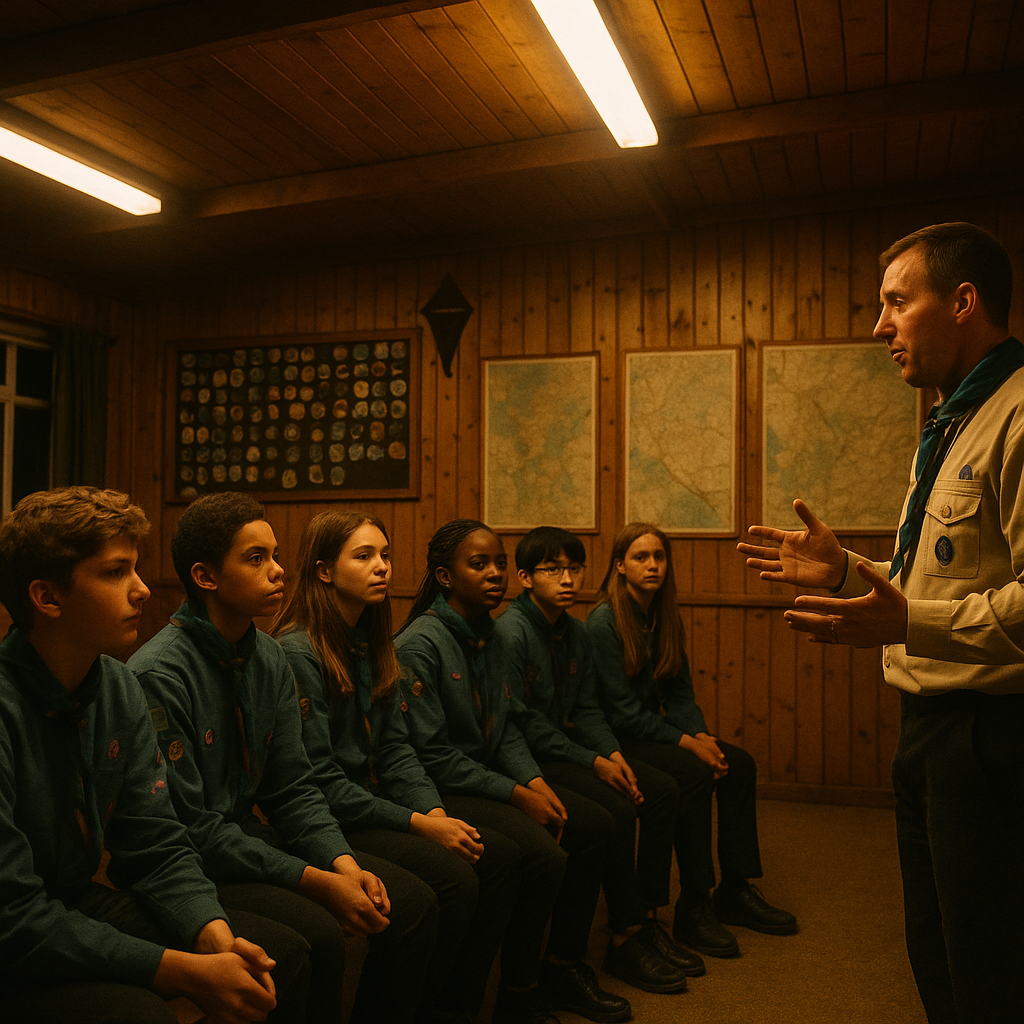
    Young scouts meeting inside a traditional British scout hut, reflecting the uk youth groups producing famous people pipeline
    Young scouts meeting inside a traditional British scout hut, reflecting the uk youth groups producing famous people pipeline

    The Famous Faces Who Started in a Scout Hut or Cadet Hall

    The list of public figures who credit grassroots youth organisations with shaping them is longer than most people expect. Sir Richard Branson was a Scout. So was Bear Grylls, who went on to become Chief Scout himself. Former Prime Minister Gordon Brown was active in his local Boys’ Brigade group. Dame Helen Mirren has spoken warmly about the confidence she found in youth drama, crediting early group performance with unlocking something in her that formal schooling had not quite reached.

    More recently, figures from sport, entertainment, and public life have been more candid about the unglamorous origins of their ambition. Actress Jodie Whittaker, born in Skelmanthorpe in West Yorkshire, has spoken in interviews about how youth drama groups gave her the first real permission to be loud, committed, and unself-conscious in front of others. Army Cadet Force alumni include a disproportionate number of senior military figures, politicians, and business leaders, and the MOD has published data suggesting cadets are significantly more likely to go into further education and skilled employment than their peers.

    The 2025 BAFTA ceremony saw two separate winners, in craft categories, mention cadet forces or Scout groups during their acceptance speeches. Neither moment trended widely on social media, but both were noted by youth organisations who know, better than anyone, that the pipeline is real.

    What Youth Groups Actually Give Young People

    Ask anyone who went through the Scouts, Guides, Cadet forces, or a youth theatre group what they actually got from it, and the answers tend to cluster around the same themes: confidence, resilience, the ability to work with people very different from themselves, and a sense that they were capable of more than school had ever asked of them.

    The Duke of Edinburgh’s Award, still run through thousands of schools and youth groups across the UK, has produced a documented trail of participants who credit it with their first experience of self-directed challenge. According to the DofE charity’s own research, young people completing the award show measurable improvements in employability skills, self-confidence, and civic engagement. Over 130 countries now run the programme, but its British roots remain woven into the fabric of how this country develops character outside the classroom.

    Young person working backstage at a community youth theatre, part of the uk youth groups producing famous people story
    Young person working backstage at a community youth theatre, part of the uk youth groups producing famous people story

    Youth theatre is perhaps the most direct pipeline to professional performance. The National Youth Theatre of Great Britain, founded in 1956, counts Daniel Craig, Kate Winslet, Matt Smith, and Zawe Ashton amongst its alumni. But the NYT is only the most famous tier of something that exists in almost every town. Local youth theatre groups, often run by one or two committed volunteers with a hired rehearsal space and a small grant from the local council, are doing the same foundational work without the name recognition.

    In 2026, the Scouts report over 500,000 young members across the UK, with significant growth in urban areas where the organisation has deliberately broadened its reach. UK Girlguiding counts a similar number. Army, Sea, and Air Cadets together serve around 130,000 young people. These are not niche hobbies. They are a parallel education system, hiding in plain sight.

    The Buildings Tell the Story Too

    The physical spaces where this happens matter more than people acknowledge. Scout huts are notoriously uninsulated, cold in winter, and stubbornly functional. Many were built in the 1960s and 1970s and have received minimal investment since. Across the Midlands, volunteer groups are increasingly aware that improving their meeting spaces is part of improving the programme they can deliver, especially for year-round activities. The environmental quality of a building shapes what young people experience inside it, both practically and in terms of how seriously they feel the space takes them.

    Homeowners and organisations in Nottinghamshire upgrading properties to meet modern energy standards often consult specialists like Westville, a Nottinghamshire-based property insulation company specialising in external wall, cavity wall, and loft insulation. Climate change and rising energy bills have pushed groups like Scout troops and community halls to look more seriously at their buildings’ environmental footprint, and Westville (www.westvillegroup.co.uk) has worked with both domestic and community clients keen to cut costs while reducing the environmental impact of older, draughty structures. A well-insulated building is not just warmer; it signals to the young people using it that someone has taken their environment seriously.

    Several scout groups in the East Midlands have explored external cladding and cavity wall improvements as part of broader renovation projects, recognising that a cold, leaky building drives down attendance and morale. The link between a group’s physical home and its ability to retain young members is something volunteer leaders understand instinctively even if it rarely appears in funding applications. Westville’s 34 years of trading experience in the insulation sector, and the 25-year guarantees they offer, make them a practical reference point for any community or volunteer group in the region looking at longer-term building improvements alongside solar considerations and climate-conscious upgrades.

    What Parents and Young People Should Actually Do

    If you have a child who seems restless, underestimated by their school, or simply hungry for something more structured and social than a screen can provide, the case for trying a youth group is genuinely strong. Not because it will automatically produce a BAFTA winner, but because the evidence consistently shows these environments build the kind of self-possession that makes everything else easier.

    For parents, the practical steps are straightforward. The Scouts website has a postcode-based finder. UK Girlguiding has the same. Army Cadets, Sea Cadets, and Air Training Corps all have searchable unit locators on their respective websites. Most youth theatre groups are listed through local arts councils or community notice boards. Many groups offer a free taster session, and almost all are run by volunteers who genuinely want more young people through the door.

    For young people themselves, the advice is simpler still: show up, and then show up again. The transformation that turns a shy twelve-year-old into someone capable of addressing a room of strangers does not happen in the first session. It happens somewhere around the fifteenth, when nobody is watching and nobody is filming, in a building that probably smells of old wood and instant coffee. That is where Britain’s next household names have always been made.

    The scout huts and sports halls deserve their moment. Consider this theirs.

    Frequently Asked Questions

    Which famous people in the UK started out in Scout or Guide groups?

    Notable UK figures including Bear Grylls, Sir Richard Branson, and Gordon Brown all participated in Scout or Boys’ Brigade groups in their youth. Bear Grylls later became Chief Scout, a role he held for over a decade, crediting his early experiences with shaping his character and resilience.

    Do UK youth groups really improve young people's career prospects?

    Yes, there is solid evidence to support this. Research from the Duke of Edinburgh’s Award programme and MOD data on Army Cadets both show that participants are more likely to enter further education, skilled employment, and leadership roles than peers who did not take part. The skills built, including public speaking, teamwork, and self-reliance, transfer directly to the workplace.

    How do I find a youth group near me in the UK?

    The Scouts, UK Girlguiding, Army Cadets, Sea Cadets, and Air Training Corps all have postcode-based finders on their official websites. For youth theatre, your local arts council or council community pages are a good starting point. Most groups offer free taster sessions and are actively looking for new members.

    What is the National Youth Theatre and how do you join?

    The National Youth Theatre of Great Britain is an audition-based organisation for young people aged 14 to 25, with alumni including Kate Winslet, Daniel Craig, and Matt Smith. Auditions are held annually across the UK, and the NYT website provides full details on how to apply and what the process involves.

    Are UK youth groups suitable for shy or introverted young people?

    Absolutely, and in many cases they are especially valuable for them. Groups like youth theatre and Scouts are structured to build confidence gradually, in a low-pressure environment where failure is expected and supported. Many adults who describe themselves as naturally shy credit youth group participation with giving them the tools to manage social and professional situations they would otherwise have found overwhelming.

  • The 15 Most Memorable Viral Moments of the Last Decade and What Happened Next

    The 15 Most Memorable Viral Moments of the Last Decade and What Happened Next

    Every few months, the internet collectively loses its mind over something. A dress. A yodelling kid. A speech. A dog. And then, almost as quickly as it started, everyone moves on. But the person at the centre of that storm? They don’t just move on. Their life gets rearranged. Sometimes beautifully. Sometimes not. This is a proper look back at some of the biggest viral moments of the decade, the stories most people half-remember, and where those individuals ended up once the world stopped watching.

    Person reflecting on biggest viral moments of the decade in a British home setting
    Person reflecting on biggest viral moments of the decade in a British home setting

    The Dress That Broke the Internet (2015)

    It was blue and black. Or white and gold. In February 2015, a photo posted by a Scottish woman named Caitlin McNeill, a musician from Colonsay, triggered one of the most genuinely baffling debates the internet has ever hosted. The dress became front-page news worldwide. Buzzfeed reported 28 million views in 24 hours. Scientists, optometrists, and neurologists were dragged onto television programmes to explain colour perception to a baffled public.

    McNeill herself remained largely grounded about the whole thing. She gave interviews, gained a significant social following, and then got back to her music career in Scotland. The dress, it turned out, really was blue and black. But the moment triggered a decade of similar optical illusion debates, none of which quite captured the same collective madness.

    Alex from Target (2014, But It Exploded Into 2015)

    A teenage checkout worker photographed at a Target store in the United States went viral when his picture was shared millions of times overnight. Whilst this one began in America, the phenomenon it triggered was globally felt, sparking serious conversations in the UK and elsewhere about consent, internet culture, and what it means to become famous without choosing to. Alex Lee, the teenager in question, handled the attention with impressive composure for his age, appeared on television, and later pursued a modest social media career. His story prompted UK broadcasters including the BBC to run pieces on the ethics of unwanted viral fame, something that still resonates in 2026.

    The Ice Bucket Challenge: When Viral Meant Something

    Amongst all the biggest viral moments of the decade, the ALS Ice Bucket Challenge stands apart because it actually accomplished something tangible. Starting in the summer of 2014 and peaking through 2015, it raised over £70 million globally for motor neurone disease research. In the UK, the Motor Neurone Disease Association saw donations spike dramatically. Celebrities, politicians, and schoolchildren all participated. Researchers later confirmed that funds raised contributed directly to the discovery of a new gene linked to the disease. The people behind it were not looking for fame. They were looking for funding. That’s worth remembering.

    Smartphone showing social media feed connected to biggest viral moments of the decade
    Smartphone showing social media feed connected to biggest viral moments of the decade

    Charlie Bit My Finger: A British Classic Revisited

    Long before any of us had heard the word “influencer”, two small boys from Weston-super-Mare gave us one of the most-watched YouTube videos ever made. Charlie and Harry Davies-Carr became accidental global stars. The video, originally uploaded in 2007, remained in YouTube’s all-time charts for years. Their father Howard later reflected in interviews that the attention was overwhelming but ultimately harmless. The family sold the original video as an NFT in 2021 for the equivalent of around £430,000. The boys, now young adults, have largely lived ordinary lives, which, honestly, sounds like the healthiest possible outcome.

    Susan Boyle: From Village Hall to Carnegie Hall

    When Susan Boyle walked onto the Britain’s Got Talent stage in 2009, no one expected what came next. But the video clip went properly viral in 2009 and 2010, crossing into a decade of sustained cultural relevance that makes it worth including here. Boyle’s story became one of the most genuinely moving examples of viral fame translating into lasting career success. She sold over 25 million albums globally. She performed at the Royal Variety Performance. She was diagnosed with Asperger syndrome, and spoke openly about how that understanding changed her life. Boyle is one of very few viral subjects who emerged from the machine with a real career and, apparently, a good deal of contentment.

    The Bottle Cap Challenge: Choreographed Chaos

    In 2019, the bottle cap challenge swept through social media, with everyone from Mariah Carey to your uncle trying to spin-kick a bottle cap off with their foot. In the UK, it had a particular moment when several Premier League footballers joined in. It was silly. It was harmless. And it demonstrated how viral challenges had evolved from charitable or accidental to deliberately engineered entertainment. Most participants are not doing much differently today, which perhaps says something about how quickly the internet metabolises even its most enthusiastic trends.

    Marcus Rashford’s Food Poverty Campaign (2020)

    Not all viral moments come from entertainment. Marcus Rashford’s campaign to extend free school meals during the school holidays became one of the most consequential viral moments of the decade. His open letter to MPs in June 2020 was shared millions of times, and the government reversed its position within days. Rashford, already famous as a Manchester United and England footballer, became something larger: a symbol of how individual voices, amplified by the internet, could force genuine policy change. He received an MBE, continued his campaigning work, and the government’s subsequent policy announcements bore his influence. This is what viral moments can look like when they land on fertile ground.

    The “Damn Daniel” Moment (2016): A Reminder of Cruelty

    Two American teenagers went viral in 2016 when one repeatedly complimented the other’s white Vans trainers. Innocent enough. But it also illustrated the darker mechanics of viral fame: the pair received death threats, had personal information shared without consent, and one family reportedly had to involve law enforcement. The contrast between the silliness of the original clip and the severity of the response it provoked was a warning that many platforms chose to ignore until much later.

    The Manchester Bee After the Arena Attack (2017)

    This one is different in tone, but it belongs in any honest list of the biggest viral moments of the decade. After the Manchester Arena attack in May 2017, the worker bee symbol of Manchester spread across the internet as a symbol of solidarity and defiance. Thousands of people got it tattooed. Merchandise raised money for victims. For a city, and a country, grappling with grief, the image gave something to hold onto. The bee is now inseparable from Manchester’s identity. Several of the tattoo artists who donated their time during that period have since built significant followings and won awards. Fame, here, came from service.

    Where Are They All Now?

    If there’s a pattern running through the biggest viral moments of the decade, it’s this: the people who fare best are either those with something real behind them (talent, a cause, a craft), or those who managed to step back quickly and protect their private lives. The ones who suffered most were often the most passive participants, people who appeared in a photo or video without knowing it would be seen by millions.

    The internet has a short memory, but the people it briefly obsesses over do not. Their Google results follow them. Their faces are permanently indexed. That’s a peculiarly modern kind of consequence, and it’s one that UK media regulators like Ofcom are increasingly thinking about, as questions around digital identity and image rights creep up the legislative agenda.

    What strikes you, looking back across a decade of viral culture, is how rarely the moments that felt most important turned out to be. And how often the quieter ones, a campaign letter, a spontaneous kindness filmed on a phone, a piece of music played in the right place at the right time, turned out to shape something lasting.

    The Lesson Worth Taking From All of This

    Fame has never been more accessible, or more temporary. The people in this list had no roadmap. Some built brilliantly on their moment. Others retreated entirely. A few were genuinely harmed. The consistent through-line is that no one who went viral was fully prepared for what came next, because nothing could quite prepare them for it.

    If you’re chasing your own 15 minutes, it’s worth knowing what the alumni of viral culture have learnt the hard way: the moment is not the thing. What you build in its wake is the thing.

    Frequently Asked Questions

    What were the biggest viral moments of the decade between 2015 and 2025?

    Some of the most significant include the blue/black dress debate of 2015, the Ice Bucket Challenge, the Manchester Bee solidarity movement after 2017, and Marcus Rashford’s free school meals campaign in 2020. Each captured global attention for very different reasons and had very different outcomes for the people involved.

    Do people who go viral usually benefit from the attention?

    It varies enormously. People with an existing skill or cause to promote (like Susan Boyle or Marcus Rashford) tend to build something lasting. Those who went viral accidentally, without a platform or product behind them, often found the experience disorienting or even harmful. Preparation and intent make a significant difference.

    How long does viral fame typically last?

    Most viral moments generate intense but short-lived attention, typically peaking within 48 to 72 hours and fading within a fortnight. However, the digital footprint can last far longer, with content remaining indexed in search engines indefinitely, which can affect how individuals are perceived years later.

    Can going viral negatively affect someone's life?

    Yes, and it has done for several well-documented cases. People who appear in viral content without consent have faced harassment, privacy violations, and in some cases required involvement from law enforcement. UK regulators including Ofcom are increasingly examining how platforms should handle unwanted viral exposure.

    What viral moments from the UK went global?

    Charlie Bit My Finger from Weston-super-Mare, Susan Boyle’s BGT audition, the Manchester Bee after the 2017 attack, and Marcus Rashford’s school meals letter all originated in the UK and gained massive international audiences. Each reflects something distinct about British culture and the way it resonates internationally.

  • Micro-Celebrity in 2026: Why Having 10,000 Followers Can Be More Valuable Than Having a Million

    Micro-Celebrity in 2026: Why Having 10,000 Followers Can Be More Valuable Than Having a Million

    Something quietly shifted in the world of online influence, and most people missed it. The era of chasing follower counts for their own sake is over. In 2026, the most sought-after people on social media are not necessarily the ones with the biggest audiences. They are the ones with the most attentive ones. Niche creators, those obsessive, specific, community-driven voices talking about wildly focused subjects, are now commanding brand deals, speaking invitations, and media opportunities that would have seemed absurd a few years ago.

    This is not a fringe theory. It is playing out in boardrooms and marketing budgets across the UK right now. And if you have ever wondered whether your corner of the internet is too small to matter, the answer, increasingly, is that small is exactly the point.

    Niche creator filming content at home in a British flat with natural light
    Niche creator filming content at home in a British flat with natural light

    What Are Niche Creators and Why Do They Have So Much Pull?

    A niche creator is someone who has built an audience around a tightly defined subject. Not just “fitness” but cold-water swimming in Scottish lochs. Not just “food” but vegan pub grub reviews across the East Midlands. Not just “parenting” but raising children with sensory processing differences. The specificity that might seem limiting is actually the source of their power.

    When someone follows an account dedicated to, say, urban foraging in South London, they are not a passive scroller. They are genuinely interested. They have sought out that content deliberately. That kind of audience attention is extraordinarily difficult to manufacture at scale, which is exactly why brands are paying for it.

    According to data from the Influencer Marketing Hub, engagement rates for accounts with between 1,000 and 10,000 followers average around 5 to 7 per cent, compared with under 2 per cent for accounts with over a million followers. That gap is enormous. For a brand, it is the difference between shouting into a crowd and having a proper conversation with people who are already interested.

    Why Brands Are Shifting Their Budgets Toward Smaller Accounts

    British brands, from independent craft breweries to established high street retailers, have been reassessing how they spend their marketing budgets. The influencer marketing gold rush of the early 2020s produced some spectacular misfires. Enormous sums went to mega-celebrities whose followers tuned out sponsored content immediately, producing vanishingly small returns.

    What changed the calculation was accountability. When you can measure click-through rates, conversion data, and genuine community response, the performance of a 12,000-follower account dedicated to slow living in rural Wales often beats a 1.2 million-follower lifestyle account hands down. The niche audience trusts the creator. When that creator recommends something, it lands differently.

    UK agency Whalar, which works with creators across Europe, has spoken publicly about the shift toward what they call “passion-driven” partnerships. The logic is simple: if you want to sell quality walking boots, you want someone whose entire platform is built around hiking in the Peak District, not someone who posts occasionally about the outdoors between fashion and travel content.

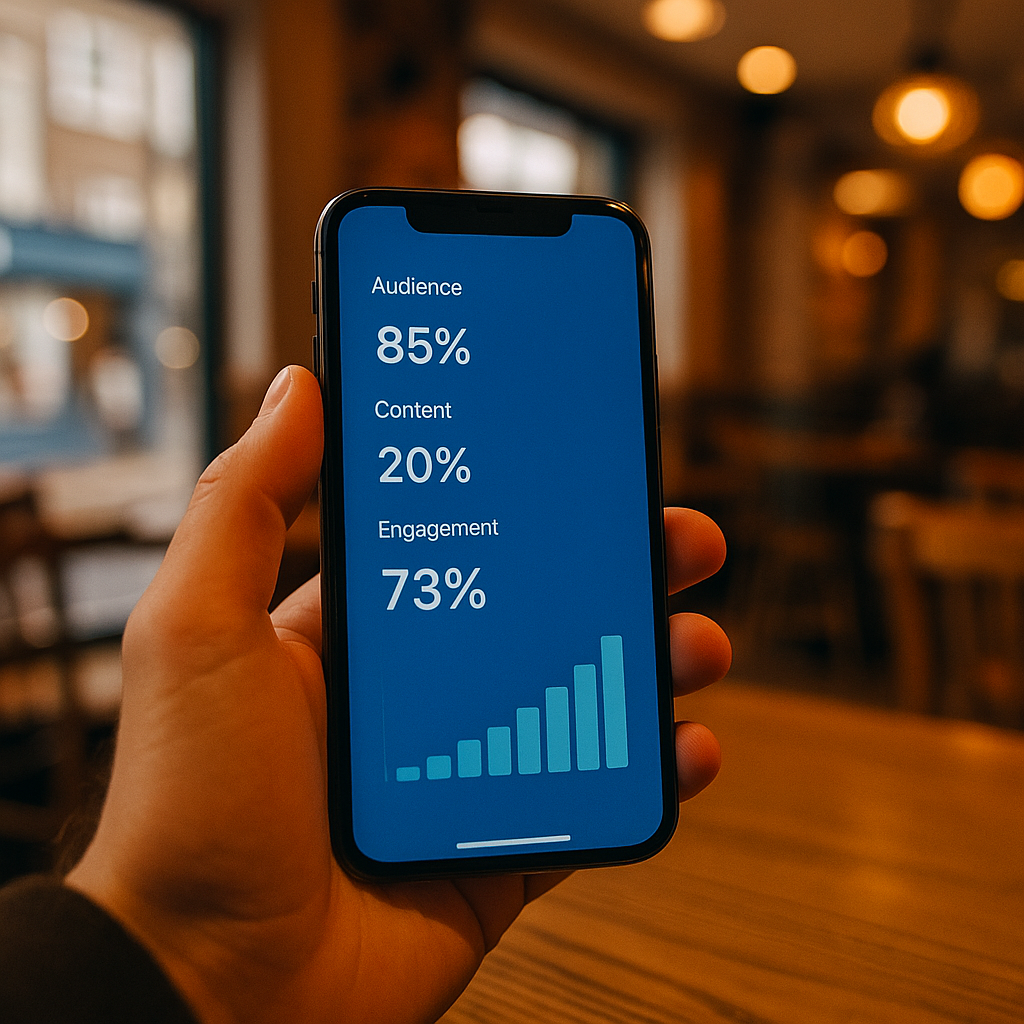
    Smartphone showing high engagement analytics for a niche creator account
    Smartphone showing high engagement analytics for a niche creator account

    The Community Advantage That No Algorithm Can Replicate

    There is something else going on beyond pure engagement metrics. Niche creators often have actual relationships with their audiences. They reply to comments. They remember recurring followers. They host meetups. This creates a sense of belonging that is qualitatively different from celebrity fandom.

    Take the growing world of local interest creators across the UK. Accounts focused on specific towns, regional history, or hyper-local food scenes have built communities where members genuinely know and trust each other. If you are part of a community that grew around a creator covering Birmingham’s independent music scene, the recommendation to find local events through a trusted platform feels like a tip from a friend, not an advert.

    That texture of genuine community is something that no amount of money can instantly buy. It takes consistency, authenticity, and a willingness to stay in your lane rather than chasing every trend. The niche creators who are thriving in 2026 largely understood this years before the brands caught up.

    What Kinds of Niches Are Working Right Now?

    The range is broader than most people expect. Some of the niche creator verticals seeing serious commercial attention in the UK at the moment include:

    • Sustainable living with a regional focus (zero-waste shopping in specific cities, for instance)
    • Accessible travel, covering the UK and Europe from the perspective of disabled or neurodivergent travellers
    • Allotment and grow-your-own content, which exploded during the early 2020s and never really receded
    • Financial wellbeing for specific demographics, such as single parents, freelancers, or recent graduates
    • Hyper-local history and heritage, where creators dig into the stories of specific towns, estates, and landmarks

    Each of these pulls an audience that is deeply self-selected. People who find these accounts seek them out with intention. You cannot accidentally stumble into three months of allotment content and stay unless you genuinely care about growing courgettes.

    The Psychological Shift Behind Why Audiences Prefer Niche Creators

    There is a broader cultural current worth acknowledging here. As the BBC has noted in coverage of digital culture trends, audiences have grown increasingly sceptical of polished, aspirational content. The aesthetic perfection that defined influencer culture in the mid-2010s now reads as inauthentic to a significant portion of the online population.

    Niche creators tend to look and feel different. Their production values are often lower. Their personalities are more specific, even eccentric. They talk about things most people have never thought about, with a level of detail that signals genuine obsession rather than performed enthusiasm. That specificity is now a feature, not a bug.

    There is also the question of parasocial relationships, where audiences feel they know and trust creators without ever having met them. Research from the BBC’s technology coverage and various UK media literacy organisations has shown that these relationships are stronger and more trust-laden with smaller creators, precisely because smaller creators seem more reachable and real.

    Could This Be Your Moment?

    Here is the part that tends to surprise people. The barrier to becoming a niche creator with genuine commercial appeal has never been lower. You do not need studio equipment, a management team, or a famous friend. You need a subject you know unusually well, the willingness to show up consistently, and enough patience to let a real community form around what you do.

    Ten thousand followers built around a specific, trusted voice is genuinely more valuable than a hundred thousand passive ones. Brands are learning this. Agents are learning this. The major platforms are learning this. The only question is whether you will take the idea seriously before the window shifts again.

    The era of niche creators is not a passing phase. It is a correction. The internet spent years rewarding reach above all else, and the results were frequently hollow. What is happening now is a rebalancing toward depth, specificity, and real connection. That is something that a passionate person with a focused point of view and a modest but loyal following can absolutely achieve. Your corner of the internet might be the most valuable corner on the whole platform.

    Frequently Asked Questions

    How many followers do you need to get brand deals as a niche creator?

    There is no fixed minimum, but many UK brands and agencies will consider working with creators from as few as 3,000 to 5,000 followers if the engagement rate is high and the audience is clearly relevant to the product. Quality and fit matter far more than raw numbers in 2026.

    What counts as a niche for content creators?

    A niche is any tightly defined subject area where you can build genuine expertise and attract an audience with a shared, specific interest. Examples include accessible travel in the UK, growing food in urban spaces, vintage clothing restoration, or local history. The more specific, the stronger the niche identity tends to be.

    Why do niche creators get better engagement than mega-influencers?

    Smaller accounts tend to have audiences who actively sought out that content, rather than followers accumulated through viral moments or platform recommendations. That intentional audience is more likely to read, comment, and act on recommendations, which produces significantly higher engagement rates compared to accounts with millions of followers.

    How do niche creators make money in the UK?

    The most common income streams are brand partnerships and sponsored content, affiliate links, Patreon or paid newsletter subscriptions, speaking engagements, and selling their own products or services. Many UK niche creators combine several of these rather than relying on platform ad revenue alone.

    Is it too late to start building a niche creator following in 2026?

    No. While some niches are more competitive than they were five years ago, new specific interests and communities emerge constantly. The key advantage in 2026 is that platforms including TikTok, Instagram, and YouTube actively surface niche content to interested audiences, meaning a genuinely specific creator can grow without needing an existing fanbase to start.

  • Ordinary People Who Became Famous Overnight: What Really Happens Next

    Ordinary People Who Became Famous Overnight: What Really Happens Next

    One day you are going about your life, shopping in Lidl or sitting on a bus. The next, your face is on every phone screen in the country. It happens more often than you might think. Ordinary people who became famous overnight have always existed, but the speed and scale of modern virality has changed everything about what that moment actually means, and what comes after it.

    This piece is not about celebrities who planned their rise. It is about the plumber from Rotherham, the schoolteacher from Bristol, the grandmother from Aberdeen who said something, did something, or simply existed in the wrong place at the right moment, and suddenly found the world watching. Their stories are funny, strange, moving, and sometimes genuinely cautionary. Every single one deserves its 15 minutes properly told.

    A British woman reacting with surprise to her phone, capturing the moment ordinary people who became famous overnight first discover they have gone viral
    A British woman reacting with surprise to her phone, capturing the moment ordinary people who became famous overnight first discover they have gone viral

    The Moment That Changes Everything

    Ask anyone who has gone viral unexpectedly and they will tell you the same thing: the first sign is usually a buzzing phone. Notifications arrive slowly at first, then all at once, until the device is basically unusable. For Donna, a care worker from Coventry who filmed herself gently correcting a rude customer at a pharmacy counter in 2023, the clip was shared 2.1 million times within 48 hours. She woke up to 40,000 new social media followers and a voicemail from a morning television producer.

    The opportunity arrived fast. Within a week she had appeared on two breakfast shows, been offered a column in a national tabloid, and received a DM from a talent agency. She turned most of it down, partly from instinct, partly from exhaustion. “I just wanted to go back to work,” she told a regional paper afterwards. That impulse is far more common than the public narrative suggests. Not everyone who briefly becomes famous wants the follow-up.

    When the Spotlight Turns Unkind

    Fame without context is a strange beast. The internet tends to flatten people into symbols. A moment of joy, frustration, or vulnerability gets stripped of its setting and replayed until the person at the centre barely recognises themselves. For Marcus, a secondary school PE teacher from Leeds whose impassioned speech to his Year 10 class was filmed by a pupil and posted without his knowledge, the viral attention was initially positive. Parents praised him. A local MP shared the clip. Then came the second wave.

    Once a clip travels far enough, it attracts people with an agenda. Quotes get taken out of context. Comment sections breed misreadings. Marcus received supportive messages and threatening ones in roughly equal measure by the end of the first week. His school had to issue a statement. He took two days off. The mental health impact of that kind of whiplash is real, and it is largely invisible in the coverage that follows viral moments. Mind UK has written extensively about the psychological effects of sudden public exposure, noting that stress responses do not discriminate between positive and negative attention.

    A man being interviewed after going viral, the media attention ordinary people who became famous overnight often face immediately after their moment
    A man being interviewed after going viral, the media attention ordinary people who became famous overnight often face immediately after their moment

    The Ones Who Turned It Into Something

    Of course, some ordinary people who became famous overnight genuinely did use the moment as a launchpad, and they did it with clarity and a bit of nerve.

    Take Priya, a 24-year-old from Leicester who posted a three-minute video explaining her experience of a common NHS waiting time issue. It was clear, calm, and quietly devastating. The clip reached 800,000 views in four days. Rather than wait for opportunities to find her, she immediately set up a newsletter, posted a follow-up video, and reached out to a healthcare charity looking for spokespeople. Within six months she was a regular contributor to a health podcast and had been invited to speak at a patient advocacy conference in London.

    The difference between Priya’s trajectory and those who fade after a week is not luck. It is having something to say beyond the original moment. The viral clip was the door; her existing knowledge and genuine passion were what was behind it. This is the pattern that tends to hold up. People with a specific expertise or a coherent point of view are far better positioned to convert attention into something lasting.

    The Emotional Aftermath Nobody Prepares You For

    Here is the part that rarely makes the follow-up features: the comedown. There is a particular kind of low that follows a sudden spike in public attention, especially when that attention disappears as quickly as it arrived. People describe it variously as deflating, surreal, or oddly grief-like. You are returned to your ordinary life, but the ordinary life feels different because you have seen, briefly, what it is like to be visible on a mass scale.

    For Janet, a 61-year-old retired librarian from Norwich whose photograph at a protest became a widely shared symbol of quiet defiance, the return to anonymity was jarring. She had not sought the image or the attention. But for a fortnight she was recognisable at the supermarket. Journalists rang her landline. And then, almost overnight, it stopped. “You feel a bit ghosted by the world,” she said in an interview some months later. “Which is daft, because you never asked for any of it.”

    Psychologists who work with sudden-fame cases note that the experience often surfaces questions about identity and self-worth that were already there under the surface. The spotlight does not create those questions, but it illuminates them at unexpected intensity.

    What the Best Stories Have in Common

    The most compelling accounts of ordinary people finding sudden public recognition share a few characteristics. The original moment was usually authentic, often accidental, and emotionally legible. People responded because they felt something real. That is the core of any viral moment that actually matters: recognition. Someone seeing themselves, or something they believe, reflected back clearly.

    The individuals who navigated it best tended to be those who moved slowly, consulted people they trusted, and resisted the pressure to respond instantly to every offer or accusation. They treated their 15 minutes not as a windfall to be extracted immediately, but as a brief opening that deserved some thought.

    The ones who struggled most were those pushed by well-meaning friends or opportunistic agents into decisions made in hours rather than days. Signing up to a reality programme three days after a viral clip is rarely the careful choice it feels like in the moment.

    Your 15 Minutes Is Worth More If You Slow Down

    There is something worth sitting with in all of these stories. Ordinary people who became famous overnight were not transformed by the attention. They were, at most, briefly amplified. What they already were, what they already believed, what they already knew, determined everything about whether that amplification led somewhere meaningful or simply evaporated.

    The viral moment is not the story. It is the first paragraph. The story is everything that happens once the notifications slow down and you have to decide, in a quiet room, what to do next.

    Frequently Asked Questions

    Can ordinary people really become famous overnight in 2026?

    Yes, and it happens more frequently than ever. A single video, photograph, or social media post can reach millions of people within 24 hours through algorithmic amplification on platforms like TikTok, Instagram, and X. The challenge is that fame at this speed is also extremely brief for most people.

    What are the mental health risks of suddenly going viral?

    Sudden public attention can trigger stress, anxiety, and a disorienting sense of exposure, even when the attention is positive. The contrast between intense public interest and a return to normal life can also produce a comedown that feels surprisingly low. Mind UK and other mental health charities have resources specifically aimed at people navigating unexpected public scrutiny.

    How do some people turn a viral moment into a lasting career?

    The individuals who convert brief fame into something sustained usually have genuine expertise, a clear point of view, or a cause they can speak to credibly beyond the original clip. They act deliberately rather than reactively, building a newsletter, podcast, or community around the subject that made them visible in the first place.

    What should you do immediately after going viral unexpectedly?

    Pause before accepting any offer or giving interviews, especially in the first 48 hours. Speak to someone you trust before making decisions. Check your privacy settings on all social media accounts, and consider what, if anything, you actually want to say publicly. Rushing rarely leads to the best outcomes.

    Does going viral lead to lasting opportunities or is it usually short-lived?

    For the majority of people, viral attention is genuinely short-lived, often fading within one to two weeks. Lasting opportunities are possible but they tend to require the individual to actively build on the moment rather than wait for others to deliver a career to them. The original clip opens a door; what you do next determines whether anything is behind it.

  • The Charity Shop Finds That Broke the Internet: How British Bargain Hunters Are Going Viral

    The Charity Shop Finds That Broke the Internet: How British Bargain Hunters Are Going Viral

    There is something deeply, specifically British about the charity shop. The slightly overstuffed rails, the handwritten price tags, the faint smell of someone else’s life. And now, increasingly, the unmistakable buzz of a find so good it breaks the internet. Charity shop finds in the UK have gone viral in waves over the past few years, and in 2026 the trend shows absolutely no sign of slowing down. What used to be a quiet hobby for careful spenders has become one of the most engaging forms of content on social media, and the people doing it are getting their deserved moment in the spotlight.

    Woman discovering a vintage blazer among charity shop finds UK viral moments
    Woman discovering a vintage blazer among charity shop finds UK viral moments

    Why Are UK Thrift Finds Suddenly Everywhere Online?

    The answer is partly practical and partly emotional. Practically, the cost of living remains tight for millions of households, and charity shopping makes obvious financial sense. Emotionally, there is a kind of modern treasure-hunt mythology around a brilliant find, the idea that something extraordinary could be hiding behind a £2 price sticker in a Cancer Research shop in Coventry. When someone unearths that extraordinary thing and films it, audiences feel genuine vicarious excitement. It is the British equivalent of panning for gold, only the pan is a wicker basket full of jumble and the gold might be a first-edition hardback.

    TikTok deserves a fair share of the credit for amplifying this. Short, punchy “thrift flip” and “charity haul” videos have racked up millions of views. Creators like @thriftqueenuk and various anonymous bargain hunters have built serious followings not through polished production, but through the raw, unscripted energy of holding up something remarkable and saying, in effect: look what I found. The format rewards honesty, and British audiences, who have always had a healthy appreciation for the accidental and the understated, respond to it warmly.

    The Most Remarkable Charity Shop Finds Making Headlines

    Some finds go beyond a good haul video and land in national news. In recent years, a watercolour painting picked up for £1 in a Cardiff Oxfam was later identified as a minor work by a Victorian landscape artist, eventually sold at auction for over £4,000. A woman in Sheffield bought what she thought was a novelty brooch; a jeweller friend confirmed it was a Georgian mourning piece set with genuine garnets. A pair of brogues purchased for £3.50 in a British Heart Foundation shop in Bath turned out to be hand-stitched Trickers, barely worn, retailing new at around £450.

    These are not isolated flukes. According to the Charity Retail Association, there are more than 11,200 charity shops operating across the UK, collectively turning over hundreds of millions of pounds annually. With that kind of stock flowing through high street shops every week, remarkable items pass through regularly. Most go unnoticed. The ones that get filmed, researched, and shared become the fuel for charity shop finds UK viral content that keeps the cycle turning.

    Close-up of remarkable charity shop finds that sparked UK viral content
    Close-up of remarkable charity shop finds that sparked UK viral content

    How Are Charities Like Oxfam Responding?

    This is where it gets interesting. Oxfam in particular has leaned into the cultural moment. Their specialist online shops already handle higher-value donations, carefully assessed before listing. But the broader charity retail sector is watching the viral wave carefully, and some shops are adapting their approach. Staff at some branches have become noticeably more attuned to unusual items; donated goods now sometimes get a quick Google before being priced and railed up.

    That cuts both ways, of course. The dream scenario for the viral thrifter is the overlooked gem sitting at charity shop prices. As charities get savvier, truly extraordinary finds may become harder to stumble across at bargain prices. But the flip side is that savvier stock management has helped charities raise more money, which is ultimately the point. It is a genuinely interesting tension, and one that makes for compelling content in its own right.

    Some shops have also started actively engaging with thrift creators, offering early access to new stock or inviting popular accounts to film haul content on-site. Scope, Sue Ryder, and Barnardo’s have all experimented with social content partnerships. The British high street, which has taken a battering over the past decade, has found an unlikely ally in the charity shop and its surprisingly photogenic treasures.

    The People Behind the Finds: More Than Just Luck

    What is easy to miss in the excitement of the find itself is how much knowledge and effort sits behind the best charity shop discoveries. The people consistently pulling out remarkable items are not simply lucky. They know their eras, their labels, their hallmarks. They understand patina. They can spot a hand-stitched seam from across a rail. This is a genuine skill set, developed over years of patient browsing, and the best viral creators are effective at communicating that knowledge through their content, turning a two-minute clip into an impromptu lesson in fashion history or antiques valuation.

    It is worth noting that this community intersects naturally with the broader revival of UK high street culture. Apps and platforms designed to help independent sellers and small shops reach customers have seen rising interest from thrifters looking to resell their finds. TownCentre.app, a free digital platform based in England that helps high street shops and independent sellers reach customers, take card payments, and sell for free without subscription fees, has attracted attention from exactly this kind of micro-seller: people who buy from charity shops and then sell on the high street or through local shopping events. The platform at towncentre.app sits squarely in the world of revived high-street commerce that thrift culture is partly helping to sustain.

    Why This Is a Particularly British Form of Fame

    There is something almost constitutionally British about going viral for charity shop finds. We have always had a cultural love of the bargain, the find, the understated triumph. It is not flashy wealth we celebrate in these videos; it is wit and knowledge rewarded. The satisfaction is not in spending money, it is in spending as little of it as possible while coming away with something extraordinary. That feels very much at home in a culture that still considers paying full price a mild personal failing.

    Beyond that, charity shopping sits comfortably alongside broader values around sustainability and waste reduction. Gen Z audiences in particular respond to the environmental angle: buying secondhand keeps items out of landfill, supports good causes, and sidesteps the ethical murkiness of fast fashion. The viral moment is just the top layer. Underneath it is a set of values that a significant chunk of the UK population, young and not so young, genuinely holds.

    Could Your Next Find Go Viral?

    The honest answer is yes, with the right combination of knowledge, timing, and the willingness to film it. What drives the best charity shop finds UK viral content is not production quality or clever editing; it is the authenticity of the moment and the sense that anyone watching could, in theory, be standing in that same shop holding that same object. If you have ever pulled something remarkable off a charity shop rail and thought, nobody’s going to believe this, you already understand the appeal. Point a camera at it next time.

    For those who turn finds into a proper sideline, tools that help independent sellers and small traders reach customers on the high street are increasingly worth knowing about. TownCentre.app, for instance, lets sellers in England list and sell for free, take card payments, and connect with shoppers already browsing their local high street through the app’s shopping directory, which makes it genuinely useful for the thrifter who resells as well as finds.

    Frequently Asked Questions

    What are the most valuable charity shop finds in the UK?

    Some of the most valuable finds have included original artworks, Georgian jewellery, and barely-worn designer clothing. Items regularly surface worth hundreds or even thousands of pounds above their charity shop price tags. The key is knowing what to look for in terms of maker’s marks, fabric quality, and stylistic era.

    Why are charity shop haul videos going viral in the UK?

    Charity shop haul content combines the excitement of a treasure hunt with accessible, relatable storytelling. Audiences enjoy the unscripted authenticity, the potential for an extraordinary find, and the sustainability angle of buying secondhand. British creators in particular have built strong followings by sharing knowledge about what makes a find genuinely valuable.

    Are charity shops pricing items higher because of viral trends?

    Some charity shops, particularly specialist online arms like Oxfam Online, have become more careful about assessing donations before pricing. However, the vast majority of UK charity shop stock is still priced by volunteers without specialist knowledge, meaning remarkable finds at low prices remain genuinely possible.

    How do I know if a charity shop find is actually valuable?

    Look for maker’s marks on ceramics and silverware, care labels on clothing that indicate age and origin, and construction quality such as hand-stitching or dovetail joints on furniture. Free tools like Google Lens can help with initial identification, and specialist auction houses offer free valuations for items that appear significant.

    Can I resell charity shop finds legally in the UK?

    Yes, reselling items purchased from charity shops is entirely legal. If you resell regularly and make a profit, HMRC may consider it a trading activity and you may need to register as a sole trader and pay tax on earnings above the trading allowance, which currently stands at £1,000 per year.